Professional skills
Programming Development Training as a Structured Computational Skill Formation Process

1. Objective Definition and Scope of Discussion
Programming development training refers to structured educational processes designed to develop the ability to design, write, test, and maintain computer programs using programming languages and software development tools. This article examines programming training as a knowledge acquisition system rather than a career-oriented or outcome-based pathway. The focus is on how computational skills are formed, how learners interact with programming environments, and how structured learning frameworks support progressive skill development.
The discussion is organized to address:
- The conceptual definition of programming development training
- Foundational principles of computational education
- Cognitive and technical mechanisms involved in coding skill formation
- System-level perspectives on learning progression in programming contexts
- A neutral synthesis and conceptual outlook
2. Fundamental Conceptual Background
Programming is the process of creating instructions that a computer can execute. These instructions are written in programming languages such as Python, Java, C++, and JavaScript. Each language provides a structured syntax and semantic rules that define how instructions are interpreted by machines.
Programming development training is typically grounded in several core educational concepts:
- Computational thinking: the ability to break down problems into structured logical steps
- Algorithmic reasoning: designing step-by-step procedures for solving defined problems
- Syntax and semantics understanding: learning language rules and meaning structures
- Data structures: organizing and storing data efficiently for computation
- Software architecture basics: structuring programs into modular components
Computer science education frameworks often emphasize abstraction, decomposition, pattern recognition, and algorithm design as foundational thinking skills.
Programming environments may include:
- Text editors or integrated development environments (IDEs)
- Compilers or interpreters
- Debugging tools
- Version control systems
These tools form the operational environment in which programming skills are practiced and refined.
3. Cognitive and Technical Mechanisms of Skill Development
Programming development training involves both cognitive learning processes and technical practice cycles.
Cognitive mechanisms
Learning programming requires the development of mental models that map real-world problems into computational representations. This involves:
- Translating abstract problems into structured logic
- Understanding conditional logic and control flow
- Developing memory structures for variable tracking
- Building recursive and iterative reasoning patterns
Cognitive load theory is often applied in educational psychology to describe how learners process complex programming concepts in stages, gradually increasing complexity as foundational knowledge stabilizes.
Technical mechanisms
From a technical perspective, programming training includes interaction with code executions systems:
- Source code is written in a programming language
- The code is parsed and interpreted or compiled
- Executions produces output or system behavior
- Errors (syntax or logic) are identified and corrected
Debugging plays a central role in skill development. It involves identifying discrepancies between expected and actual program behavior, often requiring systematic tracing of executions flow.
Version control systems such as Git support structured tracking of code changes, enabling iterative development and collaborative workflows in educational environments.
4. System-Level Interpretation of Programming Training
Programming development training can be understood as a multi-layered learning system involving interaction between learners, tools, and conceptual frameworks.
At a system level, the process includes:
- Input layer: instructional content, exercises, and problem sets
- Processing layer: cognitive interpretation and coding practice
- Feedback layer: error messages, test results, and performance evaluation
- Iteration layer: refinement of code and conceptual understanding
This cyclical structure supports incremental learning, where each iteration contributes to improved understanding of programming constructs.
Programming education is also influenced by:
- Language paradigms (procedural, object-oriented, functional)
- Problem complexity scaling
- Exposure to real-world software systems
Educational research in computer science frequently emphasizes the importance of project-based learning, where abstract concepts are reinforced through applied coding tasks.
Large-scale studies in computing education suggest that learning progression is not linear but iterative, with repeated exposure to similar concepts in increasingly complex contexts.
5. Summary and Conceptual Outlook
Programming development training is a structured process that integrates cognitive skill formation, technical tool usage, and iterative problem-solving. It is characterized by the gradual development of computational thinking abilities and the ability to translate abstract problems into executable code.
From a conceptual perspective, programming training functions as a layered system involving abstraction, implementation, testing, and refinement cycles. Ongoing developments in educational technology continue to explore adaptive learning systems, automated code evaluation, and interactive programming environments that support structured skill acquisition.
6. Question and Answer Section
Q1: What is programming development training?
It is a structured educational process focused on developing the ability to write and understand computer programs.
Q2: What skills are involved in programming?
Skills include computational thinking, algorithm design, syntax understanding, and debugging.
Q3: Why is debugging important?
Debugging helps identify and correct errors in program logic and executions.
Q4: Is programming only about writing code?
No, it also involves problem analysis, design, testing, and system understanding.
Q5: Why is programming considered a structured learning process?
Because it involves sequential skill development and iterative feedback cycles.
Data Sources (URLs only)
https://www.ncbi.nlm.nih.gov/pmc/articles/PMC7158203/
https://www.edx.org/learn/computer-programming
https://www.acm.org/education
https://www.nationalacademies.org/our-work/disciplinary-frameworks-for-k-12-computer-science
https://www.ncbi.nlm.nih.gov/books/NBK558907/

Language acquisition researcher and polyglot focusing on effective techniques for learning East Asian languages.
Exploration ArchivesOther Articles
 Apr 27, 2026
Corporate Compliance Training — Regulatory Foundations, Mechanisms, and Organizational Context
Corporate compliance training refers to structured educational processes designed to explain laws, regulations, and internal policies that govern organizational behavior. This article defines the concept, outlines its foundational components, explains the mechanisms through which compliance knowledge is structured and transmitted, and presents a comprehensive, neutral overview of its scope and limitations. The discussion follows a structured sequence: objective clarification, basic concept analysis, core mechanisms and detailed explanation, comprehensive perspective, conclusion and outlook, and a question-and-answer section. The purpose is strictly informational and avoids evaluative or prescriptive language.
 By Talia Salt
 Apr 27, 2026
Mechanical Maintenance Training — Concepts, Systems, and Technical Foundations
Mechanical maintenance training refers to structured educational processes focused on understanding, diagnosing, and maintaining mechanical systems across industrial, commercial, and technical environments. This article defines the concept, explains foundational principles of mechanical systems, analyzes the mechanisms involved in maintenance practices, and presents a comprehensive and neutral overview of its scope and limitations. The discussion follows a structured sequence: objective clarification, basic concept analysis, core mechanisms, comprehensive perspective, conclusion and outlook, and a question-and-answer section. The purpose is strictly informational, focusing on knowledge transmission without evaluative or prescriptive elements.
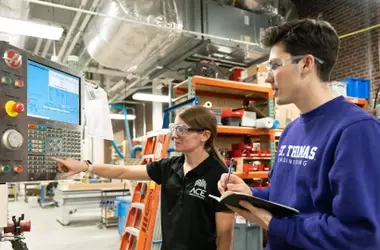 Apr 20, 2026
CNC Machine Training — A Neutral Technical Overview
CNC (Computer Numerical Control) machine training refers to structured educational programs that teach the operation, programming, and maintenance of computer-controlled machining systems used in manufacturing. This article explains the conceptual foundation of CNC training, the underlying mechanical and digital control principles, operational mechanisms, and industrial applications. It also discusses limitations, variability in skill acquisition, and technological evolution, followed by a question-and-answer section.
 By Chloe Davis