Professional skills
Corporate Compliance Training — Regulatory Foundations, Mechanisms, and Organizational Context

Objective Clarification
The objective of this article is to provide a neutral and structured explanation of corporate compliance training as a concept within organizational governance and regulatory systems. It aims to clarify what compliance means in a corporate context, how training programs are structured to address regulatory requirements, and what mechanisms underlie the dissemination and understanding of compliance-related information. Key questions include how compliance frameworks are defined, how organizations interpret legal obligations, and how structured training relates to risk management.
Basic Concept Analysis
Corporate compliance refers to adherence to laws, regulations, standards, and internal policies that apply to an organization’s operations. Compliance training is the process through which individuals within an organization are informed about these requirements and the expectations associated with them.
Compliance frameworks typically include several components:
- External regulations — laws enacted by governmental or regulatory bodies
- Internal policies — organizational rules and codes of conduct
- Industry standards — guidelines established by professional or industry groups
Training programs are designed to communicate these components in a structured format, often categorized by subject areas such as data protection, workplace conduct, financial reporting, and safety standards.
Core Mechanisms and Scientific Explanation
1. Regulatory Interpretation and Translation
Legal and regulatory texts are often complex and abstract. Compliance training involves translating these requirements into operational language that can be understood within specific organizational contexts. This process requires interpretation of legal frameworks and alignment with business activities.
2. Information Structuring and Delivery
Compliance content is typically organized into modules or thematic units. Instructional design principles are applied to structure information in a way that supports comprehension and retention. Methods may include scenario-based learning, rule-based instruction, and case analysis.
3. Behavioral and Cognitive Processes
Compliance training engages cognitive processes such as attention, memory, and decision-making. Behavioral frameworks are also relevant, as compliance involves not only knowledge acquisition but also adherence to defined rules.
Research in organizational behavior suggests that factors such as clarity of information, repetition, and contextual relevance influence how individuals process and retain compliance-related knowledge.
4. Monitoring and Assessment Mechanisms
Training systems often include mechanisms to evaluate understanding, such as assessments or knowledge checks. These mechanisms are used to measure comprehension of regulatory concepts and to document participation.
From a systems perspective, compliance monitoring also involves tracking adherence to policies through audits, reporting systems, and data analysis.
5. Risk Management Integration
Compliance training is closely linked to risk management. Organizations identify potential risks related to non-compliance, such as legal penalties or operational disruptions. Training is one component within broader risk mitigation strategies.
Comprehensive Perspective and Objective Discussion
Corporate compliance training operates within a complex regulatory and organizational environment. Its scope is influenced by factors such as jurisdiction, industry, organizational size, and operational complexity.
Data from regulatory and governance studies indicate that compliance requirements have increased in scope and complexity over time, particularly in areas such as data protection and financial reporting. However, the effectiveness of training programs varies depending on factors such as implementation methods, organizational culture, and employee engagement.
Limitations include challenges in ensuring consistent understanding across diverse workforces and the difficulty of translating abstract legal requirements into practical behavior. Additionally, compliance training alone does not guarantee adherence, as behavior is influenced by multiple organizational and individual factors.
Technological developments, including digital learning platforms and data analytics, are increasingly used to support compliance training. These tools enable scalable delivery and tracking but also introduce considerations related to data privacy and system integration.
Conclusion and Outlook
Corporate compliance training represents a structured approach to communicating regulatory and organizational requirements. It integrates legal interpretation, instructional design, and behavioral considerations within a broader governance framework.
Future developments may involve increased use of adaptive learning systems, automation in compliance monitoring, and integration with organizational data systems. Despite these changes, the fundamental role of compliance training as an informational and educational process remains central to organizational operations.
Q&A Section
Q1: What is corporate compliance training?
It is a structured process used to explain laws, regulations, and internal policies relevant to organizational operations.
Q2: Why is compliance important in organizations?
Because it relates to adherence to legal and regulatory requirements that govern activities.
Q3: How is compliance information typically delivered?
Through structured modules, instructional materials, and assessments.
Q4: Does compliance training guarantee adherence?
No, adherence depends on multiple factors beyond training, including organizational context and individual behavior.
Q5: What role does risk management play in compliance?
Risk management identifies potential consequences of non-compliance and integrates training as one component of mitigation strategies.

Educator dedicated to preserving and teaching indigenous Australian languages and oral traditions.
Exploration ArchivesOther Articles
 Apr 27, 2026
Mechanical Maintenance Training — Concepts, Systems, and Technical Foundations
Mechanical maintenance training refers to structured educational processes focused on understanding, diagnosing, and maintaining mechanical systems across industrial, commercial, and technical environments. This article defines the concept, explains foundational principles of mechanical systems, analyzes the mechanisms involved in maintenance practices, and presents a comprehensive and neutral overview of its scope and limitations. The discussion follows a structured sequence: objective clarification, basic concept analysis, core mechanisms, comprehensive perspective, conclusion and outlook, and a question-and-answer section. The purpose is strictly informational, focusing on knowledge transmission without evaluative or prescriptive elements.
 Apr 20, 2026
CNC Machine Training — A Neutral Technical Overview
CNC (Computer Numerical Control) machine training refers to structured educational programs that teach the operation, programming, and maintenance of computer-controlled machining systems used in manufacturing. This article explains the conceptual foundation of CNC training, the underlying mechanical and digital control principles, operational mechanisms, and industrial applications. It also discusses limitations, variability in skill acquisition, and technological evolution, followed by a question-and-answer section.
 By Chloe Davis
 Apr 20, 2026
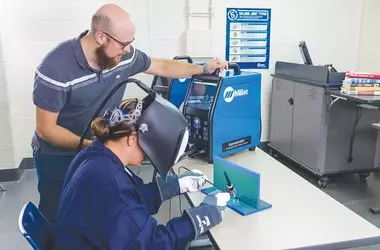
Welding Training — A Neutral Technical Overview of Processes, Principles, and Skill
Welding training refers to structured instructional programs designed to develop knowledge and practical competence in joining metals using heat, pressure, or both. This article explains the definition of welding training, its scientific and engineering foundations, core process mechanisms, and training structures. It also examines variability in outcomes, technical limitations, and safety considerations, followed by a question-and-answer section.
By Chloe Davis