Professional skills
Welding Training — A Neutral Technical Overview of Processes, Principles, and Skill

1. Defining the Objective
Welding training is a structured educational process focused on teaching methods of permanently joining metallic materials through controlled application of heat, pressure, or filler materials. It is widely used in manufacturing, construction, infrastructure development, and maintenance industries.
This article aims to address:
- What welding processes are commonly included in training systems
- How metallurgical and thermal principles govern welding behavior
- How skills are developed through technical practice
- What limitations and variability exist in training and application
The structure follows a sequential logic: definition, conceptual foundation, mechanism analysis, comprehensive discussion, synthesis, and Q&A.
2. Basic Concept Analysis
Welding is a fabrication process in which materials, typically metals or thermoplastics, are joined by causing coalescence through heat or pressure.
Common Welding Methods
- Shielded metal arc welding (SMAW)
- Gas metal arc welding (GMAW)
- Gas tungsten arc welding (GTAW)
- Flux-cored arc welding (FCAW)
- Resistance welding processes
Each method differs in energy source, shielding approach, and application suitability.
Core Materials and Inputs
- Base metals (steel, aluminum, alloys)
- Filler materials (welding rods or wires)
- Shielding gases (argon, carbon dioxide mixtures)
- Electrical energy sources
3. Core Mechanisms and In-Depth Explanation
Welding processes rely on thermal energy and metallurgical transformation.
Heat Generation and Metal Fusion
Most arc welding processes generate heat through an electric arc formed between an electrode and the workpiece. The arc temperature is sufficient to melt base metals and filler materials, creating a molten weld pool.
Solidification and Microstructure Formation
As the molten pool cools, solidification occurs, forming a weld joint. The cooling rate influences grain structure, which affects mechanical properties such as strength and toughness.
Metallurgical Transformations
Welding involves phase changes in metals. Depending on temperature and cooling conditions, changes in crystalline structure may occur, influencing hardness and ductility.
Shielding and Contamination Control
Shielding gases or flux materials prevent oxidation and contamination of the weld pool. Without protection, atmospheric gases can weaken weld integrity.
According to technical guidance from the American Welding Society (AWS), welding quality depends on controlled parameters such as heat input, travel speed, and material compatibility.
4. Comprehensive View and Objective Discussion
Welding training operates at the intersection of metallurgy, physics, and industrial engineering.
Skill Development Factors
- Manual dexterity and coordination
- Understanding of material properties
- Equipment handling proficiency
- Interpretation of welding symbols and specifications
Industrial Application Context
Welding is used in:
- Structural steel construction
- Automotive manufacturing
- Shipbuilding and aerospace fabrication
- Pipeline and infrastructure systems
Limitations and Challenges
- High sensitivity to operator skill level
- Defect formation risks such as cracks or porosity
- Material-specific constraints
- Environmental influences such as temperature and humidity
Quality Control Mechanisms
Weld inspection methods include:
- Visual inspection
- Ultrasonic testing
- Radiographic testing
- Destructive testing in controlled environments
These methods evaluate structural integrity and internal defects.
5. Summary and Outlook
Welding training provides structured knowledge and practical ability for metal joining processes based on thermal and metallurgical principles. It combines theoretical understanding with hands-on skill development.
Future trends in welding technology include automation, robotic welding systems, and advanced material compatibility research. These developments may alter training requirements and expand the role of digital monitoring systems.
6. Q&A Section
Q1: What is the main purpose of welding training?
It is designed to develop the ability to join metals using controlled thermal or pressure-based processes.
Q2: Why is shielding important in welding?
It prevents atmospheric contamination of molten metal, which can weaken weld quality.
Q3: What factors affect weld quality?
Heat input, material type, cooling rate, and operator skill influence outcomes.
Q4: Is welding fully automated?
Some processes are automated, but manual welding is still widely used.
Q5: Why is inspection necessary?
To ensure structural integrity and detect internal or surface defects.
Sources
https://www.aws.org/education
https://www.osha.gov/welding-cutting-brazing
https://www.cdc.gov/niosh/topics/welding/
https://www.sciencedirect.com/topics/engineering/welding-processes

Contemporary dance choreographer and instructor exploring movement as a form of emotional expression.
Exploration ArchivesOther Articles
 Apr 20, 2026
Electrical Technician Training — A Neutral Overview of Concepts, Systems
Electrical technician training refers to structured educational programs designed to develop knowledge and skills related to electrical systems, circuitry, installation, maintenance, and safety practices. This article provides a neutral explanation of its conceptual foundation, technical mechanisms, learning structure, and application contexts. It also examines system variability, limitations, and evolving technological influences, followed by a question-and-answer section.
 By Chloe Davis
 Apr 15, 2026
Woodworking Technician Training: Methods, Materials, and Technical Skill Development
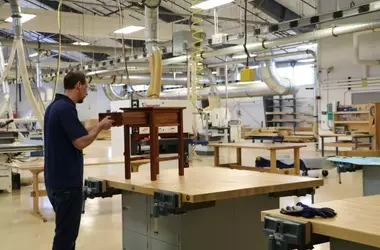
Woodworking technician training refers to structured educational programs focused on teaching the technical skills, material knowledge, and safety practices required for working with wood in construction, fabrication, and manufacturing contexts. This article defines woodworking technician training and explains its scope, fundamental principles, and operational techniques. It further examines material properties, tool systems, training progression, industrial applications, limitations, and broader vocational relevance, followed by a structured question-and-answer section.
 By Viktor Orlov
 Apr 15, 2026
Welding Technology Training: Principles, Processes, and Skill Development Framework
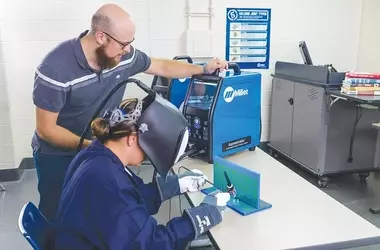
Welding technology training refers to structured instruction programs designed to teach the principles, techniques, and safety requirements of joining materials—primarily metals—through heat, pressure, or both. This article defines welding technology training and explains its scope, learning structure, and technical foundations. It further explores physical mechanisms of welding processes, training methodologies, industrial applications, limitations, and broader occupational context. The article concludes with a structured question-and-answer section.
By Chloe Davis