Medical Devices
How Digital Thermometers Work: A Technical Overview

A digital thermometer is an electronic device engineered to measure temperature by utilizing sensors that exhibit predictable changes in electrical properties in response to thermal energy. Unlike traditional analog thermometers, which rely on the physical expansion of liquids like mercury or alcohol, digital versions translate thermal data into numerical values displayed on a digital interface. This article examines the underlying scientific principles of digital thermometry, exploring the specific components that facilitate heat detection, the mathematical processes involved in signal conversion, and the objective standards of accuracy and application in modern environments.
The following sections will detail the physics of thermistors and infrared sensors, the role of microprocessors in data interpretation, and a comparative look at different digital temperature-sensing technologies.

1. Basic Conceptual Analysis: From Heat to Electricity
The fundamental objective of a digital thermometer is to convert thermal energy into a readable digital signal. To achieve this, the device must bridge the gap between thermodynamics and electronics.
Thermal Energy and Resistance
Temperature is a macroscopic measurement of the average kinetic energy of particles within a substance. In the context of digital thermometry, most devices utilize the principle that the electrical resistance of certain materials varies in direct proportion to their temperature.
Core Components
A standard contact digital thermometer consists of four primary parts:
- The Probe/Sensor: The component that comes into contact with the object being measured.
- The Thermistor: A temperature-sensitive resistor that serves as the primary transducer.
- The Analog-to-Digital Converter (ADC): A circuit that translates fluctuating electrical voltage into binary data.
- The Microprocessor and Display: The "brain" that calculates the final temperature and shows it on an LCD or LED screen.
2. Core Mechanisms and In-depth Explanation
Digital thermometers primarily employ two distinct methods of heat detection: conduction-based sensing (thermistors) and radiation-based sensing (infrared).
The Thermistor Mechanism (Contact Thermometers)
The word "thermistor" is a combination of "thermal" and "resistor." Most clinical and household digital thermometers use Negative Temperature Coefficient (NTC) thermistors.
- Variable Resistance: In an NTC thermistor, as the temperature increases, the electrical resistance decreases.
- Voltage Regulation: The thermometer’s internal battery sends a steady electrical current through the thermistor. As the resistance changes due to heat, the voltage across the circuit fluctuates.
- Signal Processing: The microprocessor measures this voltage change. By referring to a pre-programmed "resistance-temperature curve," the processor determines the exact temperature corresponding to that specific voltage.
The Infrared Mechanism (Non-Contact Thermometers)
Non-contact or "forehead" thermometers utilize the laws of blackbody radiation. Every object with a temperature above absolute zero emits infrared (IR) radiation.
- Lens Focus: The device uses a lens to focus the infrared light emitted by an object onto a detector called a thermopile.
- Thermal-to-Electric Conversion: The thermopile consists of several thermocouples connected in series. When IR radiation hits the thermopile, it absorbs the energy and generates a small electrical voltage.
- Ambient Compensation: Because the device itself has a temperature, it must subtract its own internal thermal signature from the reading to provide an accurate measurement of the external object.
3. Presenting the Full Picture: Accuracy, Calibration, and Use
Digital thermometers are governed by international quality standards to ensure consistency. According to the International Organization for Standardization (ISO), clinical thermometers must meet strict accuracy requirements, often within $\pm0.1°C$.
Comparison of Digital Thermometer Types
| Feature | Digital Probe (Contact) | Infrared (Non-contact) |
| Sensing Method | Thermal Conduction | Infrared Radiation |
| Common Use | Oral, Axillary, Rectal | Forehead, Tympanic (Ear) |
| Speed | 10–60 seconds | 1–3 seconds |
| Primary Advantage | High accuracy; direct contact | Hygiene; speed; convenience |
| Constraint | Requires cleaning; slower | Sensitive to environmental temp |
Factors Influencing Reliability
Despite their precision, digital readings can be affected by external variables. For contact thermometers, poor placement or insufficient contact time can lead to falsely low readings. For infrared thermometers, factors such as sweat on the forehead, distance from the target, or sudden changes in room temperature can impact the sensor's ability to accurately calculate the IR flux.
4. Summary and Future Outlook
Digital thermometry has largely replaced liquid-in-glass devices due to safety concerns regarding mercury and the need for faster, data-compatible results. The technology has evolved from simple numerical displays to integrated systems capable of recording longitudinal health data.
Emerging Technological Directions:
- Predictive Algorithms: Using machine learning to predict the final temperature of a contact probe within seconds, rather than waiting for full thermal equilibrium.
- Wearable Continuous Monitors: Small, adhesive patches that use low-power digital sensors to track temperature fluctuations over 24 hours.
- Smartphone Integration: Developing highly miniaturized IR sensors that can be embedded directly into mobile hardware.
- Calibration-Free Sensors: Research into new semiconductor materials that maintain their resistance-temperature curves for longer periods without drifting.
5. Q&A: Clarifying Common Technical Inquiries
Q: Why do digital thermometers beep?
A: The beep indicates that the rate of temperature change has slowed significantly (usually less than $0.1°C$ over several seconds). This suggests the sensor has reached "steady-state" or thermal equilibrium with the object being measured.
Q: Does the battery level affect the accuracy of the reading?
A: Most modern digital thermometers are designed with a "low voltage cutoff." Because the accuracy depends on a stable reference voltage, if the battery becomes too weak to provide that reference, the device will typically display an error message rather than provide an incorrect reading.
Q: How does a "tympanic" (ear) thermometer work differently?
A: While it is a digital thermometer, it specifically measures the infrared heat radiating from the eardrum (tympanic membrane). This is considered a highly accurate reflection of core body temperature because the eardrum shares the same blood supply as the hypothalamus, the body's temperature control center.
Q: Can a forehead thermometer be used to measure the temperature of liquids?
A: Many infrared thermometers have a "mode" switch. Human skin has a specific emissivity (the efficiency with which it emits IR energy). Liquids or inanimate objects have different emissivity values. Measuring a liquid in "body mode" may result in an inaccurate reading unless the device is adjusted for that specific material.
This article provides technical and scientific information regarding digital thermometry. For specific clinical guidelines or equipment maintenance protocols, individuals should refer to the National Institute of Standards and Technology (NIST) or the World Health Organization (WHO).

Regulatory affairs specialist for FDA and CE-marked devices.
Exploration ArchivesOther Articles
 Dec 22, 2025
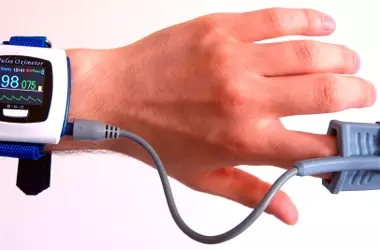
Pulse Oximeters: What They Measure and Why It Matters
A pulse oximeter is a non-invasive medical device designed to measure the oxygen saturation level ($SpO_2$) of a person's arterial blood and their pulse rate. By utilizing light-based technology to "see" through the skin, this device provides a real-time assessment of how effectively the respiratory and circulatory systems are delivering oxygen to the furthest extremities of the body. This article aims to clarify the scientific principles behind oximetry, explain the biological significance of oxygen saturation, discuss the technical limitations of these devices, and explore their role in modern healthcare monitoring.
 By Daniel Brooks
 Dec 22, 2025
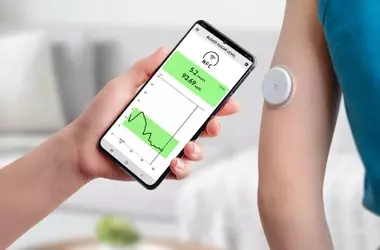
What Is a Continuous Glucose Monitor (CGM)?
A Continuous Glucose Monitor (CGM) is a medical technology designed to provide real-time, automated tracking of glucose levels throughout the day and night. Unlike traditional blood glucose meters that require discrete capillary blood samples via finger-sticks, a CGM system utilizes a semi-invasive sensor to measure glucose concentrations in the interstitial fluid—the fluid surrounding the body's cells. This article provides an objective analysis of CGM technology, exploring its fundamental components, the biochemical mechanisms of its sensors, its clinical utility compared to traditional monitoring, and the future trajectory of metabolic sensing.
 By Dr. Hannah Fischer
 Dec 22, 2025
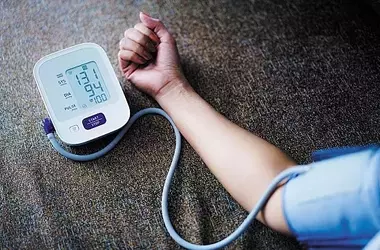
What Is a Blood Pressure Monitor and Who Uses It?
A blood pressure monitor, technically referred to as a sphygmomanometer, is a medical instrument used to measure the force exerted by circulating blood against the internal walls of the arteries. This measurement is a cornerstone of cardiovascular health assessment, providing two critical values: systolic and diastolic pressure. This article serves as a comprehensive guide to understanding the nature of these devices, the scientific principles that allow them to function, the diverse populations that rely on them for health management, and the future of non-invasive vascular monitoring.
 By Dr. Ibrahim Khalil