Medical Devices
Pulse Oximeters: What They Measure and Why It Matters

A pulse oximeter is a non-invasive medical device designed to measure the oxygen saturation level ($SpO_2$) of a person's arterial blood and their pulse rate. By utilizing light-based technology to "see" through the skin, this device provides a real-time assessment of how effectively the respiratory and circulatory systems are delivering oxygen to the furthest extremities of the body. This article aims to clarify the scientific principles behind oximetry, explain the biological significance of oxygen saturation, discuss the technical limitations of these devices, and explore their role in modern healthcare monitoring.
The following analysis will move from the basic physics of light absorption to the physiological requirements of human cells, providing a neutral overview of why this metric is a vital sign in clinical and home settings.

1. Basic Conceptual Analysis: Oxygen Saturation and Pulse Rate
To understand a pulse oximeter, one must define the two primary metrics it captures:
- Oxygen Saturation ($SpO_2$): This represents the percentage of hemoglobin—the protein in red blood cells that carries oxygen—that is currently bound to oxygen. In a healthy individual, most hemoglobin molecules should be saturated.
- Pulse Rate: The number of times the heart beats per minute (BPM), as detected by the rhythmic pressure changes in the peripheral capillaries.
Normal Physiological Ranges
According to the Mayo Clinic, a normal $SpO_2$ reading typically ranges from $95\%$ to $100\%$. Values below $90\%$ are generally considered low (hypoxemia) and may indicate that the lungs or heart are not functioning optimally.
2. Core Mechanisms and In-depth Explanation
The functionality of a pulse oximeter relies on a principle of physics called spectrophotometry, specifically the way different molecules absorb different wavelengths of light.
Red and Infrared Light Absorption
The device contains two small Light Emitting Diodes (LEDs) and a photodetector.
- Oxygenated Hemoglobin ($HbO_2$): Absorbs more infrared light and allows more red light to pass through.
- Deoxygenated Hemoglobin ($Hb$): Absorbs more red light and allows more infrared light to pass through.
By emitting both red light (approximately $660$ nm) and infrared light (approximately $940$ nm) through a translucent part of the body—usually a finger, toe, or earlobe—the device calculates the ratio of the two types of light received by the photodetector. An internal algorithm then translates this ratio into the $SpO_2$ percentage.
Photoplethysmography (PPG)
The oximeter also uses PPG to detect the pulse. As the heart beats, a "pulse" of arterial blood enters the finger, slightly increasing the volume of blood in the tissue. This volume change causes a momentary increase in light absorption. The device identifies these cyclical peaks to determine the pulse rate.
3. Presenting the Full Picture: Why It Matters and Who Uses It
The pulse oximeter has become a ubiquitous tool because it provides a rapid, painless alternative to an arterial blood gas (ABG) test, which requires a needle draw from an artery.
Clinical and Home Applications
- Anesthesia and Surgery: Monitoring patients under sedation to ensure oxygen levels remain stable.
- Chronic Condition Management: Used by individuals with COPD, asthma, or heart failure to track their baseline respiratory health.
- High-Altitude Activity: Mountain climbers and pilots use oximeters to monitor for hypoxia caused by thin air.
- Acute Illness Monitoring: During respiratory infections, oximeters can help detect "silent hypoxia," where oxygen levels drop without a significant increase in shortness of breath.
Technical and Environmental Limitations
The U.S. Food and Drug Administration (FDA) has issued safety communications noting that several factors can interfere with the accuracy of a pulse oximeter.
Factors Affecting Readings:
- Skin Pigmentation: Recent studies have indicated that deeper skin tones may occasionally result in inaccurate readings (overestimating $SpO_2$) because melanin can interfere with light absorption.
- Poor Circulation: If the hands are cold or the patient has low blood pressure, there may not be enough blood flow in the finger for the sensor to detect a signal.
- Movement: Physical tremors or movement can create "noise" that confuses the light sensors.
- External Factors: Nail polish (especially dark colors) and bright ambient light hitting the sensor can skew the results.
4. Summary and Future Outlook
Pulse oximetry has transitioned from a specialized hospital monitor to a common household device. While it is highly effective for spotting trends and sudden drops in oxygen, it is an indirect measurement that does not replace professional clinical assessment.
Future Directions in Research:
- Multi-wavelength Sensors: Developing sensors that use more than two wavelengths of light to improve accuracy across different skin tones and reduce interference.
- Wearable Integration: Incorporating oximetry into smartwatches and rings for continuous, passive health surveillance.
- Advanced Signal Processing: Using artificial intelligence to filter out movement artifacts, allowing for accurate readings during exercise.
- Integration with Respiratory Rate: Research into combining $SpO_2$ data with acoustic sensors to provide a more complete picture of respiratory effort.
The World Health Organization (WHO) emphasizes that the availability of pulse oximeters in low-resource settings is a critical factor in reducing mortality from respiratory diseases .
5. Q&A: Clarifying Common Technical Inquiries
Q: Does a pulse oximeter measure the amount of Carbon Dioxide ($CO_2$) in the blood?
A: No. A standard pulse oximeter only measures oxygen saturation and pulse. It cannot detect $CO_2$ levels or blood pH. A separate test, such as capnography or an arterial blood gas test, is required for that information.
Q: Can a pulse oximeter tell if I have anemia?
A: Not effectively. Anemia is a deficiency of hemoglobin. Because an oximeter measures the percentage of available hemoglobin that is saturated, a person with very low hemoglobin (anemia) could still show a "normal" $98\%$ reading, even though their total oxygen-carrying capacity is dangerously low.
Q: What is the significance of the "Perfusion Index" (PI) found on some monitors?
A: The PI is a numerical value that represents the strength of the pulse signal at the sensor site. A higher PI indicates better blood flow to the finger, which generally means the $SpO_2$ reading is more reliable.
Q: Why do doctors sometimes prefer to put the sensor on the earlobe?
A: The earlobe often has better circulation than the fingertips in patients with certain vascular conditions or those experiencing shock. It is also less affected by movement or nail polish.
This overview is provided for educational and informational purposes, reflecting the current scientific consensus on oximetry technology. For specific clinical data or public health guidelines, individuals should consult the National Institutes of Health (NIH) or the World Health Organization (WHO).

Medical journalist covering rare diseases and patient stories.
Exploration ArchivesOther Articles
 Dec 22, 2025
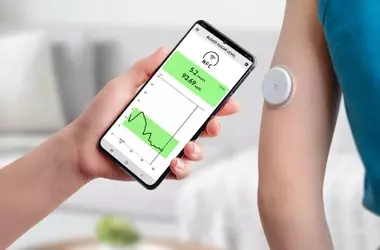
What Is a Continuous Glucose Monitor (CGM)?
A Continuous Glucose Monitor (CGM) is a medical technology designed to provide real-time, automated tracking of glucose levels throughout the day and night. Unlike traditional blood glucose meters that require discrete capillary blood samples via finger-sticks, a CGM system utilizes a semi-invasive sensor to measure glucose concentrations in the interstitial fluid—the fluid surrounding the body's cells. This article provides an objective analysis of CGM technology, exploring its fundamental components, the biochemical mechanisms of its sensors, its clinical utility compared to traditional monitoring, and the future trajectory of metabolic sensing.
 By Dr. Hannah Fischer
 Dec 22, 2025
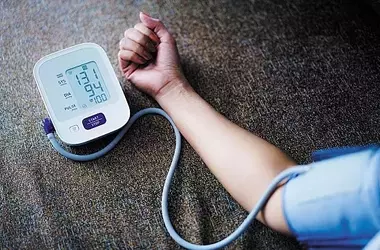
What Is a Blood Pressure Monitor and Who Uses It?
A blood pressure monitor, technically referred to as a sphygmomanometer, is a medical instrument used to measure the force exerted by circulating blood against the internal walls of the arteries. This measurement is a cornerstone of cardiovascular health assessment, providing two critical values: systolic and diastolic pressure. This article serves as a comprehensive guide to understanding the nature of these devices, the scientific principles that allow them to function, the diverse populations that rely on them for health management, and the future of non-invasive vascular monitoring.
 By Dr. Ibrahim Khalil
 Dec 19, 2025
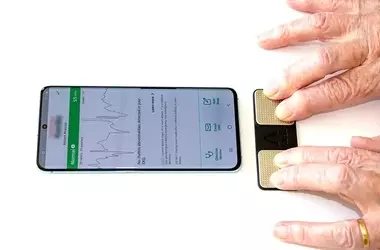
Home Electrocardiogram Devices: A Guide to Understanding Personal Heart Monitoring Technology
In an era where health monitoring has become increasingly integrated into daily life, personal devices for heart health assessment are gaining attention among the general population. As technology advances, tools once confined to clinical settings are now accessible for home use, offering individuals new ways to monitor their cardiovascular health. This article provides a neutral, factual overview of home electrocardiogram (ECG) devices, exploring their purpose, mechanisms, and role in personal health monitoring. The discussion will follow a structured approach: first clarifying fundamental concepts, then examining the underlying mechanisms of these devices, followed by an objective assessment of their current applications, a summary of the technology's role in health monitoring, and finally, addressing common questions about this form of personal health technology.
 By Dr. Aisha Rahman