Medical Devices
Electrocardiograph (ECG Machine): Understanding Its Principles and Clinical Applications

Objective of the Article
The primary goal of this article is to explain the electrocardiograph machine in a neutral, scientific manner. Specifically, it seeks to:
- Define what an ECG machine is and its clinical significance.
- Explain the foundational principles underlying its operation.
- Describe the core mechanisms by which it records and interprets cardiac electrical activity.
- Present an objective discussion on its applications, limitations, and technological evolution.
- Provide clarity for both healthcare professionals and the general audience regarding its role in diagnostic cardiology.
Basic Concepts of Electrocardiography
An electrocardiograph machine is a device designed to measure and record the electrical impulses generated by the heart during its rhythmical contractions. These impulses result from ionic exchanges across cardiac cell membranes, leading to depolarization and repolarization of the atria and ventricles.
The resulting waveform is displayed on graph paper or a digital screen, representing the temporal sequence of electrical events in the heart. The main components of an ECG tracing include the P wave (atrial depolarization), the QRS complex (ventricular depolarization), and the T wave (ventricular repolarization). These waves allow clinicians to assess heart rate, rhythm, conduction abnormalities, and potential myocardial damage.
ECG machines are widely used in various clinical settings, including hospitals, clinics, emergency departments, and outpatient cardiology units. They serve as an essential tool for monitoring cardiac health and aiding in diagnosis.
Core Mechanisms and Operational Principles
The electrocardiograph machine operates through several key mechanisms:
- Electrode Placement and Signal Acquisition:ECG electrodes are attached to the patient’s skin at specific anatomical locations. Standard limb leads (I, II, III) and precordial leads (V1–V6) capture the potential differences between points on the body. These electrodes detect electrical currents produced by the heart’s depolarization and repolarization processes.
- Signal Amplification and Filtering:The electrical signals from the heart are very weak, typically in the range of 0.5–5 millivolts. The ECG machine uses amplifiers to enhance the signal and filters to remove extraneous noise, such as interference from skeletal muscles or external electrical devices.
- Data Conversion and Display:Modern ECG machines use analog-to-digital conversion to transform the amplified signals into digital waveforms. These waveforms are displayed on screens or printed on graph paper for clinical interpretation.
- Interpretation Algorithms:Advanced machines incorporate software algorithms to detect arrhythmias, ST-segment deviations, and other clinically relevant patterns. These algorithms assist clinicians but do not replace professional judgment.
- Safety Features:ECG machines are designed with patient safety in mind, incorporating electrical isolation, low-current design, and standardized calibration to minimize risk of electrical injury.
Comprehensive Review and Objective Discussion
Electrocardiograph machines offer several advantages and limitations that are important for a balanced understanding:
Advantages:
- Non-invasive and relatively quick to perform.
- Provides immediate visual representation of heart activity.
- Detects a wide range of cardiac abnormalities, including arrhythmias, myocardial ischemia, and conduction delays.
- Portable versions allow bedside monitoring and emergency use.
Limitations:
- Cannot provide structural or anatomical information about the heart.
- Interpretation can be affected by artifacts, improper electrode placement, or patient movement.
- Single ECG readings may not detect transient arrhythmias; continuous monitoring may be necessary.
Technological Evolution:
- Traditional machines relied on analog recording on thermal or graph paper.
- Digital ECG machines provide higher accuracy, integrated storage, and connectivity with electronic health records.
- Emerging technologies include wearable ECG monitors and smartphone-connected devices, expanding the accessibility of cardiac monitoring outside clinical settings.
Summary and Outlook
Electrocardiography remains a cornerstone of cardiovascular diagnostics. While the technology is well-established, ongoing advancements focus on miniaturization, remote monitoring, and improved algorithmic interpretation. The combination of traditional ECG knowledge and emerging digital capabilities is likely to enhance cardiac care by improving detection, monitoring, and data management.
Frequently Asked Questions (FAQ)
Q1: Can an ECG machine detect all heart diseases?
A1: No, ECG primarily assesses electrical activity and may not reveal structural abnormalities or early-stage coronary artery disease. Additional imaging or testing may be required.
Q2: How long does an ECG test take?
A2: A standard ECG test typically takes 5–10 minutes, including electrode placement and recording.
Q3: Are there risks associated with ECG?
A3: ECG is considered safe; it is non-invasive and uses very low electrical currents that are unlikely to cause harm.
Q4: What factors can affect the accuracy of ECG readings?
A4: Movement artifacts, improper electrode placement, electrical interference, and certain medical conditions (e.g., electrolyte imbalances) can influence results.
Q5: How often should ECGs be performed?
A5: Frequency depends on clinical context. Routine annual ECGs are not universally required; they are typically performed when symptoms, risk factors, or clinical assessments indicate the need.
References / Data Sources
https://www.mayoclinic.org/tests-procedures/ekg/about/pac-2038498
https://www.ncbi.nlm.nih.gov/books/NBK459281/
https://www.sciencedirect.com/topics/medicine-and-dentistry/electrocardiograph
https://www.who.int/news-room/fact-sheets/detail/cardiovascular-diseases-(cvds)

Other Articles
 Apr 07, 2026
Mechanical Ventilators: Principles, Functions, and Clinical Contexts
A mechanical ventilator is a medical device designed to assist or replace spontaneous breathing by delivering controlled airflow into and out of the lungs. This article presents a structured and neutral overview of mechanical ventilation, including its definition, underlying physiological principles, operational mechanisms, clinical applications, limitations, and future developments. It also addresses common questions regarding its use and interpretation in healthcare settings.
 By Dr. Felipe Torres
 Apr 07, 2026
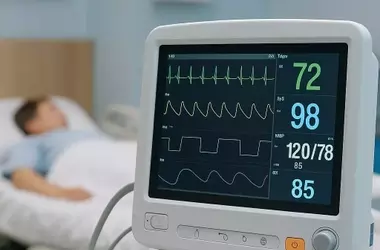
Understanding Patient Monitors: Principles, Functions, and Clinical Contexts
A patient monitor is a medical device designed to continuously measure and display vital physiological parameters such as heart rate, blood pressure, oxygen saturation, and respiratory rate. This article provides a structured overview of patient monitors, including their purpose, underlying principles, operational mechanisms, clinical roles, limitations, and future directions. It also addresses common questions regarding their use and interpretation in healthcare settings.
 By Grace Nwoye, MPH
 Apr 03, 2026
Understanding Oxygen Concentrators: Mechanisms, Uses, and Considerations
An oxygen concentrator is a medical device designed to deliver supplemental oxygen by extracting it from ambient air. This article defines what oxygen concentrators are and outlines their purpose, working principles, types, and broader considerations. It further explores how these devices function at a technical level, where they are typically used, and what limitations and debates surround their use. The structure follows a systematic path: defining the objective, explaining foundational concepts, examining core mechanisms, presenting a balanced overview, and concluding with key reflections and a question-and-answer section.
 By Dr. Peter Van Dijk