Medical Education
Continuing Medical Education for Physicians: A Scientific Overview of Structure

1. Objective Definition
The objective of this article is to explain what CME entails, the professional competencies it addresses, and the processes through which physicians acquire and apply updated medical knowledge. The article also outlines the structural frameworks, delivery methods, and regulatory considerations associated with CME. By providing a systematic overview, the article aims to present a neutral understanding of CME as an educational process rather than a prescriptive or outcome-driven program.
2. Basic Concept Explanation
Continuing medical education refers to organized educational activities that serve to maintain, update, or enhance the knowledge, skills, and professional performance of physicians. CME is distinct from initial medical education in that it occurs after formal medical qualification and is ongoing throughout a physician’s professional life.
Key elements of CME include:
- Knowledge Updating: Instruction on recent scientific research, clinical guidelines, and emerging medical technologies.
- Skill Development: Practice-based training for clinical procedures, diagnostic methods, and patient management techniques.
- Professional Competency: Education on ethics, communication, patient safety, and healthcare regulations.
- Self-Assessment and Reflection: Structured evaluation of personal practice and identification of learning needs.
CME can be delivered through diverse formats, including in-person workshops, online modules, conferences, seminars, simulation-based training, and journal-based learning. Participation may be mandated or voluntary depending on jurisdictional regulations and professional licensure requirements.
3. Core Mechanisms and In-Depth Explanation
The educational mechanisms underlying CME integrate cognitive, experiential, and reflective learning processes:
- Cognitive Learning: Physicians acquire updated theoretical knowledge through lectures, readings, case discussions, and multimedia resources. This supports evidence-based practice and clinical decision-making.
- Experiential Learning: Simulation exercises, clinical skills laboratories, and supervised procedural practice provide opportunities for skill application in controlled settings, allowing physicians to translate knowledge into practice safely.
- Feedback and Evaluation: Peer review, instructor feedback, and outcome assessments provide iterative guidance for skill refinement and knowledge reinforcement.
- Reflective Practice: Physicians analyze prior clinical decisions, identify gaps in knowledge, and plan learning objectives. Structured reflection enhances metacognitive awareness and informs subsequent professional development.
- Integration with Clinical Practice: CME often emphasizes the direct applicability of learning to patient care, supporting the translation of evidence into routine practice and fostering continuous improvement in healthcare delivery.
These mechanisms function collectively to maintain and enhance both technical competencies and professional judgment.
4. Comprehensive and Objective Discussion
CME programs are applied in a wide range of healthcare contexts, from hospital-based continuing education departments to professional societies and academic medical centers. The objectives are to ensure physicians remain current with evolving medical science, maintain competence, and adhere to professional and ethical standards.
Evidence from medical education research indicates that structured CME can improve knowledge retention, procedural skills, and guideline adherence, although measurable impacts on patient outcomes vary depending on program design, participant engagement, and clinical context.
Limitations of CME include variability in educational quality, access differences across geographic regions, and the challenge of aligning learning objectives with individual physician needs. CME functions as a professional development tool rather than a guarantee of clinical performance improvement, and its effectiveness depends on factors such as instructional design, feedback mechanisms, and integration with clinical practice.
CME is also regulated in many jurisdictions to support licensure and certification requirements. Accreditation standards, such as those established by the Accreditation Council for Continuing Medical Education (ACCME), provide frameworks for content quality, learning objectives, and assessment methods. These standards guide program development while maintaining educational neutrality.
5. Summary and Outlook
In summary, continuing medical education for physicians is a structured, ongoing educational process designed to maintain, update, and enhance medical knowledge, skills, and professional competencies. Core mechanisms include cognitive learning, experiential practice, feedback, reflective analysis, and integration with clinical practice. CME spans multiple delivery formats and is often regulated by professional and accrediting bodies.
Future directions in CME include increased use of digital platforms, adaptive learning modules, simulation-based training, and integration of data-driven feedback to personalize educational content. Research continues on optimizing learning effectiveness, evaluating educational outcomes, and aligning CME activities with evolving healthcare needs, with a focus on knowledge enhancement and professional development rather than prescriptive outcomes.
6. Question and Answer Section
Q1: Does CME ensure improved patient outcomes?
No. CME provides knowledge and skill development but does not guarantee clinical performance improvements.
Q2: Are all CME programs identical?
No. Programs vary in content, delivery methods, duration, and focus areas depending on regulatory standards and institutional design.
Q3: Why is reflective practice included in CME?
Reflection allows physicians to assess prior decisions, identify learning needs, and plan future professional development.
Q4: Is CME mandatory for all physicians?
It depends on jurisdictional regulations and professional licensure requirements; some regions require CME for license maintenance, while others allow voluntary participation.
https://www.who.int/news-room/fact-sheets/detail/continuing-medical-education
https://www.ncbi.nlm.nih.gov/pmc/articles/PMC4996122/
https://www.jamaevidence.com/article/doi/10.1001/jama.2017.13787
https://www.medicalnewstoday.com/articles/continuing-medical-education

Educator dedicated to preserving and teaching indigenous Australian languages and oral traditions.
Exploration ArchivesOther Articles
 Feb 03, 2026
Nursing Courses: A Neutral, Scientific Overview
This article provides a neutral and educational overview of nursing courses, focusing on their definition, foundational concepts, educational mechanisms, and role within healthcare education. It explains what nursing courses entail, how professional nursing competencies are developed, and the broader context of nursing education. The discussion follows a structured sequence: clear objective, basic concept analysis, core mechanisms with in-depth explanation, comprehensive discussion, summary and outlook, and a question-and-answer section. The article serves exclusively to transmit knowledge and clarify concepts, without recommendation or evaluative claims.
 By Thomas Red Hawk
 Jan 29, 2026
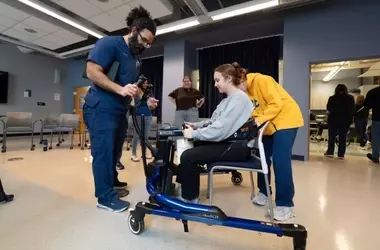
Rehabilitation Technologist Curriculum: A Systematic and Academic Overview
This article provides a neutral, systematic overview of the rehabilitation technologist curriculum. It defines the course as a professional framework for mastering kinesiology, neuroplasticity, and therapeutic modalities. The text analyzes the mechanical foundations of biomechanical alignment, the Larmor-like precision of gait analysis, and the physiological mechanisms of tissue repair. Referencing data from the BLS, WHO, and CAPTE, the article outlines the regulatory landscape of accreditation and the rising global demand for rehabilitation services. It concludes with an outlook on robotic-assisted therapy and addresses factual questions regarding professional roles and physical agents, providing a scientific framework for understanding rehabilitation professional education.
 By Talia Salt
 Jan 29, 2026
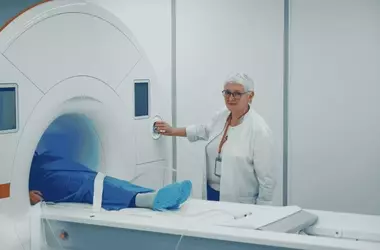
Magnetic Resonance Imaging (MRI) Technologist Curriculum: A Systematic and Academic Overview
This article provides a neutral, systematic overview of the MRI technologist curriculum. It defines the course as a professional framework for mastering Nuclear Magnetic Resonance (NMR) and scanner operations. The text analyzes the mechanical foundations of the Larmor equation, gradient spatial encoding, and T1/T2 image weighting. Referencing data from the BLS, ARRT, and ACR, the article outlines the regulatory landscape of accreditation (JRCERT) and the critical importance of MR safety protocols. It concludes with an outlook on AI-enhanced imaging and addresses factual questions regarding superconducting magnets and clinical pathways, providing a scientific framework for understanding MRI professional education.
 By Erik Johansson