Medical Education
Rehabilitation Technologist Curriculum: A Systematic and Academic Overview

A rehabilitation technologist curriculum is a structured professional education program designed to train individuals in the application of clinical skills and assistive technologies to restore, maintain, or improve the functional capabilities of individuals with physical, sensory, or cognitive impairments. These programs provide the academic and practical foundation required for professionals to work alongside physiotherapists and occupational therapists in clinical settings. This article provides a neutral, evidence-based examination of the rehabilitation educational framework, clarifying the foundational sciences of human movement, the core mechanical and physiological mechanisms of therapeutic intervention, and the objective landscape of global regulatory and accreditation standards. The following sections will detail the structural phases of the curriculum, analyze the integration of kinesiology and medical technology, present the regulatory environment for licensure, and conclude with a factual question-and-answer session regarding industry standards.
Foundation: Basic Concepts of Rehabilitation Education
The primary objective of a rehabilitation technologist course is to bridge the gap between medical diagnosis and functional recovery. Unlike acute care medicine, which focuses on the "cure," rehabilitation education focuses on "function" and "participation."
According to the World Health Organization (WHO), the curriculum is generally aligned with the International Classification of Functioning, Disability, and Health (ICF) model. It is organized into three functional pillars:
- Biomedical Sciences: Foundation in human anatomy, physiology, and pathology to understand the biological basis of impairments.
- Kinesiology and Biomechanics: The study of human movement and the mechanical laws relating to the movement or structure of living organisms.
- Therapeutic Modalities: The study of physical agents (heat, cold, electricity, sound) and exercise protocols used to stimulate tissue repair and functional adaptation.
In many jurisdictions, the educational pathway requires a diploma or a Bachelor’s degree in Rehabilitation Science, involving a combination of classroom theory and supervised clinical practicums.
Core Mechanisms and In-depth Analysis
The functionality of a rehabilitation curriculum relies on the rigorous instruction of Neuroplasticity and Biomechanical Alignment.
1. The Mechanism of Neuroplasticity
The core of the curriculum involves understanding how the nervous system reorganizes itself in response to injury or learning.
- Mechanism: Students learn about synaptic pruning and axonal sprouting. In the context of rehabilitation, repetitive, task-specific training is taught as a mechanical stimulus to encourage the brain to form new neural connections.
- Motor Learning: The curriculum explains the stages of motor acquisition—from the cognitive phase to the autonomous phase—and how feedback mechanisms influence the permanence of these skills.
2. Biomechanics and Pathomechanics
A significant mechanical component of the training involves analyzing the forces acting on the human body.
- Mechanism: Students study the "lever systems" of the human musculoskeletal system. Understanding how the insertion point of a muscle affects the mechanical advantage is critical for designing safe resistance exercises.
- Gait Analysis: Instruction focuses on the phases of the human gait cycle (stance and swing phases). Technologists learn to identify mechanical deviations, such as "Trendelenburg gait," which indicates specific muscular weaknesses.
3. Assistive Technology and Orthotics
Instruction covers the selection and fitting of mechanical aid.
- Mechanism: The curriculum explores the physics of pressure distribution in orthotic design. By increasing the surface area of a brace or splint, the technologist mechanically reduces the pressure ($P = F/A$) on the skin, preventing tissue breakdown.
Presenting the Full Landscape and Objective Discussion
The landscape of rehabilitation education is defined by standardized clinical protocols and the statistical reality of an aging global population.
Regulatory Standards and Accreditation
In the United States, programs for physical therapist assistants (often performing technologist roles) are accredited by the Commission on Accreditation in Physical Therapy Education (CAPTE).
- Clinical Hour Requirement: Accreditation standards typically require a set number of clinical education hours (often exceeding 500-600 hours) where students must demonstrate competency in direct patient intervention under supervision.
- Certification: Graduates in various regions must pass national examinations, such as those administered by the Federation of State Boards of Physical Therapy (FSBPT), to ensure a minimum standard of public safety.
Workforce Data and Global Demand
According to the U.S. Bureau of Labor Statistics (BLS), employment in rehabilitation-related support roles is projected to grow significantly—approximately 19% for physical therapist assistants and aides from 2022 to 2032, much faster than the average for all occupations.
- Global Context: The WHO "Rehabilitation 2030" initiative highlights that globally, 1 in 3 people currently live with a health condition that would benefit from rehabilitation, emphasizing the objective demand for trained technologists in low- and middle-income countries.
Objective Constraints
A neutral evaluation of the curriculum acknowledges that rehabilitation is a long-term process with variable outcomes. Factors such as patient adherence, socioeconomic status, and "biological ceiling" (the limit of physiological recovery) represent objective constraints that the curriculum addresses through the study of psychology and sociology in health.
Summary and Future Outlook
Rehabilitation education is currently transitioning toward Digital Health and Robotic-Assisted Therapy. The future outlook involves the use of exoskeletons and Virtual Reality (VR) to provide high-intensity, task-oriented training that traditional manual therapy cannot achieve alone.
Furthermore, there is a shift toward "Telerehabilitation" in standard curricula. As remote monitoring technology advances, technologists require training in data analysis to interpret movement patterns captured by wearable sensors, allowing for the mechanical adjustment of home exercise programs from a distance.
Q&A: Factual Industry Inquiries
Q: Is a rehabilitation technologist the same as a physical therapist?
A: No. While they work in the same field, a technologist or assistant typically focuses on the implementation of the treatment plan and the mechanical application of exercises, whereas the therapist is responsible for the initial diagnosis, evaluation, and complex clinical decision-making.
Q: What are "Physical Agents" in the curriculum?
A: These are energy forms used for treatment. Examples include Ultrasound (acoustic energy), TENS (electrical energy), and Diathermy (electromagnetic energy). The curriculum teaches the specific frequencies and intensities required to achieve physiological effects like vasodilation or pain gate modulation.
Q: How are "ADLs" used in rehabilitation training?
A: Activities of Daily Living (ADLs) are basic tasks such as dressing, eating, and bathing. The curriculum focuses on "Adaptive Equipment" that allows patients with mechanical limitations to perform these tasks independently, such as long-handled reachers or weighted utensils.
Data Sources
- https://www.who.int/news-room/fact-sheets/detail/rehabilitation
- https://www.bls.gov/ooh/healthcare/physical-therapist-assistants-and-aides.htm
- https://www.capteonline.org/about-capte/accreditation-process/accreditation-handbook
- https://www.fsbpt.org/Secondary-Pages/Exam-Candidates/National-Physical-Therapy-Examination-NPTE
- https://www.who.int/initiatives/rehabilitation-2030
- https://www.ncbi.nlm.nih.gov/pmc/articles/PMC3314414/

Educator dedicated to preserving and teaching indigenous Australian languages and oral traditions.
Exploration ArchivesOther Articles
 Jan 29, 2026
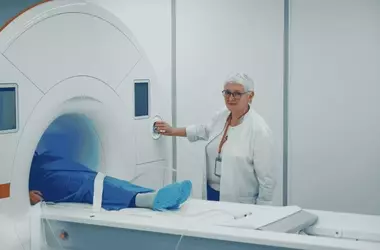
Magnetic Resonance Imaging (MRI) Technologist Curriculum: A Systematic and Academic Overview
This article provides a neutral, systematic overview of the MRI technologist curriculum. It defines the course as a professional framework for mastering Nuclear Magnetic Resonance (NMR) and scanner operations. The text analyzes the mechanical foundations of the Larmor equation, gradient spatial encoding, and T1/T2 image weighting. Referencing data from the BLS, ARRT, and ACR, the article outlines the regulatory landscape of accreditation (JRCERT) and the critical importance of MR safety protocols. It concludes with an outlook on AI-enhanced imaging and addresses factual questions regarding superconducting magnets and clinical pathways, providing a scientific framework for understanding MRI professional education.
 By Erik Johansson
 Jan 28, 2026
Online Registered Nurse (RN) Curriculum: A Systematic and Academic Overview
This article provides a neutral, systematic overview of online Registered Nurse (RN) courses. It defines these programs as hybrid educational pathways that combine digital theoretical instruction with mandatory in-person clinical rotations. The text explores the structural differences between ADN and BSN degrees and the mechanical use of virtual simulations. Referencing data from the BLS, HRSA, and AACN, the article outlines the regulatory necessity of accreditation (CCNE/ACEN) and the requirement of passing the NCLEX-RN for professional practice. It concludes with an outlook on augmented reality in nursing education and addresses factual questions regarding clinical placements and licensure validity.
 By Natalia Petrova
 Jan 28, 2026
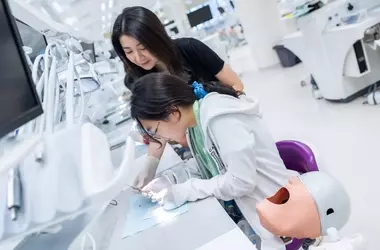
Dental Education: A Systematic and Academic Overview
This article provides a neutral, systematic overview of dental education. It defines the dental course as a professional framework comprising pre-clinical and clinical phases leading to a DDS or DMD degree. The text analyzes the integration of biomaterials science, oral pathology, and psychomotor training. Referencing data from CODA, the BLS, and the WHO, the article outlines the regulatory landscape of licensure and global disparities in dental training. It concludes with an outlook on digital dentistry and regenerative science, providing a factual framework for understanding the academic path toward becoming a dental professional.
 By Chloe Davis