Medical Education
Nursing Courses: A Neutral, Scientific Overview

Clear Objective: Defining the Core Concept
Nursing courses are structured educational programs within the field of healthcare education designed to develop knowledge, skills, and professional behaviors necessary for the practice of nursing. These courses encompass theoretical study, clinical practice, and ethical training, focusing on patient care, health promotion, and healthcare system understanding. This article examines what nursing courses involve, the foundational principles guiding their design, the mechanisms for skill acquisition, and their integration into broader healthcare education frameworks. The discussion proceeds in the following order: defining objectives, analyzing foundational concepts, examining core mechanisms, presenting a comprehensive and objective discussion, summarizing key points with an outlook, and concluding with a question-and-answer section.
Basic Concept Analysis
Nursing is a healthcare discipline concerned with the promotion, maintenance, and restoration of health across diverse populations. Nursing courses typically cover a range of topics, including anatomy, physiology, pharmacology, medical-surgical nursing, mental health nursing, community health, and professional ethics. These courses provide both foundational knowledge and practical skills required for safe and effective patient care.
Nursing education is guided by competency-based frameworks. Competencies commonly include patient assessment, clinical decision-making, communication, teamwork, and professional behavior. These competencies are essential for preparing learners to function in diverse clinical environments, from hospitals and community health centers to public health settings.
Nursing courses also incorporate principles from educational psychology and adults learning theory, emphasizing experiential learning, reflective practice, and the integration of theory and practice. They aim to cultivate not only technical skills but also critical thinking, ethical reasoning, and professional judgment.
Core Mechanism and In-Depth Explanation
The development of nursing competencies in educational programs relies on multiple mechanisms. One primary mechanism is clinical practicum, in which learners engage in supervised patient care. This experiential learning allows students to apply theoretical knowledge to real-world situations, practice clinical procedures, and develop patient interaction skills under guidance.
Another mechanism is simulation-based education. Simulation allows learners to practice clinical scenarios in a controlled environment, reinforcing technical skills, critical thinking, and decision-making without risk to actual patients. High-fidelity mannequins, virtual simulations, and standardized patient exercises are commonly used in nursing training programs.
Case-based learning and problem-based learning are also central mechanisms. These approaches present learners with clinical cases requiring analysis, prioritization, and application of knowledge from multiple domains. They encourage reflective thinking, integrative reasoning, and teamwork skills, supporting both individual and group learning objectives.
Assessment mechanisms ensure competency acquisition and include written examinations, practical skills assessments, objective structured clinical examinations (OSCEs), and reflective portfolio evaluations. Assessment aligns with predefined learning outcomes, providing measurable indicators of knowledge, skills, and professional behavior.
Presenting the Full Picture and Objective Discussion
Nursing courses operate within a regulated framework defined by accrediting bodies, professional councils, and educational institutions. Standards specify minimum curriculum content, clinical hours, assessment methods, and ethical competencies to ensure consistent quality in nursing education globally. Nursing courses are designed to produce graduates capable of safe, ethical, and effective practice in diverse healthcare settings.
The scope of nursing education has expanded to include interprofessional collaboration, evidence-based practice, health policy, and leadership skills, reflecting the evolving roles of nurses in modern healthcare systems. Research indicates that structured clinical training and simulation-based education improve skill acquisition and readiness for professional practice, though outcomes are influenced by factors such as clinical site quality, educator expertise, and student engagement.
Limitations exist in nursing education. Courses provide foundational skills and knowledge but cannot fully replicate the variability and complexity of real-world clinical practice. Professional competence develops progressively, and continued education, mentorship, and practical experience remain essential. Additionally, educational outcomes may vary across institutions, healthcare settings, and regions due to differences in resources, patient populations, and local regulations.
Summary and Outlook
Nursing courses represent structured educational pathways designed to develop theoretical knowledge, clinical skills, and professional competencies essential for nursing practice. They integrate classroom instruction, clinical practicum, simulation, and reflective learning to prepare learners for diverse patient care environments. Nursing education is guided by competency-based frameworks, professional standards, and evidence-based teaching methodologies.
Future developments in nursing education are expected to emphasize interprofessional collaboration, technology-enhanced learning, global health perspectives, and continued research on effective educational strategies. These advancements aim to support the ongoing preparation of nurses capable of meeting the complex demands of modern healthcare systems.
Questions and Answers
What are nursing courses?
Structured educational programs designed to develop the knowledge, skills, and professional behavior required for nursing practice.
Do nursing courses focus only on clinical skills?
No. They also include theoretical knowledge, ethical training, communication, and professional behavior.
Are nursing courses standardized globally?
They are guided by international standards and accreditation frameworks, though structure and content may vary regionally.
Do nursing courses fully prepare students for practice?
They provide foundational skills, but competence develops progressively through continued practice and professional development.
https://www.who.int/publications/i/item/9241562743
https://www.icn.ch/what-we-do/projects/education
https://www.ncbi.nlm.nih.gov/pmc/articles/PMC7201122/
https://www.nln.org/education/competencies
https://www.aacnnursing.org/Portals/42/AcademicNursing/Essentials-2021.pdf

Woodcarver and storyteller sharing techniques and cultural narratives behind indigenous Pacific Northwest art.
Exploration ArchivesOther Articles
 Jan 29, 2026
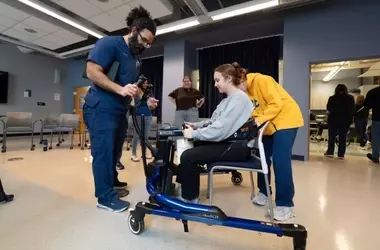
Rehabilitation Technologist Curriculum: A Systematic and Academic Overview
This article provides a neutral, systematic overview of the rehabilitation technologist curriculum. It defines the course as a professional framework for mastering kinesiology, neuroplasticity, and therapeutic modalities. The text analyzes the mechanical foundations of biomechanical alignment, the Larmor-like precision of gait analysis, and the physiological mechanisms of tissue repair. Referencing data from the BLS, WHO, and CAPTE, the article outlines the regulatory landscape of accreditation and the rising global demand for rehabilitation services. It concludes with an outlook on robotic-assisted therapy and addresses factual questions regarding professional roles and physical agents, providing a scientific framework for understanding rehabilitation professional education.
 By Talia Salt
 Jan 29, 2026
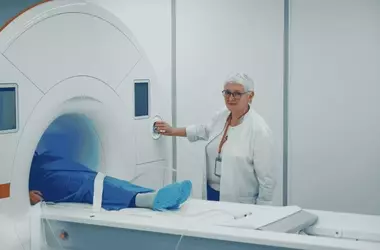
Magnetic Resonance Imaging (MRI) Technologist Curriculum: A Systematic and Academic Overview
This article provides a neutral, systematic overview of the MRI technologist curriculum. It defines the course as a professional framework for mastering Nuclear Magnetic Resonance (NMR) and scanner operations. The text analyzes the mechanical foundations of the Larmor equation, gradient spatial encoding, and T1/T2 image weighting. Referencing data from the BLS, ARRT, and ACR, the article outlines the regulatory landscape of accreditation (JRCERT) and the critical importance of MR safety protocols. It concludes with an outlook on AI-enhanced imaging and addresses factual questions regarding superconducting magnets and clinical pathways, providing a scientific framework for understanding MRI professional education.
 By Erik Johansson
 Jan 28, 2026
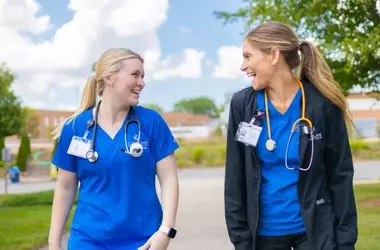
Online Registered Nurse (RN) Curriculum: A Systematic and Academic Overview
This article provides a neutral, systematic overview of online Registered Nurse (RN) courses. It defines these programs as hybrid educational pathways that combine digital theoretical instruction with mandatory in-person clinical rotations. The text explores the structural differences between ADN and BSN degrees and the mechanical use of virtual simulations. Referencing data from the BLS, HRSA, and AACN, the article outlines the regulatory necessity of accreditation (CCNE/ACEN) and the requirement of passing the NCLEX-RN for professional practice. It concludes with an outlook on augmented reality in nursing education and addresses factual questions regarding clinical placements and licensure validity.
 By Natalia Petrova