Medical Devices
Anesthesia Machine: Structure, Function, and Clinical Role

I. Clear Objective
The purpose of this article is to explain what an anesthesia machine is, how it operates, and how it functions within modern healthcare environments. The structure follows a strict sequence:
- Definition and basic concepts
- Core technical mechanisms and system architecture
- Comprehensive overview of clinical use, benefits, and limitations
- Summary and future perspectives
- Question-and-answer section
The discussion remains factual, descriptive, and neutral.
II. Fundamental Concept Explanation
An anesthesia machine is a specialized medical system used in operating rooms and procedural settings to administer inhalational anesthetic agents and medical gases, primarily oxygen, to induce and maintain general anesthesia. The device also supports or controls patient ventilation and integrates monitoring systems to ensure safe delivery.
Modern anesthesia machines evolved from early ether delivery systems in the 19th century. Contemporary systems are often referred to as anesthesia workstations because they integrate ventilation, gas delivery, monitoring, and safety mechanisms into a unified platform.
According to the World Health Organization (WHO), safe anesthesia is a fundamental component of surgical care, which is recognized as an essential part of universal health coverage. The Lancet Commission on Global Surgery estimates that approximately 313 million surgical procedures are performed worldwide each year, highlighting the broad clinical context in which anesthesia equipment operates.
III. Core Mechanisms and In-Depth Explanation
1. Gas Supply System
An anesthesia machine receives gases from centralized hospital pipelines or compressed gas cylinders. The primary gases include:
- Oxygen (O₂)
- Nitrous oxide (N₂O)
- Medical air
Pressure regulators reduce high cylinder pressures to safe working levels. Flow control valves and flowmeters allow precise adjustment of gas proportions. Modern systems often use digital flow control interfaces rather than purely mechanical meters.
2. Vaporizers
Volatile anesthetic agents such as sevoflurane or isoflurane are stored in liquid form. Vaporizers convert these liquids into controlled concentrations of vapor and mix them with carrier gases. Each vaporizer is calibrated for a specific agent to account for its vapor pressure and physical characteristics.
Accurate vaporization depends on temperature compensation mechanisms and pressure regulation to maintain stable anesthetic concentration delivery.
3. Breathing Circuit and Ventilation
The breathing circuit connects the machine to the patient. A common configuration is the circle breathing system, which allows partial rebreathing of gases after carbon dioxide removal. Key components include:
- Inspiratory and expiratory valves
- Carbon dioxide absorber (typically soda lime)
- Reservoir bag
- Adjustable pressure-limiting valve
Modern anesthesia machines incorporate mechanical ventilators capable of volume-controlled or pressure-controlled ventilation modes.
4. Monitoring and Safety Systems
Integrated monitoring systems typically measure:
- Oxygen concentration
- Airway pressure
- Tidal volume
- End-tidal carbon dioxide (capnography)
- Anesthetic agent concentration
Safety features may include oxygen failure alarms, minimum oxygen ratio controllers, and pressure relief valves. International standards for anesthesia equipment safety are published by organizations such as the International Organization for Standardization (ISO).
IV. Comprehensive Overview and Objective Discussion
1. Clinical Applications
Anesthesia machines are used in:
- General surgical procedures
- Obstetric interventions
- Cardiac surgery
- Pediatric operations
- Certain diagnostic and interventional procedures requiring sedation or general anesthesia
The global surgical volume estimate of 313 million annual procedures indicates the scale at which anesthesia equipment supports healthcare delivery.
2. Advantages
- Controlled and adjustable anesthetic gas delivery
- Integrated ventilation support
- Real-time physiological monitoring
- Safety mechanisms designed to reduce human error
3. Limitations and Challenges
- Dependence on reliable oxygen supply infrastructure
- Requirement for trained personnel
- Maintenance and calibration needs
- Complexity in resource-limited environments
The World Federation of Societies of Anaesthesiologists (WFSA) has reported disparities in anesthesia provider density across regions, indicating systemic differences in anesthesia care access.
4. Global Context
The WHO identifies anesthesia as a critical component of safe surgery. Access to safe anesthesia services remains uneven globally, with lower availability in low-income countries compared to high-income regions. Infrastructure, training, and equipment availability contribute to these differences.
V. Summary and Outlook
An anesthesia machine is a comprehensive medical device designed to deliver anesthetic gases, maintain ventilation, and monitor patient physiology during surgical procedures. Its operation relies on controlled gas flow, vaporization technology, rebreathing circuits, and integrated safety systems.
Ongoing technological developments include digital integration, automated ventilation algorithms, advanced gas monitoring, and data recording capabilities. Portable anesthesia systems are being developed to address surgical needs in varied clinical environments. As global healthcare systems continue to expand surgical capacity, anesthesia equipment remains a central component of perioperative medicine.
VI. Question and Answer Section
Q1: What is the primary purpose of an anesthesia machine?
To deliver controlled anesthetic gases and support ventilation during procedures requiring general anesthesia.
Q2: How does the machine ensure oxygen safety?
Through pressure regulators, oxygen monitoring systems, and alarm mechanisms that detect supply failure or low concentration.
Q3: What removes carbon dioxide in the breathing circuit?
A carbon dioxide absorber, commonly containing soda lime, chemically removes CO₂ from exhaled gases.
Q4: Why are vaporizers agent-specific?
Different anesthetic liquids have unique vapor pressures and physical properties, requiring calibrated control mechanisms.
Q5: Is anesthesia equipment standardized internationally?
Yes, safety and performance standards are issued by international regulatory and standard-setting organizations.
https://www.who.int/publications/i/item/9789241507783
https://www.thelancet.com/commissions/global-surgery
https://wfsahq.org/resources/anaesthesia-workforce-map/

Other Articles
 Feb 13, 2026
Ultrasound Equipment: Principles, Functions, and Clinical Applications
Ultrasound equipment refers to medical imaging systems that use high-frequency sound waves to produce images of structures inside the human body. This article aims to provide a neutral and comprehensive overview of ultrasound equipment. It will first define the concept and clarify the objective of the discussion. It will then explain fundamental principles, explore the core mechanisms and technical components, examine the broader clinical and non-clinical applications, and present a balanced discussion of advantages and limitations. The article concludes with a forward-looking summary and a structured question-and-answer section.
 By Dr. Marcus Lee
 Feb 12, 2026
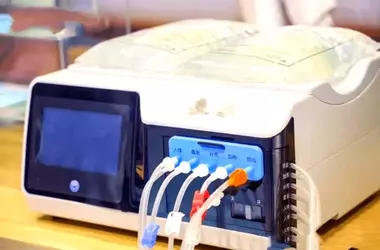
Dialysis Machines: Principles, Mechanisms, Clinical Applications, and Perspectives
A dialysis machine is a medical device designed to perform the essential functions of the kidneys when renal function is severely impaired. It removes waste products, excess fluids, and balances electrolytes in the blood through controlled filtration processes. This article provides a structured and neutral overview of dialysis machines, beginning with a definition and clear objective. It then explains foundational concepts, details the underlying mechanisms of operation, discusses clinical applications and limitations, and concludes with a forward-looking perspective. A question-and-answer section addresses common points of clarification. All content is presented for educational purposes and maintains a strictly informational focus.
 By Dr. Felipe Torres
 Feb 12, 2026
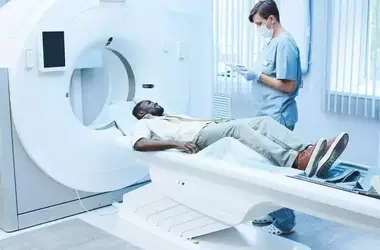
Magnetic Resonance Imaging (MRI): Principles, Mechanisms, Applications, and Perspectives
Magnetic Resonance Imaging (MRI) is a non-invasive medical imaging technique widely used to visualize internal structures of the human body. This article provides a structured and neutral overview of MRI, beginning with a clear definition and outlining its objectives. It explains the fundamental physical principles behind MRI, examines its operational mechanisms, and discusses its clinical and research applications. The article also presents a balanced discussion of benefits, limitations, safety considerations, and evolving technological developments. A concluding section summarizes key points and offers a forward-looking perspective, followed by a question-and-answer segment addressing common inquiries. All information is presented for educational purposes only.
By Dr. Felipe Torres