Medical Devices
Magnetic Resonance Imaging (MRI): Principles, Mechanisms, Applications, and Perspectives

I. Objective and Scope
Magnetic Resonance Imaging (MRI) refers to a diagnostic imaging modality that uses strong magnetic fields, radiofrequency pulses, and computer processing to generate detailed images of organs and tissues within the body. Unlike imaging methods that rely on ionizing radiation, MRI operates on principles derived from nuclear magnetic resonance physics.
The objective of this article is to clarify what MRI is, how it functions at a physical and technical level, what types of information it provides, and how it is used in healthcare and scientific research. The structure follows a logical progression: first establishing foundational concepts, then exploring the core mechanisms in depth, followed by a comprehensive and neutral discussion of its applications and limitations. The article concludes with a summary and a brief question-and-answer section to reinforce understanding.
II. Fundamental Concepts
MRI is based on the magnetic properties of atomic nuclei, particularly hydrogen nuclei (protons), which are abundant in water and fat molecules within the human body. When placed in a strong magnetic field, these protons align with the field.
Clinical MRI systems commonly operate at magnetic field strengths of 1.5 tesla (T) or 3.0 T in standard hospital settings, with higher strengths such as 7.0 T used in research environments. According to the U.S. Food and Drug Administration (FDA), 1.5 T and 3 T systems are widely used in clinical practice.
MRI differs from computed tomography (CT) and conventional X-ray imaging because it does not employ ionizing radiation. The U.S. Nuclear Regulatory Commission defines ionizing radiation as radiation capable of removing tightly bound electrons from atoms. MRI uses non-ionizing radiofrequency energy instead.
Images produced by MRI can be adjusted to emphasize different tissue characteristics through various pulse sequences. These include T1-weighted, T2-weighted, diffusion-weighted, and fluid-attenuated inversion recovery (FLAIR) sequences, among others. Each sequence highlights specific anatomical or pathological features.
III. Core Mechanisms and In-Depth Explanation
1. Alignment and Excitation
When a patient enters the MRI scanner, the strong magnetic field (denoted B₀) causes hydrogen protons in the body to align either parallel or antiparallel to the field. A slight excess aligns parallel, creating a measurable net magnetization vector.
Radiofrequency (RF) pulses are then applied at a frequency known as the Larmor frequency. The Larmor frequency is directly proportional to the magnetic field strength, as described by the equation:ω=γB0\omega = \gamma B_0ω=γB0
where ω is the angular frequency, γ is the gyromagnetic ratio of the proton, and B₀ is the magnetic field strength.
2. Relaxation Processes
After the RF pulse is turned off, protons return to equilibrium through two processes:
- T1 (longitudinal) relaxation: recovery of longitudinal magnetization.
- T2 (transverse) relaxation: decay of transverse magnetization due to dephasing.
Different tissues have distinct T1 and T2 relaxation times, which create contrast in MRI images. For example, cerebrospinal fluid appears bright on T2-weighted images because of its long T2 relaxation time.
3. Spatial Encoding
Gradient magnetic fields are applied to encode spatial information. These gradients vary the magnetic field strength slightly across different axes (x, y, z), allowing the system to determine the origin of signals within the body.
The signals are detected by receiver coils and processed through Fourier transformation to reconstruct cross-sectional images. Modern MRI systems use advanced computational algorithms to convert raw signal data into interpretable images.
4. Advanced Techniques
- Functional MRI (fMRI) measures blood oxygenation level–dependent (BOLD) signals to assess brain activity.
- Diffusion MRI evaluates the movement of water molecules in tissue, often used in stroke assessment.
- Magnetic Resonance Spectroscopy (MRS) analyzes chemical composition within tissues.
Functional MRI has been widely used in neuroscience research. According to the National Institute of Neurological Disorders and Stroke (NINDS), fMRI enables mapping of brain function through changes in blood oxygenation.
IV. Comprehensive Overview and Objective Discussion
Clinical Applications
MRI is used in a range of medical fields, including:
- Neurology (brain and spinal cord imaging)
- Orthopedics (joints, ligaments, cartilage)
- Oncology (tumor detection and staging)
- Cardiology (cardiac structure and function)
The World Health Organization (WHO) recognizes MRI as an essential diagnostic imaging modality in modern healthcare systems.
Safety Considerations
MRI does not use ionizing radiation; however, the strong magnetic field requires strict safety protocols. Metallic implants, pacemakers, or ferromagnetic objects may pose risks. The FDA provides safety guidelines for MRI equipment and patient screening.
Gadolinium-based contrast agents may be used to enhance image clarity. The U.S. Food and Drug Administration has issued communications regarding retention of gadolinium in the body, emphasizing appropriate clinical evaluation of risks and benefits.
Limitations
- High operational and installation costs
- Longer scanning times compared to CT
- Sensitivity to patient movement
- Contraindications in certain implantable devices
According to data from the Organisation for Economic Co-operation and Development (OECD), the number of MRI units per million population varies significantly by country, reflecting differences in healthcare infrastructure and investment.
Global Usage Data
The OECD reports that in several high-income countries, MRI availability exceeds 20 units per million population, while lower-income regions may have fewer than 1 per million. These figures illustrate disparities in access to advanced imaging technologies.
V. Summary and Outlook
MRI is a diagnostic imaging technology grounded in principles of nuclear magnetic resonance physics. By manipulating magnetic fields and radiofrequency pulses, it produces detailed images of soft tissues without using ionizing radiation. Its versatility allows visualization of anatomy, pathology, and even functional activity in certain contexts.
Despite limitations related to cost, accessibility, and technical complexity, MRI continues to evolve. Developments in higher magnetic field strengths, faster pulse sequences, artificial intelligence–assisted image reconstruction, and portable MRI systems are areas of ongoing research. Future progress is likely to focus on improving efficiency, expanding accessibility, and refining diagnostic precision while maintaining safety standards.
VI. Question and Answer Section
Q1: Does MRI use radiation?
MRI uses non-ionizing radiofrequency energy and strong magnetic fields. It does not use ionizing radiation as defined by regulatory authorities.
Q2: Why are some MRI scans performed with contrast agents?
Contrast agents, often containing gadolinium, can enhance visualization of certain tissues or abnormalities. Their use depends on clinical assessment and established guidelines.
Q3: Why are MRI machines noisy?
The noise is produced by rapid switching of gradient coils, which create vibrations within the scanner structure.
Q4: How long does an MRI examination typically take?
The duration varies by protocol and body region, generally ranging from approximately 15 to 60 minutes according to clinical practice standards described by radiology associations.
Q5: Are higher magnetic field strengths always better?
Higher field strengths can improve signal-to-noise ratio and resolution but may also introduce technical challenges and safety considerations. Clinical selection depends on diagnostic requirements and regulatory approval.
https://www.fda.gov/radiation-emitting-products/medical-imaging/magnetic-resonance-imaging-mri
https://www.nrc.gov/about-nrc/radiation/health-effects/info.html
https://www.ninds.nih.gov/health-information/disorders/functional-mri

Other Articles
 Feb 12, 2026
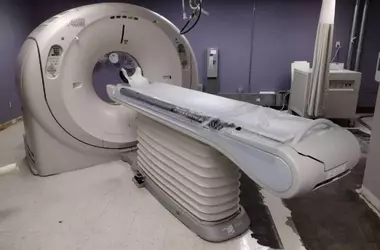
CT Scanners: Principles, Functions, and Contemporary Perspectives
Computed Tomography (CT) scanners are advanced medical imaging systems that use X-rays and computer processing to generate cross-sectional images of the human body. They are widely applied in diagnostic medicine, emergency care, oncology, and research. This article provides a structured and neutral overview of CT scanners, beginning with a clear definition and objectives, followed by foundational concepts, technical mechanisms, broader contextual discussion, and a forward-looking summary. The discussion concludes with a question-and-answer section addressing common technical and safety-related inquiries. All data cited are derived from authoritative international sources.
 By Dr. Alejandro Ruiz
 Feb 11, 2026
Rehabilitation Training Devices: A Neutral Scientific Overview of Principles
Rehabilitation training devices are mechanical, electromechanical, or digital systems designed to assist individuals in regaining physical, neurological, or functional abilities following injury, illness, or surgery. These devices are used in medical rehabilitation to support recovery of movement, strength, coordination, balance, and daily living skills. This article provides a structured and neutral scientific overview of rehabilitation training devices. It defines the core concept, explains physiological and biomechanical mechanisms, examines clinical applications and limitations, and presents relevant epidemiological context supported by authoritative data sources. The discussion follows a clear structure: objective clarification, foundational concepts, mechanism explanation, comprehensive contextual analysis, summary and outlook, and a question-and-answer section.
 By Dr. Felipe Torres
 Feb 11, 2026
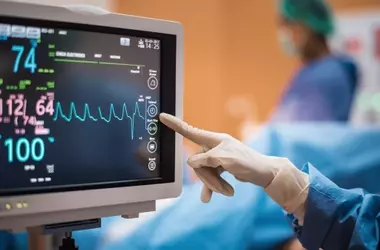
Cardiac Monitor: A Neutral Scientific Overview of Principles, Functions, and Clinical Context
A cardiac monitor is a medical device designed to continuously observe and record the electrical activity of the heart, typically through electrocardiographic (ECG) signals, in order to assess heart rhythm and detect abnormalities. This article provides a structured and neutral scientific overview of cardiac monitoring systems. It defines the core concept, explains the physiological and technical mechanisms involved, examines their clinical applications and limitations, and presents relevant epidemiological context based on authoritative data. The discussion follows a clearly defined structure: objective clarification, foundational concepts, in-depth mechanism explanation, comprehensive contextual analysis, summary and outlook, and a question-and-answer section.
By Dr. Felipe Torres