Medical Devices
Ultrasound Equipment: Principles, Functions, and Clinical Applications

I. Clear Objective
The objective of this article is to explain what ultrasound equipment is, how it functions, and how it is used in contemporary medical practice. The discussion will follow a structured sequence:
- Definition and foundational concepts
- Technical mechanisms and system components
- Comprehensive overview of applications, benefits, and limitations
- Summary and future outlook
- Question-and-answer section
The focus remains strictly informational and descriptive.
II. Fundamental Concept Explanation
Ultrasound equipment is a diagnostic imaging system that uses high-frequency sound waves—typically between 2 and 18 megahertz (MHz)—to visualize internal anatomical structures. Unlike imaging modalities that rely on ionizing radiation, ultrasound operates through mechanical sound waves transmitted into biological tissues.
The core physical principle is based on echo reflection. A handheld device known as a transducer emits sound waves into the body. When these waves encounter tissues with different acoustic properties, part of the energy is reflected back to the transducer. The system converts returning echoes into electrical signals, which are processed to generate real-time images.
Medical ultrasound has been in clinical use since the mid-20th century. According to the World Health Organization (WHO), ultrasound imaging is considered one of the safest imaging modalities when used appropriately, particularly in obstetrics and general diagnostics.
III. Core Mechanisms and In-Depth Explanation
1. Acoustic Physics
Ultrasound waves are longitudinal mechanical waves. Their propagation depends on tissue density and compressibility. Key acoustic parameters include:
- Frequency: Higher frequencies provide better spatial resolution but lower penetration depth.
- Acoustic impedance: Differences between tissues determine reflection intensity.
- Attenuation: Sound energy decreases as it travels through tissue due to absorption and scattering.
The speed of sound in soft tissue is approximately 1540 meters per second, a standardized assumption used in image calculation algorithms.
2. Transducer Technology
The transducer contains piezoelectric crystals. These materials generate electrical signals when mechanically deformed and produce mechanical vibrations when electrically stimulated. This bidirectional property enables both transmission and reception of ultrasound waves.
Common probe types include:
- Linear array transducers: Used for superficial structures.
- Curvilinear (convex) transducers: Used for abdominal imaging.
- Phased array transducers: Common in cardiac imaging due to their small footprint and beam steering capability.
3. Imaging Modes
Ultrasound systems support multiple imaging modes:
- B-mode (Brightness mode): Two-dimensional grayscale imaging.
- M-mode (Motion mode): Used for motion tracking, particularly cardiac structures.
- Doppler mode: Measures blood flow velocity using frequency shifts.
The Doppler principle is based on the frequency change observed when sound waves reflect off moving objects such as red blood cells.
IV. Comprehensive Overview and Objective Discussion
1. Clinical Applications
Ultrasound equipment is widely used in multiple medical disciplines:
- Obstetrics and gynecology: Fetal development monitoring.
- Cardiology: Echocardiography for cardiac structure and function evaluation.
- Abdominal imaging: Liver, gallbladder, kidneys, pancreas assessment.
- Vascular imaging: Blood flow analysis.
- Musculoskeletal evaluation: Tendons and soft tissues.
According to the Organisation for Economic Co-operation and Development (OECD), the availability of medical imaging equipment, including ultrasound systems, varies significantly among member countries, reflecting differences in healthcare infrastructure.
2. Advantages
- Non-ionizing imaging method
- Real-time dynamic visualization
- Portable and bedside capability
- Relatively lower operational cost compared with CT or MRI
3. Limitations
- Operator-dependent image quality
- Limited penetration in obese patients
- Reduced image clarity in gas-filled structures
- Lower contrast resolution compared with CT and MRI
4. Global Utilization
The World Health Organization emphasizes the importance of diagnostic imaging in primary healthcare settings, noting that imaging can support early diagnosis and management of many common conditions. Portable ultrasound systems have been increasingly adopted in rural and resource-limited environments.
V. Summary and Outlook
Ultrasound equipment is a sound-wave-based imaging system that transforms reflected acoustic signals into diagnostic images. Its functioning relies on piezoelectric technology, acoustic physics, and digital signal processing. The technology has become integral to multiple medical disciplines due to its safety profile, real-time capability, and portability.
Future developments include enhanced image resolution, artificial intelligence–assisted interpretation, miniaturization, and integration into handheld devices. Research efforts focus on improving quantitative imaging and expanding point-of-care applications. As healthcare systems continue to evolve, ultrasound technology remains a significant component of diagnostic infrastructure.
VI. Question and Answer Section
Q1: Does ultrasound use radiation?
No. Diagnostic ultrasound uses mechanical sound waves rather than ionizing radiation.
Q2: What determines image quality?
Image quality depends on frequency selection, tissue characteristics, operator technique, and equipment processing capabilities.
Q3: Is ultrasound safe during pregnancy?
International health organizations consider diagnostic ultrasound safe when used according to established medical guidelines.
Q4: How is blood flow measured?
Doppler ultrasound measures changes in frequency caused by moving blood cells to estimate velocity.
Q5: Why are different probes used?
Different anatomical regions require specific frequency ranges and beam shapes, which are provided by different transducer designs.
https://www.who.int/news-room/fact-sheets/detail/medical-imaging
https://www.oecd.org/health/health-data.htm

Other Articles
 Feb 12, 2026
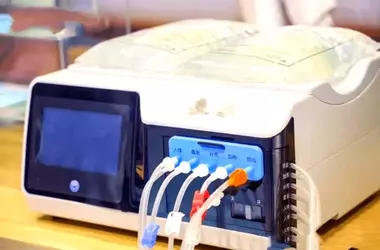
Dialysis Machines: Principles, Mechanisms, Clinical Applications, and Perspectives
A dialysis machine is a medical device designed to perform the essential functions of the kidneys when renal function is severely impaired. It removes waste products, excess fluids, and balances electrolytes in the blood through controlled filtration processes. This article provides a structured and neutral overview of dialysis machines, beginning with a definition and clear objective. It then explains foundational concepts, details the underlying mechanisms of operation, discusses clinical applications and limitations, and concludes with a forward-looking perspective. A question-and-answer section addresses common points of clarification. All content is presented for educational purposes and maintains a strictly informational focus.
 By Dr. Felipe Torres
 Feb 12, 2026
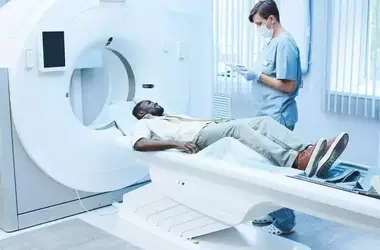
Magnetic Resonance Imaging (MRI): Principles, Mechanisms, Applications, and Perspectives
Magnetic Resonance Imaging (MRI) is a non-invasive medical imaging technique widely used to visualize internal structures of the human body. This article provides a structured and neutral overview of MRI, beginning with a clear definition and outlining its objectives. It explains the fundamental physical principles behind MRI, examines its operational mechanisms, and discusses its clinical and research applications. The article also presents a balanced discussion of benefits, limitations, safety considerations, and evolving technological developments. A concluding section summarizes key points and offers a forward-looking perspective, followed by a question-and-answer segment addressing common inquiries. All information is presented for educational purposes only.
By Dr. Felipe Torres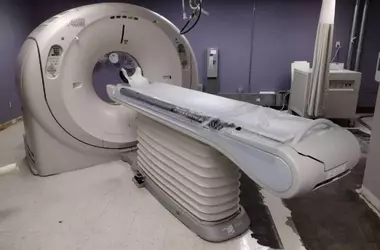 Feb 12, 2026
CT Scanners: Principles, Functions, and Contemporary Perspectives
Computed Tomography (CT) scanners are advanced medical imaging systems that use X-rays and computer processing to generate cross-sectional images of the human body. They are widely applied in diagnostic medicine, emergency care, oncology, and research. This article provides a structured and neutral overview of CT scanners, beginning with a clear definition and objectives, followed by foundational concepts, technical mechanisms, broader contextual discussion, and a forward-looking summary. The discussion concludes with a question-and-answer section addressing common technical and safety-related inquiries. All data cited are derived from authoritative international sources.
 By Dr. Alejandro Ruiz