Medical Devices
Ventilators: A Scientific Overview of Principles, Mechanisms, and Clinical Context

Introduction: Definition, Scope, and Objectives
A ventilator, in the medical context, refers to a mechanical device designed to support or replace spontaneous breathing by moving air into and out of the lungs. Its primary function is to ensure adequate oxygen delivery and carbon dioxide removal when normal respiratory processes are impaired. Ventilators are widely used in critical care, anesthesia, emergency medicine, and long-term respiratory management.
This article aims to provide a neutral, educational overview of ventilators by addressing several core questions: What is a ventilator and how is it classified? How does mechanical ventilation function at a physiological and technical level? What benefits, limitations, and risks are associated with its use? To answer these questions systematically, the article follows a structured sequence: clear objectives, foundational concepts, detailed mechanisms, a comprehensive and balanced discussion, a concluding summary with future perspectives, and a concise question-and-answer section.
Objective Clarification
The objective of this article is to explain ventilators as medical devices from a scientific and technical perspective. The discussion focuses on definitions, operational principles, and clinical contexts without offering recommendations, value judgments, or outcome guarantees. The scope is limited to general medical knowledge applicable across healthcare systems and does not address device branding, procurement decisions, or individualized clinical protocols.
Fundamental Concepts and Classification
Mechanical ventilation is based on the principle of assisted or controlled airflow to maintain gas exchange. Under normal conditions, breathing is driven by negative pressure generated by the diaphragm and respiratory muscles. Ventilators, in contrast, most commonly operate using positive pressure to deliver air into the lungs.
Ventilators can be broadly classified into several categories:
- Invasive ventilators, which deliver airflow through an artificial airway such as an endotracheal tube or tracheostomy.
- Non-invasive ventilators, which provide ventilatory support through interfaces such as masks without bypassing the upper airway.
- Critical care ventilators, designed for continuous and precise respiratory support in intensive care environments.
- Transport and portable ventilators, intended for use during patient transfer or in settings with limited infrastructure.
Key parameters used to describe ventilation include tidal volume, respiratory rate, fraction of inspired oxygen, airway pressure, and positive end-expiratory pressure. These variables are adjusted to align mechanical support with physiological needs.
Core Mechanisms and Detailed Explanation
At the physiological level, ventilation supports gas exchange within the alveoli, where oxygen diffuses into the bloodstream and carbon dioxide diffuses out. Mechanical ventilators facilitate this process by generating airflow according to predefined control variables.
Ventilation modes are typically categorized by what the ventilator controls:
- Volume-controlled ventilation, where a preset tidal volume is delivered with each breath.
- Pressure-controlled ventilation, where airflow continues until a target airway pressure is reached.
- Assisted or spontaneous modes, which respond to patient-initiated breathing efforts.
Sensors within the ventilator continuously monitor pressure, flow, and volume. Feedback systems adjust airflow in real time to maintain consistency with selected parameters. Alarm systems are integrated to detect deviations such as excessive pressure, disconnections, or insufficient ventilation.
Protective ventilation strategies have been developed to reduce lung injury associated with mechanical ventilation. For example, studies have shown that lower tidal volumes, typically in the range of 6–8 milliliters per kilogram of predicted body weight, are associated with reduced lung stress in certain patient populations.
Comprehensive Perspective and Objective Discussion
Ventilators play a critical role in managing acute respiratory failure, supporting patients during surgical anesthesia, and stabilizing breathing in chronic respiratory conditions. Their use enables clinicians to maintain oxygenation and ventilation during periods when spontaneous breathing is insufficient.
However, mechanical ventilation is also associated with limitations and risks. Prolonged use may contribute to ventilator-associated lung injury, diaphragm disuse, or infections such as ventilator-associated pneumonia. These risks have led to ongoing research into optimal ventilation strategies, monitoring techniques, and weaning processes.
From a systems perspective, ventilators require trained personnel, reliable power sources, and regular maintenance. Their effective use depends not only on device capabilities but also on clinical assessment, monitoring, and adherence to evidence-based protocols.
Summary and Future Outlook
Ventilators are complex medical devices designed to support or replace natural breathing through controlled airflow and pressure delivery. Their operation integrates principles of respiratory physiology, engineering, and clinical medicine. While they are indispensable in many medical settings, their use involves careful balancing of benefits and potential complications.
Future developments in ventilation are expected to focus on improved synchronization between patient effort and mechanical support, enhanced monitoring through data integration, and adaptive algorithms that respond dynamically to physiological changes. These directions reflect an ongoing effort to align mechanical assistance more closely with natural respiratory function.
Questions and Answers
What is the primary purpose of a ventilator?
To support adequate oxygen delivery and carbon dioxide removal when normal breathing is impaired.
How does mechanical ventilation differ from normal breathing?
Normal breathing relies on negative pressure generated by respiratory muscles, whereas most ventilators use positive pressure to move air into the lungs.
Are all ventilators invasive?
No. Ventilators can be invasive or non-invasive, depending on whether an artificial airway is used.
Why are ventilation parameters carefully controlled?
Because inappropriate pressure or volume levels can affect lung tissue and gas exchange efficiency.
Data Source Links (URLs only)

Other Articles
 Jan 30, 2026
Portable Oxygen Concentrators: A Scientific Overview of Principles, Technology, and Clinical Context
Portable oxygen concentrators are medical devices that supply oxygen-enriched air by separating oxygen from ambient air using adsorption-based technologies. This article provides a neutral, scientific overview of their purpose, operating principles, system components, and application contexts. By examining both functional mechanisms and limitations, the article aims to support general understanding of portable oxygen concentrators within modern oxygen therapy systems.
 By Anjali Deshpande
 Jan 30, 2026
X-Ray Machines: A Scientific Overview of Principles, Technology, and Clinical Context
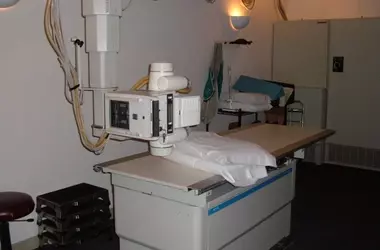
X-ray machines are imaging devices that generate ionizing radiation to visualize internal structures based on differences in tissue absorption. This article provides a neutral, scientific overview of X-ray technology, including its historical development, physical mechanisms, radiation characteristics, and application contexts. By examining both capabilities and limitations, the article aims to support general understanding of X-ray imaging as a core component of modern diagnostic systems.
By Anjali Deshpande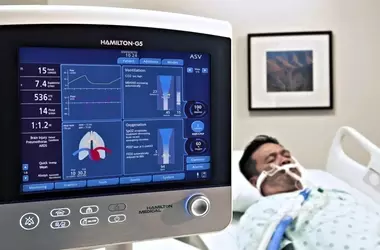 Jan 30, 2026
Mechanical Ventilators: A Scientific Overview of Principles, Functions, and Clinical Context
Mechanical ventilators are medical devices that provide respiratory support by mechanically assisting airflow into and out of the lungs. This article presents a neutral, science-based overview of their purpose, historical development, operating principles, and clinical context. By examining physiological mechanisms, ventilation parameters, and technological considerations, the article aims to enhance general understanding of mechanical ventilation as a foundational component of modern healthcare.
 By Dr. Marcus Lee