Medical Devices
Mechanical Ventilators: A Scientific Overview of Principles, Functions, and Clinical Context

Definition and Article Roadmap
A mechanical ventilator is a medical device designed to assist or replace spontaneous breathing by delivering controlled airflow into the lungs. It is primarily used when an individual is unable to maintain adequate ventilation or oxygenation independently.
This article provides a neutral and systematic explanation of mechanical ventilators by outlining their objectives, foundational concepts, operating mechanisms, and clinical context. The discussion proceeds through clearly defined stages: objective clarification, basic concept analysis, in-depth explanation of core mechanisms, a comprehensive and balanced overview, a summary with future perspectives, and a factual question-and-answer section.
I. Objective Clarification
The objective of this article is to explain what a mechanical ventilator is, how it functions, and under what general circumstances it is applied in healthcare settings.
The focus is placed on scientific principles, physiological interaction, and system design rather than operational guidance or evaluative judgment. The content is intended to support general understanding of respiratory support technologies within modern medicine.
II. Fundamental Concepts and Basic Explanation
Definition and Purpose
Mechanical ventilation refers to the process by which a device supports gas exchange by moving air into and out of the lungs. This process may involve supplying oxygen, removing carbon dioxide, or maintaining airway pressure.
Historical Context
The development of modern mechanical ventilators accelerated during the mid-20th century, particularly following poliomyelitis outbreaks that caused widespread respiratory paralysis. Early negative-pressure devices, such as iron lungs, were gradually replaced by positive-pressure ventilators, which remain the dominant form today.
Basic Components
A typical mechanical ventilator system includes:
- A gas delivery system
- Control valves and sensors
- A patient interface, such as an endotracheal tube or mask
- Monitoring and alarm mechanisms
Each component contributes to regulating airflow, pressure, and timing.
III. Core Mechanisms and In-Depth Explanation
Physiological Basis
Normal breathing relies on negative pressure generated by diaphragmatic movement. Mechanical ventilators commonly use positive-pressure ventilation, in which air is pushed into the lungs during inspiration.
Key Parameters
Ventilator operation involves adjustment of several measurable parameters:
- Tidal volume: the amount of air delivered per breath, often measured in milliliters
- Respiratory rate: number of breaths delivered per minute
- Positive end-expiratory pressure (PEEP): pressure maintained in the lungs at the end of exhalation
- Fraction of inspired oxygen (FiO₂): proportion of oxygen in delivered gas
Clinical literature indicates that typical adults tidal volumes range from approximately 6 to 8 milliliters per kilogram of predicted body weight in lung-protective strategies.
Modes of Ventilation
Ventilators may operate in various modes, including:
- Controlled modes, where all breaths are machine-delivered
- Assisted modes, where patient effort triggers support
- Spontaneous modes, where breathing is primarily patient-driven
Each mode reflects different interactions between patient physiology and mechanical support.
IV. Comprehensive View and Objective Discussion
Clinical Contexts of Use
Mechanical ventilators are used in diverse settings, including:
- Intensive care units
- Operating rooms during anesthesia
- Emergency medical care
- Long-term respiratory support environments
Conditions associated with ventilatory support include acute respiratory failure, neuromuscular disorders, and severe pulmonary disease.
Limitations and Risks
Scientific studies identify potential complications associated with mechanical ventilation, such as:
- Ventilator-associated lung injury
- Barotrauma from excessive airway pressure
- Ventilator-associated pneumonia
These risks highlight the importance of careful monitoring and individualized parameter adjustment.
Technological Developments
Advances in ventilator design include improved sensor accuracy, closed-loop control systems, and integration with electronic medical records. Research continues into optimizing synchrony between patient effort and machine response.
V. Summary and Outlook
Article Summary
This article has provided a structured overview of mechanical ventilators, explaining their definition, fundamental principles, operational mechanisms, and clinical context. Mechanical ventilation represents a critical method of respiratory support grounded in physiological and engineering principles.
Future Perspective
Ongoing research in respiratory medicine and biomedical engineering suggests continued refinement of ventilation strategies, including enhanced monitoring, automation, and data-driven decision support. The fundamental role of mechanical ventilation in supporting gas exchange remains central to critical care medicine.
VI. Questions and Answers (Factual Section)
Q1: What is the primary function of a mechanical ventilator?
The primary function is to support or replace spontaneous breathing by ensuring adequate oxygen delivery and carbon dioxide removal.
Q2: Does mechanical ventilation always require invasive airway access?
Mechanical ventilation may be delivered invasively or non-invasively, depending on clinical circumstances and patient condition.
Q3: Are ventilators used only in critical care units?
Ventilators are most commonly used in critical care but are also applied in surgical, emergency, and long-term care settings.
Data Source Links
https://www.ncbi.nlm.nih.gov/books/NBK470545/
https://www.ncbi.nlm.nih.gov/pmc/articles/PMC7095359/
https://www.who.int/publications/i/item/WHO-2019-nCoV-clinical-2020.5
https://www.ncbi.nlm.nih.gov/pmc/articles/PMC8174533/
https://www.britannica.com/science/mechanical-ventilation

Other Articles
 Jan 30, 2026
Understanding the Stethoscope: A Scientific Overview of Its Principles, Functions, and Clinical Role
This article aims to provide a neutral, science-based explanation of the stethoscope by clearly defining its purpose, examining its underlying physical principles, and objectively discussing its role in modern healthcare. The discussion follows a structured progression: defining the objective, explaining fundamental concepts, detailing core mechanisms, presenting a comprehensive and balanced view, summarizing key points with future perspectives, and concluding with a factual question-and-answer section.
 By Dr. Mei Wong
 Jan 29, 2026
Pulse Oximetry: A Technical and Clinical Overview
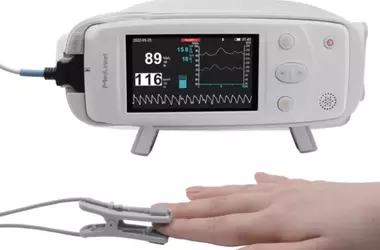
This article provides a neutral, systematic overview of pulse oximetry technology. It defines the pulse oximeter as a non-invasive tool for measuring oxygen saturation ($SpO_2$) and heart rate through spectrophotometry. The text analyzes the mechanical use of red and infrared light absorption and the biological application of photoplethysmography to isolate arterial blood flow. Referencing data from the WHO, FDA, and NIH, the article outlines the regulatory standards for medical-grade devices and the objective limitations caused by skin pigmentation, motion, and poor perfusion. It concludes with an outlook on wearable monitoring and addresses factual questions regarding altitude and carbon monoxide interference, providing a scientific framework for understanding this physiological monitoring tool.
 By Dr. Peter Van Dijk
 Jan 28, 2026
Automated External Defibrillators: A Technical and Clinical Overview
This article provides a neutral, technical overview of Automated External Defibrillators (AEDs). It defines the device as a portable tool for treating cardiac arrhythmias and outlines the mechanical and algorithmic foundations of its operation, including ECG analysis and biphasic waveforms. Referencing data from the AHA, FDA, and NIH, the article discusses regulatory standards for Class III medical devices, the physiological effects of electrical impedance, and the objective impact of public access defibrillation programs. It concludes with an outlook on connected medical technology and addresses factual questions regarding device safety and electrode placement, providing a scientific framework for understanding emergency cardiac intervention.
By Dr. Peter Van Dijk