News
US Imposes New 30% Tariffs on EU and Mexico, Sparking Global Trade Tensions

In a significant shift in global economic policy, the United States has declared the implementation of a 30% tariff on goods originating from the European Union and Mexico, effective August 1. This bold step, announced by the US President, signifies a direct challenge to existing trade frameworks, aiming to rectify perceived imbalances and secure national economic interests. The decision has immediately reverberated across international markets, triggering strong responses from Brussels and Mexico City, who have vowed to protect their own economic integrity. This escalation highlights a growing trend of protectionist measures in an interconnected global economy, prompting widespread debate on their potential long-term implications for stability and prosperity.
The newly imposed tariffs on the European Union and Mexico are a cornerstone of the current US administration's trade agenda, which prioritizes domestic economic revitalization. By leveraging increased import duties, the administration seeks to address persistent trade deficits, which it views as detrimental to national security and prosperity. This strategy, however, departs from established multilateral trade norms, raising concerns among allies and adversaries alike about the potential for retaliatory measures and a broader disruption of global commerce. As the August 1 deadline approaches, the international community watches closely to assess the immediate and enduring effects of these tariffs on trade relations and economic stability.
New Tariffs Target Key Trading Partners
The US government has unveiled plans to levy a 30% tariff on products from the European Union and Mexico, effective August 1. This aggressive trade action, announced by the President, is presented as a crucial component of a comprehensive strategy aimed at rebalancing international trade flows and bolstering the domestic economy. The administration has communicated these new tariffs through official letters posted on social media, signaling a departure from traditional diplomatic protocols. These measures align with the President's campaign pledges to revamp trade agreements and address what he describes as decades of unfair trade practices that have disadvantaged the United States.
This latest tariff announcement extends the US administration's proactive approach to global trade, previously seen in similar pronouncements against other nations. The rationale provided emphasizes the need to correct what the US views as significant trade imbalances and non-reciprocal trade policies with both the EU and Mexico. For Mexico, the tariffs also serve as a leverage point to intensify efforts in border security and combating illicit trafficking, despite acknowledgments of some prior cooperation. For the EU, the move directly targets their substantial trade surplus with the US, which American officials categorize as a national security issue. These tariffs represent a significant escalation in trade tensions, setting a precedent that could redefine future global trade negotiations and alliances.
International Repercussions and Future Outlook
The announcement of fresh tariffs has elicited strong and immediate reactions from the European Union and Mexico, both of whom are preparing to safeguard their economic interests. The European Commission President has affirmed the bloc's dedication to constructive dialogue and a stable transatlantic partnership, while simultaneously indicating a readiness to implement proportionate countermeasures if necessary. This stance underscores the EU's firm position against unilateral trade actions and its commitment to defending its economic sovereignty. Similarly, Italy, a key member of the EU, has expressed support for the Commission's diplomatic efforts, advocating for a balanced resolution that avoids a destructive trade conflict between major economic blocs.
The potential implementation of these tariffs could significantly alter the dynamics of world trade, moving away from established multilateral agreements that have governed international commerce for decades. The US administration’s willingness to impose tariffs at rates outside the globally agreed-upon frameworks suggests a fundamental reevaluation of its trade policy. This could lead to a fragmented global trading system, where bilateral disputes supersede collective regulations. Economists and policymakers are closely analyzing the potential fallout, particularly the impact on consumer prices, supply chains, and the overall stability of the global economy. The current trajectory indicates a period of heightened uncertainty and potential friction in international trade relations, prompting nations to reassess their trade strategies and diplomatic approaches.
Veteran BBC and OZY journalist, author, and commentator on US politics and women's issues.
Other Articles
 Jul 14, 2025
Presidential Presence Graces FIFA Club World Cup Final Amidst Political Tensions and Personal Reflection
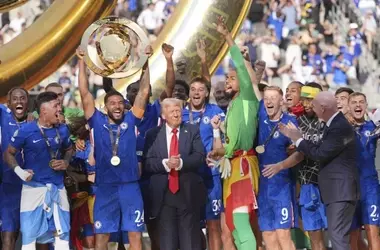
President Trump attended the FIFA Club World Cup final in East Rutherford, N.J., where Chelsea defeated Paris Saint-Germain. The event coincided with the one-year anniversary of an assassination attempt on his life. Trump engaged with players, presented trophies, and met with dignitaries, including FIFA President Gianni Infantino and Qatari officials, amidst discussions about international relations and upcoming global sports events.
By Lester Holt Jul 11, 2025
Christian Faith and Political Action: A Critical Examination
This article explores the growing disillusionment among various Christian denominations with the Trump administration's policies, particularly those perceived as harmful to the poor and vulnerable. It critiques the use of religious rhetoric to justify legislation and actions that contradict core Christian values, highlighting the disconnect between proclaimed faith and actual policy outcomes.
By Ann Curry Jul 12, 2025
Alcaraz vs Sinner: Wimbledon 2025 Men's Singles Final Preview
The highly anticipated Wimbledon 2025 men's singles final features a compelling clash between Carlos Alcaraz and Jannik Sinner. This encounter not only offers Sinner a chance for redemption after their epic French Open final, but also presents Alcaraz with an opportunity to secure a historic third consecutive Wimbledon title. Their rivalry is poised to define men's tennis for years to come, promising an enthralling spectacle on the grass courts of London.
By Ann Curry