News
Presidential Presence Graces FIFA Club World Cup Final Amidst Political Tensions and Personal Reflection

President Trump's appearance at the FIFA Club World Cup final was a multifaceted event, blending the thrill of international football with moments of personal reflection and high-level diplomatic engagements. His presence, marking the anniversary of a significant personal ordeal, underscored a narrative of resilience while simultaneously highlighting his administration's ongoing international dialogues. The sporting spectacle provided a unique platform for both public engagement and private discussions, attracting considerable attention from political observers and sports enthusiasts alike.
The President's attendance at the FIFA Club World Cup final was not merely a ceremonial gesture but a symbolic convergence of sports, politics, and personal history. As Chelsea clinched a decisive victory over Paris Saint-Germain, Trump was actively involved in the post-match celebrations, presenting medals and the championship trophy. This public display of sportsmanship and engagement was set against the backdrop of the one-year anniversary of a serious attempt on his life, an occasion he marked with profound reflection on his survival and purpose. The event also served as a discreet venue for diplomatic interactions, particularly with Qatari officials, hinting at delicate ongoing international negotiations.
A Presidential Blend of Sport and Statesmanship
The President's visit to the FIFA Club World Cup final in East Rutherford, New Jersey, was a notable occasion, integrating his public duties with a significant personal anniversary. Attending the match where Chelsea secured a dominant victory over Paris Saint-Germain, Trump's presence added a layer of political intrigue to the international sporting event. He actively participated in the post-match ceremonies, engaging directly with the athletes by presenting medals to the runner-up PSG team and the championship trophy to Chelsea, demonstrating his engagement with the world of elite sports. This public appearance was carefully timed to coincide with the one-year mark since an assassination attempt, which the President reflected upon as an act of divine intervention for a greater national purpose.
Beyond the immediate sporting spectacle, Trump's attendance at the final provided a unique forum for informal diplomatic exchanges and personal reflection. His interaction with FIFA President Gianni Infantino highlighted ongoing discussions regarding the future of major international tournaments, particularly the upcoming World Cup to be co-hosted by the U.S., Canada, and Mexico. The presence of high-ranking government officials and prominent figures in his suite further underscored the event's importance as a gathering point for influence and policy. Furthermore, discussions with Qatari representatives, facilitated by envoy Steve Witkoff, signaled the continuation of sensitive negotiations, notably concerning a Gaza ceasefire and hostage releases. This blend of high-stakes sports, personal commemoration, and subtle diplomacy characterized a highly public yet strategically significant presidential outing.
Personal Resilience and Global Diplomacy at the Final
The President's presence at the FIFA Club World Cup final was deeply intertwined with a poignant personal milestone: the one-year anniversary of an assassination attempt. This significant date imbued his attendance with a reflective tone, as he publicly attributed his survival to divine providence and expressed gratitude to the first responders and citizens who acted heroically during the incident. This personal narrative of resilience was woven into the fabric of a major international sporting event, providing a unique platform for the President to address both his past trials and his vision for the nation's future. The atmosphere at MetLife Stadium, with a mix of cheers and jeers upon his arrival, reflected the complex public sentiment surrounding his leadership.
Amidst the fanfare of the championship match, the President and his entourage engaged in crucial diplomatic discussions, highlighting the event's role beyond mere entertainment. The opportunity to convene with FIFA President Gianni Infantino underscored the administration's interest in global sporting events, especially with North America slated to host the next World Cup. More discreetly, the presence and interactions with Qatari government officials, facilitated by envoy Steve Witkoff, signaled ongoing efforts in delicate international negotiations, particularly concerning peace in the Middle East. These discussions, happening away from formal settings, exemplified how major public events can serve as vital conduits for informal diplomacy. The President's continued engagement with various sports events since taking office further illustrates a strategic approach to public appearances, leveraging these platforms for both domestic engagement and international dialogue.
Anchor of NBC Nightly News, known for his trusted reporting and moderation of political debates.
Other Articles
 Jul 11, 2025
Christian Faith and Political Action: A Critical Examination
This article explores the growing disillusionment among various Christian denominations with the Trump administration's policies, particularly those perceived as harmful to the poor and vulnerable. It critiques the use of religious rhetoric to justify legislation and actions that contradict core Christian values, highlighting the disconnect between proclaimed faith and actual policy outcomes.
By Ann Curry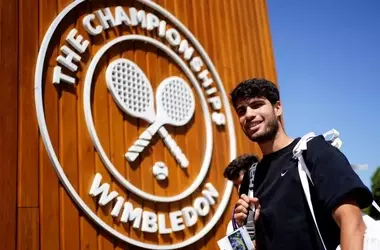 Jul 12, 2025
Alcaraz vs Sinner: Wimbledon 2025 Men's Singles Final Preview
The highly anticipated Wimbledon 2025 men's singles final features a compelling clash between Carlos Alcaraz and Jannik Sinner. This encounter not only offers Sinner a chance for redemption after their epic French Open final, but also presents Alcaraz with an opportunity to secure a historic third consecutive Wimbledon title. Their rivalry is poised to define men's tennis for years to come, promising an enthralling spectacle on the grass courts of London.
By Ann Curry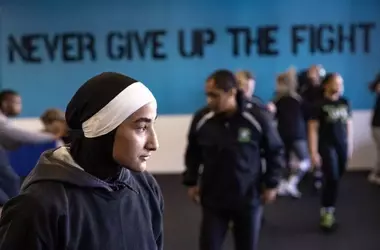 Jul 11, 2025
Sisters Revolutionize Women's Wrestling with Faith-Based Uniforms
Three Muslim sisters, Jamilah, Zaynah, and Latifah McBryde, defied expectations and traditional norms in American women's wrestling. Originating from Buffalo, N.Y., and homeschooled, their talent was evident early on. However, their Islamic faith conflicted with the sport's required singlets. This led them on a journey to advocate for rule changes, ultimately allowing full-body uniforms in collegiate and national wrestling, paving the way for greater inclusivity in the sport. Their perseverance has left an indelible mark on wrestling, demonstrating the power of cultural accommodation in athletics.
By Lester Holt