Art Training
Street Dance Courses: A Scientific and Educational Overview of Styles, Techniques

I. Objective and Scope
The objective of this article is to clarify the nature, content, and educational purpose of street dance courses. Central questions addressed include:
- What defines street dance courses in professional and educational contexts?
- What foundational principles and movement techniques are included?
- How are instructional programs structured and delivered?
- What cultural, social, and physical contexts make street dance training relevant?
- How are teaching methods and curricula evolving with trends and technological tools?
The article proceeds in a structured sequence: definitions and conceptual foundations, technical mechanisms, instructional frameworks, comprehensive discussion of context, summary and outlook, and a factual Q&A section.
II. Fundamental Concepts and Definitions
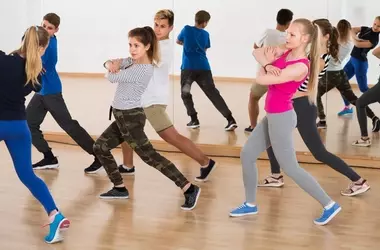
Street dance refers to a collection of dance styles that originated outside formal dance studios, often performed in urban settings such as streets, clubs, or community centers. Key styles include breaking, popping, locking, hip-hop, house dance, and krumping. These forms are characterized by improvisation, musicality, rhythm, and individual expression.
Street dance courses are structured programs that teach these techniques, while also incorporating physical conditioning, rhythm training, choreography principles, and cultural history. Courses are offered in dance schools, community centers, universities, and online platforms.
Instruction in street dance includes:
- Technical Skills: Footwork, body isolation, coordination, balance, and rhythm.
- Stylistic Elements: Distinctive characteristics of each dance style, including aesthetic and movement vocabulary.
- Musical Interpretation: Understanding rhythm, beat, and musical phrasing to inform movement choices.
- Cultural Awareness: Historical context, evolution of dance styles, and social significance of street dance in urban communities.
According to research published in the Journal of Dance Education, structured training programs in street dance support physical fitness, creativity, and social development while preserving cultural heritage.
III. Core Mechanisms and In-Depth Explanation
1. Technical Movement Principles
Street dance training emphasizes foundational techniques such as body isolation, dynamic control, and rhythm synchronization. Body isolation involves moving one part of the body independently from others, enabling precise articulation of movement patterns. Coordination and balance training are integral to performing complex sequences safely and effectively.
Musicality is taught through exercises that align movement with beats, tempo, and rhythmic variation. Students learn to identify accents, syncopation, and phrasing in music to inform their choreography and improvisation.
2. Style-Specific Techniques
Courses often segment instruction by style:
- Breaking: Emphasizes acrobatic footwork, spins, freezes, and floor-based movements.
- Popping: Focuses on muscle contractions to create sharp, isolated movements.
- Locking: Characterized by distinct pauses or “locks” in movement sequences.
- Hip-Hop: Integrates freestyle movements influenced by urban culture, including gestures, body rolls, and waves.
- House Dance: Features intricate footwork, jacking motions, and fluid torso movements.
- Krumping: Involves high-energy expressive movements and aggressive rhythmic patterns.
Each style is taught through a combination of repetition, demonstration, and improvisational exercises.
3. Physical Conditioning and Safety
Street dance training emphasizes physical fitness, including strength, flexibility, cardiovascular endurance, and joint mobility. Proper warm-up, conditioning exercises, and cool-down routines are essential for injury prevention.
Biomechanical principles are incorporated to teach safe landing techniques, controlled spins, and falls. Research in the International Journal of Exercise Science indicates that structured dance training can improve musculoskeletal health and motor coordination.
4. Choreography and Improvisation
Courses combine structured sequences with freestyle practice. Choreography instruction teaches composition, spatial awareness, and narrative in dance sequences. Improvisational exercises encourage creativity, adaptability, and personal expression within stylistic frameworks.
5. Cultural and Historical Context
Street dance has deep roots in urban communities, often reflecting social, political, and cultural narratives. Courses typically include historical overviews, highlighting the emergence of styles from African American, Latino, and Caribbean communities. Understanding this context is essential for preserving the integrity and authenticity of the dance forms.
IV. Comprehensive Context and Objective Discussion
1. Educational and Professional Frameworks
Street dance courses are offered at various levels, from introductory workshops to advanced conservatory programs. Some courses are integrated into performing arts curricula, while others exist as community-based programs focusing on cultural preservation and youth engagement.
Instructional methodologies include live demonstration, mirrored practice, peer feedback, video analysis, and online tutorials. Assessment is typically based on technical proficiency, musicality, stylistic accuracy, and creative interpretation.
2. Physical and Social Benefits
Studies in dance education highlight benefits including cardiovascular health, coordination, flexibility, and muscular strength. Participation in street dance also supports social skills, teamwork, and self-expression, particularly in group class settings or performance contexts.
3. Industry and Cultural Trends
Street dance has gained global visibility through competitions, social media, music videos, and television programs. Digital platforms allow widespread access to tutorials, choreography, and performances, influencing instructional approaches. Virtual learning environments increasingly complement in-person training.
Emerging trends include fusion styles, interdisciplinary performance collaborations, and integration with other performing arts disciplines. Educators emphasize preserving the cultural roots of street dance while adapting to contemporary performance contexts.
4. Safety, Inclusion, and Accessibility
Courses increasingly address safety, inclusive practice, and accessibility. Proper guidance on warm-up, injury prevention, and skill progression ensures equitable participation. Cultural sensitivity and respect for the origins of street dance are emphasized in ethical pedagogical approaches.
V. Summary and Outlook
Street dance courses provide structured instruction in technical, stylistic, physical, and cultural components of urban dance forms. They combine skill development, musical interpretation, choreography, improvisation, and cultural education. Courses support physical health, creativity, social engagement, and preservation of cultural heritage.
Future developments in street dance education include expanded use of digital learning platforms, cross-disciplinary collaborations, adaptive and inclusive training models, and enhanced documentation of historical and cultural context. Continuous adaptation ensures alignment with evolving social and artistic trends.
VI. Question and Answer Section
Q1: What are the primary goals of street dance courses?
To teach technical skills, stylistic understanding, musicality, choreography, improvisation, and cultural knowledge.
Q2: Are physical conditioning and safety addressed in courses?
Yes. Warm-ups, conditioning exercises, and biomechanical principles are integral components.
Q3: How is musicality integrated into training?
Through exercises aligning movement with beat, tempo, accents, and rhythmic phrasing.
Q4: Do courses include historical and cultural instruction?
Yes. Students learn the origins of styles, social significance, and community contexts.
Q5: Can street dance training be delivered online?
Yes. Digital platforms complement in-person instruction and provide access to tutorials, choreography, and demonstrations.
https://www.journalofdanceeducation.org/
https://www.ijesonline.com/
https://www.ncbi.nlm.nih.gov/pmc/articles/PMC7368665/
https://www.danceheritage.org/
https://www.scd.org.uk/street-dance-culture

Educator dedicated to preserving and teaching indigenous Australian languages and oral traditions.
Exploration ArchivesOther Articles
 Feb 25, 2026
Oil Painting Courses: Concepts, Techniques, and Educational Insights
Oil painting courses are structured educational programs designed to teach the techniques, materials, and artistic principles associated with oil-based paints. These courses typically cover topics such as color theory, brushwork, composition, layering methods, and art history, providing learners with the skills to create and analyze works of art using oils. This article provides a neutral overview of oil painting courses, including their definition, foundational concepts, instructional mechanisms, applications, and current trends in art education. The discussion follows a structured sequence: objective clarification, basic concept analysis, mechanism explanation, comprehensive discussion, summary and outlook, and a question-and-answer section. All content is intended solely for educational purposes.
 By Erik Johansson
 Feb 14, 2026
street Dance Training: A Neutral Overview of Structure, Techniques, and Cultural Context
Street dance training refers to structured programs designed to teach urban dance styles that originated outside formal dance institutions, including hip-hop, breaking, locking, and popping. These courses aim to develop rhythm, coordination, physical fitness, creativity, and performance skills. This article provides a neutral overview of street dance training, defining the concept, explaining foundational techniques, analyzing the mechanisms of skill acquisition, presenting the broader cultural and educational context, and summarizing key insights. A question-and-answer section addresses common informational queries. The content is strictly informational and educational.
By Erik Johansson Feb 12, 2026
Violin Training: Concepts, Techniques, Pedagogy, and Perspectives
Violin training refers to structured educational programs and instructional practices designed to develop technical proficiency, musical interpretation, and performance skills on the violin. It encompasses fundamental techniques, music theory, reading of musical notation, ensemble coordination, and practice methodologies. This article provides a neutral and comprehensive overview of violin training. It defines the concept, explains foundational principles of violin pedagogy, examines core mechanisms of skill acquisition, discusses applications across individual and group learning settings, and highlights challenges and considerations in instruction. The article concludes with a summary, outlook, and a question-and-answer section. All content is presented for informational and educational purposes only.
 By Talia Salt