Medical Devices
Pulse Oximeter: A Neutral Scientific Overview of Principles, Use, and Limitations

1. Objective Definition
The objective of this article is to explain what a pulse oximeter is, what physiological parameter it measures, how it functions, and how its readings are typically interpreted within a medical and scientific framework. The article also addresses common factors that influence measurement accuracy and summarizes the role of pulse oximetry in broader health monitoring contexts. By following a structured explanatory sequence, the text seeks to clarify both the capabilities and the limitations of pulse oximeters while maintaining a neutral and evidence-based perspective.
2. Basic Concept Explanation
A pulse oximeter is a device that estimates peripheral oxygen saturation, commonly abbreviated as SpO₂. Oxygen saturation represents the percentage of hemoglobin molecules in the blood that are bound to oxygen. In healthy adults at sea level, arterial oxygen saturation is often reported in the range of approximately 95% to 100% under resting conditions. This measurement does not directly quantify the amount of oxygen dissolved in plasma; instead, it reflects hemoglobin oxygen binding status.
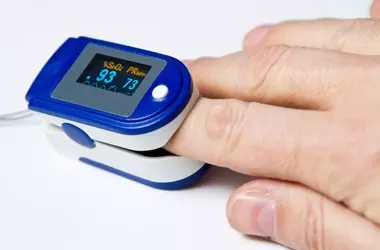
Pulse oximeters are typically applied to peripheral body sites such as the fingertip, earlobe, or toe. The device provides a numerical oxygen saturation value and often displays pulse rate derived from pulsatile blood flow. Because the method does not require blood sampling, it is categorized as noninvasive monitoring.
3. Core Mechanism and In-Depth Explanation
The fundamental operating principle of pulse oximetry is based on photoplethysmography and spectrophotometry. Hemoglobin absorbs light differently depending on whether it is oxygenated or deoxygenated. Most pulse oximeters emit light at two specific wavelengths, generally in the red and infrared regions of the electromagnetic spectrum.
When light passes through or reflects from vascular tissue, a portion of that light is absorbed by blood components. Oxygenated hemoglobin absorbs more infrared light and less red light, while deoxygenated hemoglobin shows the opposite pattern. The device detects changes in light absorption synchronized with arterial pulsations, allowing it to isolate arterial blood signals from nonpulsatile tissues such as skin, bone, and venous blood.
Using empirically derived algorithms, the ratio of absorbed red and infrared light is converted into an estimated oxygen saturation value. These algorithms are developed through controlled calibration studies comparing optical signals with arterial blood gas measurements in human subjects.
4. Comprehensive and Objective Discussion
Pulse oximetry is widely used in hospitals, outpatient clinics, emergency settings, and observational research. It is also employed in nonclinical contexts such as altitude physiology studies and sleep-related breathing assessments. Despite its broad application, pulse oximetry has recognized limitations.
Measurement accuracy can be affected by several factors, including reduced peripheral perfusion, motion artifacts, ambient light interference, nail coverings, and certain skin pigmentation characteristics. Clinical literature has documented that pulse oximeters may show reduced accuracy under conditions of low oxygen saturation, and variability has been observed across different device models and populations.
Importantly, pulse oximetry provides an estimate rather than a direct measurement of arterial oxygenation. It does not replace arterial blood gas analysis, which remains the reference standard for assessing oxygen and carbon dioxide levels as well as blood pH. Pulse oximetry readings should therefore be interpreted within a broader clinical and physiological context rather than in isolation.
5. Summary and Outlook
In summary, a pulse oximeter is a noninvasive optical device that estimates arterial oxygen saturation by analyzing light absorption characteristics of hemoglobin. Its strengths include ease of use, rapid feedback, and the ability to monitor trends over time. At the same time, its readings are influenced by technical and physiological variables that limit precision in certain conditions.
From a scientific perspective, ongoing research continues to examine calibration methods, algorithm transparency, and population-level performance characteristics. Future developments may focus on refining accuracy across a wider range of physiological states and improving interpretability without altering the fundamental measurement principles of pulse oximetry.
6. Question and Answer Section
Q1: Does a pulse oximeter directly measure blood oxygen content?
No. It estimates hemoglobin oxygen saturation using optical signals rather than directly measuring oxygen concentration in the blood.
Q2: Is oxygen saturation the same as oxygen delivery to tissues?
No. Oxygen delivery depends on multiple factors, including hemoglobin concentration, cardiac output, and vascular function, not solely oxygen saturation.
Q3: Can pulse oximeter readings vary between individuals?
Yes. Individual physiological differences and external factors can influence readings, which is why results are typically interpreted alongside other observations.
Q4: Why are two wavelengths of light used?
Different wavelengths allow the device to distinguish between oxygenated and deoxygenated hemoglobin based on their distinct light absorption properties.
- https://www.who.int/publications/i/item/WHO-2019-nCoV-clinical-2020.5
- https://www.fda.gov/medical-devices/products-and-medical-procedures/pulse-oximeters
- https://www.ncbi.nlm.nih.gov/books/NBK470348/
- https://www.ncbi.nlm.nih.gov/pmc/articles/PMC6681270/
- https://www.ncbi.nlm.nih.gov/pmc/articles/PMC8881232/

Other Articles
 Feb 04, 2026
Patient Monitors: A Neutral, Scientific Overview
This article provides a neutral and educational overview of patient monitors. It defines the core concept, explains fundamental principles, describes key operating mechanisms in detail, and places patient monitoring systems within the broader context of modern healthcare. The discussion follows a structured sequence: clear objective, basic concept analysis, core mechanisms and in-depth explanation, a comprehensive and objective discussion, summary and outlook, and a question-and-answer section. The article is intended solely for information dissemination and knowledge clarification, without recommendation, inducement, or evaluative judgment.
 By Dr. Peter Van Dijk
 Feb 03, 2026
Oxygen Concentrator: A Neutral, Scientific Overview
This article presents a neutral and educational overview of the oxygen concentrator, focusing on its definition, foundational concepts, core operating mechanisms, performance characteristics, limitations, and broader application contexts. The discussion follows a structured progression from basic explanation to deeper technical clarification, then to an objective, comprehensive view, concluding with a summary, outlook, and a question-and-answer section. The sole purpose is information transmission and scientific understanding, without recommendation or evaluative intent.
 By Dr. Mei Wong
 Feb 03, 2026
Pulse Oximeter: A Neutral, Scientific Overview
This article provides a neutral and educational overview of the pulse oximeter, focusing on its definition, foundational concepts, operating mechanisms, measurement characteristics, limitations, and broader clinical and non-clinical contexts. It follows a structured progression from basic explanations to deeper technical discussion, concluding with an objective summary and a question-and-answer section. The purpose is to support general understanding and scientific literacy without any evaluative or promotional intent.
By Dr. Peter Van Dijk