ParentsKids
Navigating Friendships Across Life Stages: A Guide for Parents and Non-Parents

In a world where life stages often create divides among friends, maintaining meaningful connections can be challenging. This article explores the complexities of friendships between parents and non-parents, offering insights into fostering stronger bonds despite differing lifestyles. By addressing common misconceptions and providing actionable advice, it aims to bridge the gap between these groups, ensuring that relationships remain vibrant and supportive.
Friendships evolve as people grow older and enter new phases of life, such as parenthood. When one friend becomes a parent, their priorities shift dramatically, leading to potential misunderstandings with child-free companions. To address this issue, experts like Mariah Maddox, Anne Helen Petersen, and Justin Kellough share strategies for keeping these friendships alive. Open communication plays a crucial role in overcoming assumptions about each other's availability or interests.
Petersen highlights the importance of inviting non-parent friends into family activities, suggesting that inclusivity strengthens ties. For instance, asking someone without kids to attend a school play or join a toddler's birthday party demonstrates genuine interest in maintaining the relationship. Additionally, scheduling regular check-ins via phone calls or arranging creative outings, such as running errands together, provides opportunities for quality time.
Maddox emphasizes finding mutual activities where children are present yet not overly distracting. She recommends walks around the neighborhood with strollers or organizing gatherings that include both parents and non-parents. These events allow individuals from different life stages to connect meaningfully while respecting everyone's commitments.
Kellough introduces the concept of "parent time off" (PTO), encouraging couples to allocate specific nights or weekends exclusively for personal enjoyment. By planning ahead with partners, family members, or babysitters, parents ensure they have dedicated moments away from childcare responsibilities. Such proactive measures contribute significantly to sustaining long-term friendships across various life stages.
Despite best efforts, some friendships naturally transform over time due to changing circumstances. Recognizing when a relationship has run its course is essential; however, before severing ties completely, revisiting initial takeaways about clear communication might reveal possibilities for renewal. Ultimately, embracing flexibility allows friendships to adapt gracefully through life's transitions.
Investing in diverse friendships enriches lives by offering fresh perspectives and support systems beyond immediate circles. Whether through logistical conveniences or emotional growth, nurturing bonds between parents and non-parents benefits all parties involved. By following the outlined strategies, individuals can cultivate enduring relationships capable of weathering any storm brought on by differing life stages.
Author of "This Book Is Anti-Racist," focusing on raising inclusive, socially conscious children.
Other Articles
 May 06, 2025
Jon Stewart Takes Aim at Trump's Toy-Economy Remarks
In this episode of "The Daily Show," Jon Stewart critiques Donald Trump's economic comments, specifically his suggestion that children might have fewer toys in his economy. Stewart mocks Trump's straightforward approach in an interview, where Trump attributes the good parts of the economy to himself and the bad parts to Biden. Stewart humorously shares a story about his niece who loves dolls, highlighting the joy of gifting generously. He contrasts this with Trump's frugal perspective on toys and pencils, labeling it as a depression-era mindset. Stewart jokingly suggests that if a Democrat proposed similar ideas, there would be widespread outrage, emphasizing the political hypocrisy surrounding such issues.
By Tiffany Jewell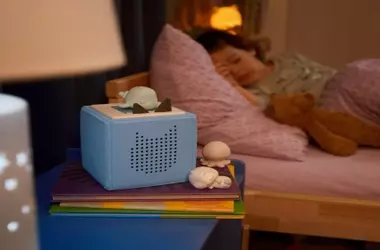 May 06, 2025
Revolutionizing Bedtime: Can Tech Gadgets Truly Transform Children's Sleep?
Parenting a sleep-resistant child can be an exhausting challenge, often leading to disrupted routines and power struggles. Experts suggest that consistent bedtime schedules, gradual transitions in parental presence, and reframing sleep as essential for well-being can help mitigate these issues. While various tech gadgets, such as Tonies' Sleepy Friends audio players and Moonbird’s moonbuddy breathing companion, aim to ease bedtime challenges, their effectiveness varies widely depending on the child. Pediatric sleep experts warn that reliance on technology should not replace crucial parent-child bonding or neglect potential underlying medical conditions affecting sleep, like asthma or allergies. Ultimately, simpler interventions like warm baths or consistent routines might prove more beneficial than tech solutions. Gadgets may complement bedtime rituals but shouldn’t serve as standalone fixes.
By Tiffany Jewell May 06, 2025
Global Trade Tensions Spark Concerns Over Toy Prices
Mattel is contemplating price increases for U.S. consumers due to tariffs imposed by the Trump administration, which could significantly impact toy prices. Despite being committed to affordable products, Mattel CEO Ynon Kreiz acknowledges that rising tariffs might necessitate pricing adjustments. Analysts warn that consumers are highly price-sensitive regarding toys, complicating potential price hikes. Although global sales increased by 2%, uncertainty in trade policies has led Mattel to withhold its annual financial outlook. With nearly 80% of U.S. toys imported from China, tariffs could drastically affect affordability. Mattel aims to diversify production, reducing reliance on China, but moving manufacturing to the U.S. seems unlikely. The situation highlights growing concerns across corporate sectors about the economic implications of ongoing trade policy changes.
By Dr. Carlos González