ParentsKids
Jon Stewart Takes Aim at Trump's Toy-Economy Remarks

Unpacking Economic Rhetoric with Persuasive Wit
Jon Stewart is no stranger to tackling political discourse with razor-sharp wit, and this latest segment was no exception. By analyzing Trump's interview with NBC's Kristen Welker, Stewart illuminated the intricacies of how leaders attempt to manipulate public perception regarding their economic policies. The former president's bold assertion that any positive aspects of the economy are attributed to him while blaming his predecessor for its shortcomings became the focal point of Stewart's critique.
Stewart's comedic timing shone as he mocked the simplicity of Trump's argumentation. Without resorting to subtlety or metaphor, Trump laid out his stance: "Trump good, Biden bad." This straightforward approach elicited laughter from Stewart, who likened it to the works of Shakespeare in its grandiosity and lack of nuance. Such comparisons not only entertained but also underscored the absurdity of such black-and-white thinking in complex economic matters.
A Playful Dive Into Consumerism and Childhood Joy
Stewart transitioned seamlessly into personal anecdotes to drive home his message. He recounted a hypothetical scenario involving an 11-year-old niece who adores dolls. In this amusing vignette, Stewart envisioned gifting her an extravagant collection of dolls, envisioning the sheer delight such generosity would bring. Yet, when juxtaposed with Trump's suggestion that children need only a handful of dolls, the contrast became glaringly apparent.
This playful exploration delved deeper into societal values surrounding consumerism and childhood joy. What began as a lighthearted joke evolved into a broader commentary on material possessions and their role in shaping happiness. Stewart cleverly used this example to highlight how political decisions can ripple outward, affecting even the minutiae of daily life, such as the number of dolls a child might receive.
Standardized Testing Meets Political Satire
The segment took yet another unexpected turn as Stewart introduced the concept of standardized testing into the mix. With characteristic flair, he described purchasing a "baby's first SAT kit" for his fictional niece—a whimsical nod to education reform debates. Even here, Trump's frugal mindset came under scrutiny, as the idea of limiting resources like pencils resonated with Stewart's critique of austerity measures.
This portion of the segment served as a microcosm of larger discussions around educational policy and resource allocation. By linking these themes to Trump's toy-related comments, Stewart effectively demonstrated how seemingly trivial remarks could symbolize broader ideological stances. His ability to weave together diverse topics showcased his skill as both a comedian and social commentator.
Economic Ideologies Through a Historical Lens
Stewart further expanded his critique by drawing parallels between Trump's views and those of previous eras marked by economic hardship. He humorously suggested that Trump's perspective resembled Depression-era rationing strategies, where luxuries were stripped away in favor of bare necessities. This analogy added depth to the discussion, inviting viewers to consider historical precedents and their relevance today.
Moreover, Stewart imagined a counterfactual scenario wherein a Democratic politician proposed similar restrictions. Predictably, this would have sparked outrage among conservative media outlets, fueling narratives about the perils of socialism. Through this thought experiment, Stewart underscored the double standards often present in political discourse, particularly concerning issues tied to family and childhood.
Author of "This Book Is Anti-Racist," focusing on raising inclusive, socially conscious children.
Other Articles
 May 06, 2025
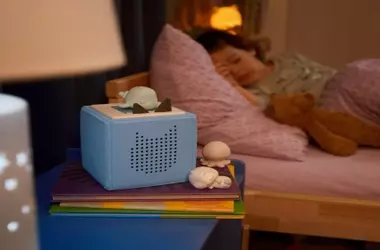
Revolutionizing Bedtime: Can Tech Gadgets Truly Transform Children's Sleep?
Parenting a sleep-resistant child can be an exhausting challenge, often leading to disrupted routines and power struggles. Experts suggest that consistent bedtime schedules, gradual transitions in parental presence, and reframing sleep as essential for well-being can help mitigate these issues. While various tech gadgets, such as Tonies' Sleepy Friends audio players and Moonbird’s moonbuddy breathing companion, aim to ease bedtime challenges, their effectiveness varies widely depending on the child. Pediatric sleep experts warn that reliance on technology should not replace crucial parent-child bonding or neglect potential underlying medical conditions affecting sleep, like asthma or allergies. Ultimately, simpler interventions like warm baths or consistent routines might prove more beneficial than tech solutions. Gadgets may complement bedtime rituals but shouldn’t serve as standalone fixes.
By Tiffany Jewell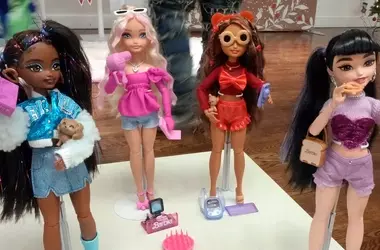 May 06, 2025
Global Trade Tensions Spark Concerns Over Toy Prices
Mattel is contemplating price increases for U.S. consumers due to tariffs imposed by the Trump administration, which could significantly impact toy prices. Despite being committed to affordable products, Mattel CEO Ynon Kreiz acknowledges that rising tariffs might necessitate pricing adjustments. Analysts warn that consumers are highly price-sensitive regarding toys, complicating potential price hikes. Although global sales increased by 2%, uncertainty in trade policies has led Mattel to withhold its annual financial outlook. With nearly 80% of U.S. toys imported from China, tariffs could drastically affect affordability. Mattel aims to diversify production, reducing reliance on China, but moving manufacturing to the U.S. seems unlikely. The situation highlights growing concerns across corporate sectors about the economic implications of ongoing trade policy changes.
By Dr. Carlos González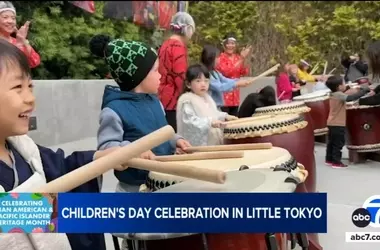 May 06, 2025
Children's Celebration Brings Japanese Tradition to Life in Los Angeles
In Little Tokyo, Los Angeles, the Kibo Nobori Children’s Day Festival celebrated its fourth year, honoring children in a vibrant event inspired by Japan's Kodomo no Hi. This national Japanese holiday, observed on May 5, focuses on the health and happiness of children, symbolized by koinobori windsocks. Founder Faith-Ann Kiwa Young introduced this tradition to Los Angeles through an event featuring performances, art activities, and local cuisine, with hand-decorated "hope flags" as a centerpiece. The festival provided a unique platform for celebrating children in a culture predominantly recognizing adults, receiving positive feedback from attendees like parent Kevin Liao. Through traditional elements, it emphasized the importance of cherishing childhood.
By Cathy Glass