Art Training
Modern Calligraphy: A Technical Analysis of Contemporary Scriptorium Practices

Modern calligraphy is a contemporary evolution of the traditional art of beautiful writing. Unlike traditional formal scripts—such as Spencerian or Copperplate—which are governed by rigid structural rules and historical cannons, modern calligraphy prioritizes individual style, creative expression, and the intentional subversion of classical proportions. This article examines the fundamental material requirements, the mechanical principles of pressure-based stroke variation, the chemical interaction between inks and substrates, and an objective assessment of the medium's role in the current visual landscape.
1. Basic Concept Analysis
At its core, modern calligraphy is a pressure-sensitive writing discipline. It is defined by the contrast between thin "upstrokes" and thick "downstrokes."
- The Flexible Nib: The primary tool is a pointed steel nib that possesses a slit. When pressure is applied, the tines of the nib spread apart, allowing a greater flow of ink to create a thick line.
- Deviation from Tradition: In modern calligraphy, the "slant," "x-height" (the height of lowercase letters), and "flourishing" are flexible. Artists may intentionally vary letter spacing or baseline alignment to create a specific visual rhythm.
- The Scriptorium Workflow: The process involves three distinct stages: the preparation of the nib (removing oils), the loading of the reservoir, and the rhythmic application of strokes combined with controlled breathing.
2. Core Mechanisms and In-Depth Elucidation
The technical success of modern calligraphy relies on the physics of fluid dynamics and the mechanical behavior of flexible metals.
The Principle of Pressure and Release
The fundamental mechanic is the modulation of force.
- Upstrokes (Hairlines): These are created by moving the pen upward or sideways with minimal pressure. The tines remains closed, resulting in a thin line determined by the sharpness of the nib's point.
- Downstrokes (Swells): These are created by applying downward pressure. The tines spread, and the ink bridges the gap via surface tension to create a wide stroke.
Tool Geometry: Oblique vs. Straight Holders
- Straight Holders: Align the nib directly with the handle. These are often used for upright modern scripts or by left-handed calligraphers.
- Oblique Holders: Feature a side brass flange that holds the nib at an angle. This tool was mechanically designed to help right-handed writers achieve a consistent slant without contorting their wrists, reducing the risk of the nib "snagging" on the paper fibers during upstrokes.
Ink-Paper Interaction
The chemistry of the ink must be balanced with the "tooth" and sizing of the paper.
- Viscosity: If ink is too thin (low viscosity), it will "bleed" into the paper fibers (feathering). If it is too thick, it will not flow from the nib (clogging).
- Sizing: Professional calligraphy paper is treated with "sizing" (internal or surface starch/gelatin) to prevent the ink from being absorbed too quickly, allowing it to sit on top of the surface and dry with crisp edges.
3. Presenting the Full Picture and Objective Discussion
An objective assessment of modern calligraphy must consider its archival qualities and the learning curve associated with its tools.
Archival Integrity
According to standards set by the American Society for Testing and Materials (ASTM), the longevity of a calligraphic work depends on the "lightfastness" of the ink and the pH-neutrality of the paper.
- Pigment-based Inks: Carbon-based (India ink) or iron-gall inks are generally permanent.
- Dye-based Inks: Many colorful fountain pen inks are dye-based and will fade over time when subject to UV radiation.
The Learning Curve and Ergonomics
Modern calligraphy is often perceived as more accessible than classical scripts because of its "rules-free" nature. However, from a mechanical standpoint, it requires significant fine motor control.
- Muscle Memory: Achieving consistent "swell" widths requires training the extrinsic muscles of the hand to apply precise grams of force.
- Safety: Prolonged practice without proper grip can lead to repetitive strain injuries (RSI).
Comparative Analysis
| Feature | Traditional Calligraphy | Modern Calligraphy |
| Slant | Strict (e.g., 55 degrees) | Variable / Personal |
| Letterform | Fixed Proportions | Fluid / Bounce Lettering |
| Tools | Pointed Nib / Broad Edge | Pointed Nib / Brush Pen / Faux |
| Goal | Historical Accuracy | Individual Expression |
4. Summary and Outlook
Modern calligraphy has bridged the gap between ancient manuscript traditions and contemporary graphic design. Its reliance on physical tools—metal, ink, and paper—provides a tactile contrast to digital typography.
Future Trends:
- Hybridization: Combining hand-calligraphed elements with digital vectorization for commercial branding.
- Sustainability: A shift toward eco-friendly, walnut-based inks and tree-free papers (such as cotton or bamboo).
- Procreate Calligraphy: The development of digital "brushes" that simulate the pressure-sensitivity of a steel nib, allowing for "modern calligraphy" on tablets.
5. Q&A (Question and Answer Session)
Q: Why do new nibs often refuse to hold ink?
A: New steel nibs are coated with a thin layer of industrial oil to prevent rusting during storage. This oil is hydrophobic and causes the ink to bead up and fall off. It must be removed using a mild abrasive or a quick pass through a flame before the first use.
Q: What is "Faux Calligraphy"?
A: Faux calligraphy replicates the look of modern calligraphy using standard pens (like ballpoints). The writer draws the outlines of the "downstrokes" and colors them in manually. While it mimics the aesthetic, it lacks the fluid mechanical rhythm of the pointed pen.
Q: Can I use fountain pen ink for dip pen calligraphy?
A: Yes, but fountain pen ink is usually very thin. Many calligraphers add a small amount of Gum Arabic to increase the viscosity, helping the ink cling to the dip pen nib and preventing it from "blobbing" onto the paper.
Q: What is "Bounce Lettering"?
A: This is a specific modern technique where letters are intentionally placed above or below the baseline. Objectively, this disrupts the traditional horizontal alignment to create a sense of movement and "playfulness" in the composition.
Would you like me to provide a table comparing the flexibility ratings of different professional pointed nibs?
Emergency Medicine physician and simulation training director for emergency response protocols.
Exploration ArchivesOther Articles
 Dec 19, 2025
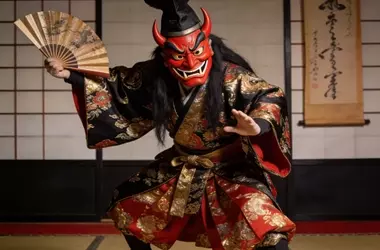
Kyogen: The Mechanics of Classical Japanese Comedy
Kyogenis a traditional form of Japanese theater that developed alongside Noh as its comedic counterpart. While Noh focuses on the tragic, the supernatural, and the aristocratic, Kyogen emphasizes the comedic, the mundane, and the everyday life of commoners during the medieval period. Together, these two forms constitute the theater ofNogaku.
 By Viktor Orlov
 Dec 19, 2025
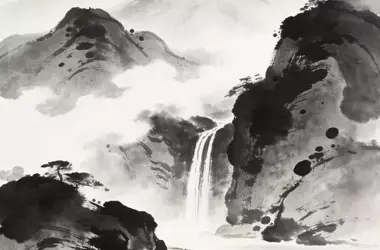
Technical Analysis of Sumi-e: Ink Chemistry, Tool Mechanics, and Philosophic Frameworks
Sumi-e, also known as Suibokuga, is a traditional East Asian wash painting technique that utilizes black carbon-based ink and water to create monochromatic images on paper or silk. Originating in China during the Tang Dynasty and later refined in Japan, the practice is characterized by its emphasis on brushstroke economy and the intentional use of negative space. This article examines the molecular composition of "Sumi" ink, the mechanical properties of animal-hair brushes, the fluid dynamics of ink-to-paper interaction, and the objective criteria defining technical proficiency in the medium. The following sections provide a structured analysis of the material science and physical principles that facilitate this art form.
 By Jin Park
 Dec 19, 2025
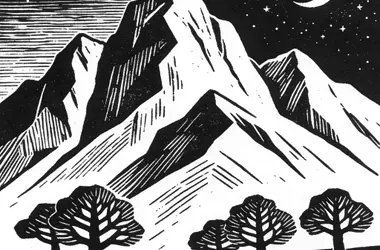
Technical Analysis of Linocut: Materials, Mechanics, and Relief Printing
Linocut, a variant of woodcut, is a relief printing technique in which a sheet of linoleum—frequently backed with burlap or hessian—is used as the relief surface. A design is engraved into the linoleum surface with a sharp knife, V-shaped chisel, or gouge, with the raised (uncarved) areas representing a reversal (mirror image) of the parts to be printed. This article examines the material properties of linoleum, the mechanical process of carving and ink transfer, the objective archival considerations of the medium, and its role in the broader landscape of printmaking.
 By Leo Fernandez