Medical Devices
Mammography Equipment (Breast X-Ray System): A Neutral Overview of Technology

1. Clear Objective
The purpose of this article is to explain what a mammography machine is, how it functions, and how it is used in contemporary medical practice. The discussion follows a logical sequence:
- Definition and scope of mammography systems
- Technical foundations and imaging mechanisms
- Clinical use cases and broader context
- Objective discussion of advantages and constraints
- Summary and future development trends
- Frequently asked questions
The content remains informational and avoids promotional language. All numerical data cited originate from recognized public health or medical authorities and are listed as web links at the end of the document.
2. Basic Concept Analysis
A mammography machine is a dedicated radiographic imaging system engineered specifically for breast examination. Unlike general X-ray units, it operates at lower photon energies and incorporates compression paddles to spread breast tissue evenly, which improves image clarity and reduces radiation dose.
Mammography is primarily used to detect early signs of breast cancer, including masses and microcalcifications that may not be palpable. According to the World Health Organization, breast cancer is the most commonly diagnosed cancer globally, with approximately 2.3 million new cases reported in 2020. The widespread clinical use of mammography is closely related to efforts aimed at early detection of this disease.
In the United States, screening mammography has been widely adopted. The U.S. Preventive Services Task Force periodically reviews evidence to issue age-specific screening recommendations. The American Cancer Society also publishes guidelines based on epidemiological and clinical evidence. These organizations emphasize that screening policies depend on age, risk level, and individual health context.
Mammography systems can be categorized into two primary types:
- Screening mammography systems, used for routine examinations in asymptomatic individuals.
- Diagnostic mammography systems, used for evaluating symptoms such as lumps or abnormal screening findings.
Technologically, systems may also be divided into:
- Digital mammography (2D full-field digital mammography)
- Digital breast tomosynthesis (3D mammography)
Digital breast tomosynthesis creates multiple thin-slice images of the breast, which can reduce tissue overlap and improve detection in certain patients.
3. Core Mechanisms and In-Depth Explanation
3.1 Physical Principles
Mammography relies on ionizing radiation in the X-ray spectrum. The system includes:
- An X-ray tube optimized for low-energy imaging
- A breast support platform
- A compression paddle
- A digital detector
The breast is gently compressed to achieve three goals:
- Reduce tissue thickness
- Minimize motion artifacts
- Lower radiation dose
Radiation dose is a central safety parameter. According to the U.S. Food and Drug Administration, the average glandular dose for a standard two-view mammogram is typically about 0.4 millisieverts (mSv). For comparison, the U.S. Nuclear Regulatory Commission reports that the average annual background radiation exposure in the United States is approximately 3.1 mSv. This comparison provides context but does not imply equivalence of risk.
3.2 Image Formation
Digital detectors convert X-ray photons into electrical signals, which are processed into grayscale images. Breast tissues of varying densities attenuate X-rays differently:
- Fatty tissue appears darker
- Dense glandular tissue appears lighter
- Calcifications appear as bright spots
Breast density is a clinically relevant variable. The National Cancer Institute notes that dense breast tissue can make interpretation more challenging and is associated with an increased risk of breast cancer.
3.3 Digital Breast Tomosynthesis
Tomosynthesis acquires multiple projection images at different angles and reconstructs them into thin slices. This approach reduces the masking effect caused by overlapping tissues. According to published evaluations referenced by the U.S. Food and Drug Administration, tomosynthesis may improve cancer detection rates in certain populations, though outcomes vary depending on patient characteristics and study design.
4. Comprehensive and Objective Discussion
4.1 Clinical Context
Mammography is used in:
- Population-based screening programs
- Diagnostic work-up of symptoms
- Post-treatment surveillance
Screening aims to identify cancer before symptoms appear. The World Health Organization states that early detection is associated with improved treatment outcomes in many health systems where timely therapy is available.
In the United States, surveillance data compiled by the Centers for Disease Control and Prevention indicate substantial participation in breast cancer screening programs among eligible age groups.
4.2 Benefits and Limitations
Potential Benefits:
- Detection of early-stage cancers
- Identification of microcalcifications
- Standardized imaging protocols
Limitations:
- False-positive findings requiring additional imaging
- False-negative results, especially in dense breasts
- Exposure to ionizing radiation
- Overdiagnosis in certain screening populations
The concept of overdiagnosis is discussed in peer-reviewed literature and summarized by public health bodies such as the National Cancer Institute. Overdiagnosis refers to detection of tumors that may not progress to cause symptoms during a patient’s lifetime.
4.3 Safety Regulation
Mammography equipment in the United States is regulated under the Mammography Quality Standards Act (MQSA), overseen by the U.S. Food and Drug Administration. Facilities must meet defined technical, quality control, and personnel standards.
Radiation exposure limits and equipment calibration protocols are defined to ensure consistent performance and minimize risk.
5. Summary and Outlook
Mammography machines are specialized low-dose X-ray systems designed to image breast tissue for early detection and diagnostic evaluation. The technology is grounded in established radiographic physics and has evolved from film-screen systems to fully digital platforms and three-dimensional tomosynthesis.
Clinical implementation varies across countries depending on healthcare infrastructure, screening policies, and population risk profiles. While mammography contributes to early detection efforts, it also presents interpretive challenges and potential harms that are acknowledged in scientific literature.
Ongoing research focuses on:
- Artificial intelligence–assisted image interpretation
- Dose optimization
- Risk-based screening strategies
- Integration with complementary imaging modalities
Technological development continues within a framework of regulatory oversight and evidence-based evaluation.
6. Question and Answer Section
Q1: Does mammography use ionizing radiation?
Yes. It uses low-dose X-rays. The average effective dose per standard examination is approximately 0.4 mSv, according to U.S. regulatory data.
Q2: Is digital mammography different from traditional film mammography?
Digital systems replace film with electronic detectors, enabling image processing, storage, and transmission. Image quality and workflow efficiency differ between the two systems.
Q3: What is breast tomosynthesis?
Digital breast tomosynthesis is a three-dimensional imaging method that reconstructs multiple projection images into thin slices to reduce tissue overlap.
Q4: Can mammography detect all breast cancers?
No imaging modality detects all cancers. Sensitivity varies depending on age, breast density, and tumor characteristics.
Q5: Are there risks associated with mammography?
Risks include radiation exposure, false positives, false negatives, and overdiagnosis. Regulatory agencies establish safety standards to manage these factors.
https://www.who.int/news-room/fact-sheets/detail/breast-cancer
https://www.uspreventiveservicestaskforce.org
https://www.fda.gov/radiation-emitting-products/mammography-quality-standards-act-and-program
https://www.nrc.gov/about-nrc/radiation/around-us.html

Other Articles
 Feb 14, 2026
Physical Therapy Device: A Neutral Scientific Overview of Principles, Mechanisms
A physical therapy device, often referred to as a physiotherapy instrument, is a category of medical equipment designed to assist rehabilitation, pain management, or functional recovery through physical means such as electrical stimulation, ultrasound, heat, cold, light, or mechanical force. This article provides a structured and neutral scientific overview of physical therapy devices. It defines the core concept, clarifies the objective of the discussion, explains foundational principles and operational mechanisms, presents a comprehensive and balanced perspective on clinical applications and limitations, and concludes with a summary and question-and-answer section. All information is presented for educational purposes, without promotional intent.
 By Anjali Deshpande
 Feb 14, 2026
Pulse Oximeter: A Neutral Scientific Overview of Principles, Mechanisms, and Clinical Context
A pulse oximeter is a noninvasive medical device designed to estimate arterial oxygen saturation (SpO₂) and pulse rate by analyzing light absorption characteristics of oxygenated and deoxygenated hemoglobin. This article provides a structured, neutral overview of the device. It clarifies the objective of discussing pulse oximetry, explains foundational physiological and technical concepts, examines the measurement mechanism in depth, presents a comprehensive and balanced discussion of applications and limitations, and concludes with future perspectives and a question-and-answer section. All content is informational in nature and avoids promotional language.
 By Dr. Peter Van Dijk
 Feb 13, 2026
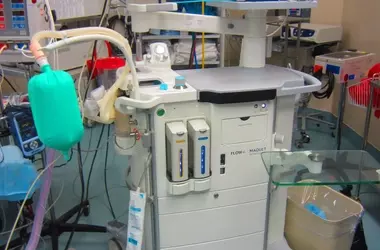
Anesthesia Machine: Structure, Function, and Clinical Role
An anesthesia machine is a medical device designed to deliver a controlled mixture of gases and anesthetic agents to patients during surgical and procedural interventions while supporting ventilation and monitoring physiological parameters. This article provides a neutral and structured overview of anesthesia machines. It defines the concept, explains the foundational components, examines the core operational mechanisms, discusses clinical applications and limitations, and concludes with a summary and structured question-and-answer section. The objective is solely to clarify technical and clinical knowledge.
By Anjali Deshpande