News
Kazakhstan to Join Abraham Accords

Kazakhstan's decision to affiliate with the Abraham Accords marks a noteworthy, albeit largely symbolic, step in international diplomacy. This Central Asian nation, having established full diplomatic relations with Israel since its independence in 1992, is now formally endorsing an initiative previously spearheaded by the Trump administration. The move is positioned as a significant advancement in fostering broader peace and collaboration between Israel and other Muslim-majority states, coming at a time when the Abraham Accords seek further expansion beyond its current members: Bahrain, Morocco, Sudan, and the United Arab Emirates.
The announcement underscores a continued effort to integrate Israel within the global community, particularly amidst scrutiny concerning its military actions in Gaza. While critics question the practical impact given Kazakhstan's existing ties and geographical distance, proponents argue that its inclusion sends a powerful message, potentially encouraging other nations to engage in similar diplomatic endeavors. U.S. officials involved in the discussions highlighted the potential for enhanced cooperation in vital sectors such as defense, cybersecurity, energy, and food technology, areas where both countries have previously engaged through bilateral agreements.
Former President Donald Trump, who publicly confirmed Kazakhstan's impending membership, framed this development as a major stride towards global unity and stability, suggesting it would be the first of many such additions during his potential second term. He emphasized that more nations are considering joining this "club of STRENGTH" to promote peace and prosperity. This diplomatic push aligns with a broader vision of transforming geopolitical landscapes and achieving tangible progress in international relations.
This initiative reflects the ongoing pursuit of a more interconnected and cooperative world, where diplomatic engagement and shared interests can bridge historical divides and foster a future of mutual respect and prosperity. The inclusion of new members in such accords symbolizes a collective commitment to dialogue and partnership, paving the way for strengthened international bonds and collaborative solutions to global challenges.
Veteran BBC and OZY journalist, author, and commentator on US politics and women's issues.
Other Articles
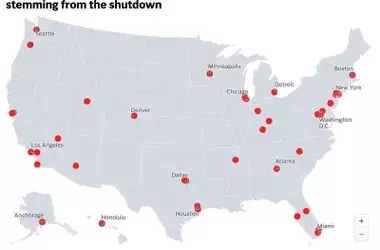 Nov 07, 2025
Federal Aviation Administration Imposes Flight Reductions Amidst Government Shutdown
The Federal Aviation Administration has ordered flight cutbacks nationwide, impacting 40 airports across over two dozen states. These reductions, starting at 4% and escalating to 10% by November 14th, are a direct consequence of the prolonged government shutdown, aiming to alleviate pressure on unpaid air traffic controllers. This measure has led to widespread flight cancellations and adjustments by airlines, causing uncertainty for travelers.
By Carl Bernstein Nov 07, 2025
Boeing Avoids Criminal Charges in 737 Max Crashes, Sparking Controversy
A federal judge has dismissed criminal conspiracy charges against Boeing related to two 737 Max crashes that claimed 346 lives. This decision comes after a deal in which Boeing will pay an additional $1.1 billion in fines and compensation, and commit to internal safety improvements. The ruling has drawn strong reactions from victims' families, who argue it undermines accountability.
By Carl Bernstein Nov 06, 2025
Government Shutdown, Tariff Disputes, and Tax Policy Under Scrutiny
The nation faces a prolonged government shutdown, with President Trump urging Republicans to bypass the Senate filibuster, while Democrats, bolstered by recent electoral gains, remain steadfast. Concurrently, the Supreme Court is deliberating the legality of Trump's tariffs, questioning the extent of presidential authority under the International Emergency Economic Powers Act. Meanwhile, new tax legislation is set to disproportionately benefit high-income individuals and corporations, and a federal judge has mandated ASL interpretation for White House briefings.
By Rageh Omaar