News
The Judicial Future: Emil Bove and the Reshaping of Federal Courts

This report delves into the enduring impact of former President Donald Trump's administration on the United States federal judiciary. During his term, Trump prioritized the appointment of judges who embrace a conservative, originalist interpretation of the Constitution, significantly altering the composition of the courts. This strategic realignment was largely facilitated by the Federalist Society, an influential legal organization that played a crucial role in identifying and endorsing judicial candidates. The article highlights that this judicial nomination process is now resuming, bringing to the forefront a particularly contentious nominee, Emil Bove, who is on the verge of securing a federal judgeship. His potential appointment underscores the continued efforts to embed a specific judicial philosophy within the federal court system, a move that has significant implications for future legal interpretations and policy. The narrative explores the trajectory of this judicial transformation and the figures central to its ongoing development.
Judicial Landscape Shifts with Emil Bove's Nomination
In a significant development for the American legal system, the machinery of judicial nominations, initiated under former President Donald Trump's administration, has roared back to life. A pivotal figure in this renewed drive is Emil Bove, who stands merely one step away from ascending to a lifetime position on the federal bench. This critical nomination comes years after Trump's initial term, during which he strategically appointed a multitude of jurists committed to a conservative, originalist reading of the Constitution. These appointments, a resounding triumph for the conservative legal movement, were meticulously cultivated with the substantial assistance of the esteemed Federalist Society.
Emil Bove, notably, served as a legal representative for President Trump during his high-profile criminal trial in Manhattan last year. His direct involvement in such a significant legal battle adds another layer of intrigue to his nomination to the U.S. Court of Appeals earlier this year. As July 2025 unfolds, the legal and political spheres are keenly observing Bove's path, understanding that his confirmation would solidify a particular jurisprudential direction within the nation's courts for decades to come. This ongoing process reflects a deliberate and sustained endeavor to profoundly reshape the federal judiciary according to a specific ideological blueprint.
A Contemplation on Judicial Philosophy and its Future
As a keen observer of the evolving legal landscape, I am struck by the profound implications of these judicial appointments. The focus on an "originalist" interpretation of the Constitution, while rooted in a particular legal tradition, inevitably shapes the very fabric of our society. When individuals like Emil Bove, with clear ties to a specific political agenda and a history of representing controversial figures, are nominated to lifetime positions on the federal bench, it raises important questions about the balance of power and the future direction of justice. This isn't merely about political victories; it's about the fundamental principles that will guide legal decisions for generations. The influence of organizations like the Federalist Society in vetting and promoting these candidates cannot be overstated, as they effectively act as gatekeepers for a specific judicial philosophy. From a citizen's perspective, it underscores the critical importance of understanding not just who is appointed, but what judicial philosophy they embody, as this directly impacts civil liberties, governmental oversight, and the interpretation of foundational laws. The current trajectory suggests a judiciary increasingly aligned with a conservative viewpoint, which prompts us to consider the potential for shifts in precedent and the broader societal consequences of such a concentrated judicial ideology.
Former NPR host and founder of The Race Card Project, focusing on race and identity in America.
Other Articles
 Jul 21, 2025
Trump Administration Challenges 2016 Russian Interference Findings
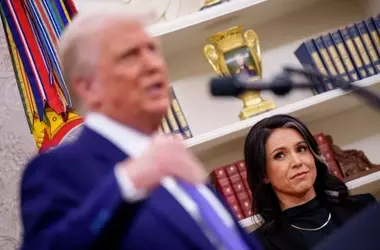
The Office of the Director of National Intelligence, under the Trump administration, recently issued reports disputing previous intelligence community conclusions regarding Russian interference in the 2016 U.S. presidential election. These reports, spearheaded by Director Tulsi Gabbard, allege that the Obama administration 'manufactured and politicized intelligence' to undermine the Trump presidency. This move has reignited debates over the integrity of intelligence assessments and sparked criticism from Democratic lawmakers, who view it as a politically motivated attempt to rewrite history.
By Carl Bernstein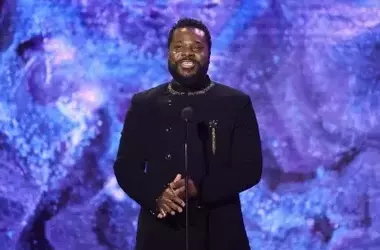 Jul 21, 2025
Remembering Malcolm-Jamal Warner: A Life of Talent and Versatility
Malcolm-Jamal Warner, the beloved actor and Grammy Award winner, passed away at 54 due to a drowning incident in Costa Rica. Best known for his iconic role as Theo Huxtable on 'The Cosby Show,' Warner's career spanned acting, music, and poetry, earning him critical acclaim and a Grammy nomination. His work reflected a deep commitment to artistic expression and vulnerability, leaving behind a legacy of diverse talent.
By Lester Holt Jul 21, 2025
A Nurse's Compassionate Embrace Amidst Profound Loss
Alek Hermon recounts the most challenging week of his life in 2019, when his father, Michael, was in a coma due to a severe brain injury. During this arduous period, an unexpected bond formed between Alek and Ray, a hospital nurse. Ray's profound compassion and empathy, initially misjudged by Alek, became a source of solace during his darkest hour, culminating in a powerful embrace after Michael's passing that left a lasting impact.
By Carl Bernstein