News
Trump Administration Challenges 2016 Russian Interference Findings

In a significant development, the Office of the Director of National Intelligence (ODNI), led by Trump's appointed Director Tulsi Gabbard, has released a series of reports aiming to discredit earlier intelligence community findings about Russia's involvement in the 2016 U.S. presidential election. These documents suggest that the Obama administration intentionally fabricated intelligence to initiate a 'years-long coup' against then-President Trump, a claim that aligns with Trump's long-standing assertions of a 'hoax' surrounding the Russia investigation. The declassified materials, including emails and memos from the new 'Director's Initiatives Group,' reveal internal discussions from 2016 among Obama officials concerning Russian election interference. These communications indicate that while there was no evidence of Russia directly altering vote counts, concerns existed about their ability to influence public confidence through cyber activities and disinformation campaigns.
Despite the ODNI's new narrative, a careful review of the original 2017 intelligence assessment shows that it primarily focused on Russian influence operations, such as social media disinformation and hack-and-leak campaigns, rather than direct manipulation of voting infrastructure. Intelligence experts from that period confirmed that any Russian hacking attempts on election systems were likely for intelligence gathering, not vote alteration. The recent publications from ODNI and similar statements from CIA Director John Ratcliffe have drawn sharp criticism from Democratic figures. Lawmakers like Rep. Jim Himes and Sen. Mark Warner have accused the Trump administration of weaponizing intelligence for political gain, arguing that these new reports do not genuinely contradict the core findings of the 2017 assessment but rather serve to amplify the president's conspiracy theories.
The continuous efforts to re-evaluate and, in some cases, undermine established intelligence conclusions underscore a persistent tension between political narratives and objective assessments. This ongoing dispute highlights the critical importance of transparent and unbiased intelligence gathering and analysis, as well as the need for public trust in government institutions. It also serves as a reminder that safeguarding democratic processes against foreign interference requires unwavering vigilance and a commitment to truth, even when faced with politically charged challenges.
Pulitzer Prize-winning investigative journalist who helped break the Watergate scandal.
Other Articles
 Jul 21, 2025
Remembering Malcolm-Jamal Warner: A Life of Talent and Versatility
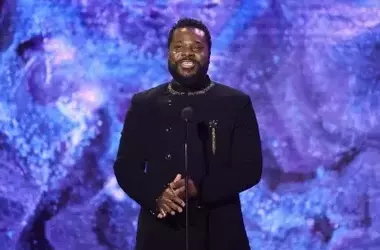
Malcolm-Jamal Warner, the beloved actor and Grammy Award winner, passed away at 54 due to a drowning incident in Costa Rica. Best known for his iconic role as Theo Huxtable on 'The Cosby Show,' Warner's career spanned acting, music, and poetry, earning him critical acclaim and a Grammy nomination. His work reflected a deep commitment to artistic expression and vulnerability, leaving behind a legacy of diverse talent.
By Lester Holt Jul 21, 2025
A Nurse's Compassionate Embrace Amidst Profound Loss
Alek Hermon recounts the most challenging week of his life in 2019, when his father, Michael, was in a coma due to a severe brain injury. During this arduous period, an unexpected bond formed between Alek and Ray, a hospital nurse. Ray's profound compassion and empathy, initially misjudged by Alek, became a source of solace during his darkest hour, culminating in a powerful embrace after Michael's passing that left a lasting impact.
By Carl Bernstein Jul 21, 2025
The Metamorphosis of Canton: A Mill Town's Search for a New Identity
Canton, North Carolina, a town once defined by its paper mill, faces an uncertain future after the mill's sudden closure on "Black Monday." For over a century, the mill provided steady employment and a strong communal identity, despite its notorious odor. This article explores the immediate aftermath of the closure, the emotional toll on residents like Jody Mathis, and the town's struggle to forge a new path forward beyond its industrial past. It delves into how the community, deeply intertwined with the mill's rhythm, now grapples with defining itself without its long-standing economic and cultural anchor.
By Rageh Omaar