News
Iran's Leadership Transition: The Future After Khamenei

The political landscape of Iran is entering a critical phase, marked by the advanced age of its Supreme Leader, Ayatollah Ali Khamenei, and the recent shifts in regional power dynamics. At 86, and with his authority reportedly tempered by recent geopolitical events, the question of who will eventually assume the mantle of leadership in the Islamic Republic has become paramount. This evolving situation raises significant inquiries into the stability and future trajectory of Iranian governance.
For decades, Ayatollah Khamenei has been the ultimate arbiter of state affairs in Iran, guiding the nation through complex domestic challenges and intricate international relations. His eventual departure will undoubtedly usher in a period of intense deliberation and maneuvering among various influential factions within the country's political and religious establishment. Speculation abounds regarding the potential candidates and the intricate processes involved in selecting a new Supreme Leader. This includes consideration of both religious scholars and military figures, each representing different ideological leanings and strategic visions for Iran's future.
The current political climate, particularly in the aftermath of recent skirmishes with regional adversaries, has highlighted the vulnerabilities and resilience of the Iranian system. The succession process is not merely a transfer of power but a critical juncture that will define Iran's strategic orientation, its approach to economic reforms, and its engagement with the global community. Observers are closely watching how this transition might impact the country's nuclear ambitions, its support for regional proxies, and its internal social cohesion.
Moreover, the role of the Assembly of Experts, a body responsible for selecting the Supreme Leader, will be under intense scrutiny. The composition and internal dynamics of this assembly will play a crucial role in shaping the outcome of the succession. The potential for shifts in power balances among conservative, reformist, and pragmatist elements within Iran's intricate political structure makes the future leadership an issue of considerable domestic and international importance.
As Iran navigates this period of anticipated transition, the world watches closely for signs of how a new leadership might redefine the nation's path. The choices made in the coming years will not only shape Iran's destiny but also have far-reaching implications for regional stability and global security.
CNN anchor known for his coverage of major global events and sober, factual delivery.
Other Articles
 Jul 09, 2025
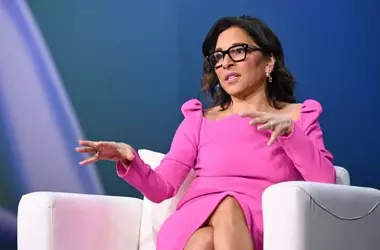
Turbulent Exit: Linda Yaccarino Departs X After Two Contentious Years
Linda Yaccarino, the CEO of X for the past two years, has announced her resignation from the social media platform. Her departure follows a turbulent period marked by content controversies and advertiser challenges under Elon Musk's ownership. Yaccarino, a seasoned advertising executive, was initially brought in to stabilize the platform's ad business, but faced an uphill battle against Musk's unpredictable leadership. Her exit comes swiftly after a recent controversy involving Musk's xAI chatbot.
By Anderson Cooper Jul 09, 2025
Legislative Battles Brew Over Surprise Ambulance Billing: A Deep Dive into State Efforts and Insurer Resistance
Efforts by various states to protect citizens from unexpected ground ambulance charges are facing significant challenges. While federal legislation, the No Surprises Act, addresses air ambulance costs, it leaves ground services uncovered, creating a loophole that leads to substantial financial burdens for patients. Insurers are actively lobbying against state-level protective measures, arguing that mandating higher reimbursement rates for ambulance services would inevitably lead to increased health insurance premiums for all. This ongoing struggle highlights a critical divergence between consumer protection and the financial interests of insurance providers.
By Rageh Omaar Jul 09, 2025
Texas Flood Aftermath and Federal Employment Shifts: A National Briefing
Texas grapples with the severe aftermath of recent floods, where the death toll has tragically exceeded 100, and over 160 individuals remain unaccounted for, prompting continuous search operations. Concurrently, the Supreme Court's latest ruling permits the U.S. government to resume extensive federal workforce reductions, impacting numerous agencies. This multifaceted national update also touches on ongoing foreign policy discussions concerning Gaza and Ukraine, highlighting complex geopolitical challenges.
By Anderson Cooper