News
Texas Flood Aftermath and Federal Employment Shifts: A National Briefing

In a confluence of significant national events, Texas continues to confront the devastating consequences of recent flooding, marked by a climbing death toll and sustained efforts to locate missing persons. Simultaneously, a pivotal Supreme Court decision has cleared the path for the federal government to proceed with substantial employee reductions across various departments. These critical domestic issues unfold alongside ongoing international dialogues, particularly regarding geopolitical tensions in Gaza and Ukraine, underscoring a period of diverse challenges for the nation.
The state of Texas is currently in the throes of a profound humanitarian crisis following the catastrophic floods of July 4th. The number of confirmed fatalities has tragically surpassed 100, with official reports indicating that more than 160 individuals are still missing. Emergency response teams are relentlessly engaged in search and rescue missions, though the last successful live recovery effort was reported days ago. Governor Greg Abbott has affirmed the state's unwavering commitment to these operations, vowing that they will persist until every missing person is accounted for. Investigations into the preparedness and response protocols leading up to and during the disaster are anticipated to commence shortly, as state legislators prepare for a special session to address the immense scale of the catastrophe. A critical point of contention highlighted by residents is the perceived lack of timely warnings, especially in Kerr County, one of the hardest-hit areas, which relies solely on a text-based alert system rather than outdoor sirens for flash flood emergencies. Despite the immense challenges, affected communities are demonstrating resilience, with many, like Kyle McCormick, expressing determination to rebuild in the face of unprecedented destruction. The majority of flood-related fatalities have occurred along the Guadalupe River, emphasizing the river's dangerous and unpredictable surge. The personal toll of the disaster is acutely felt, with individuals like Thad Heartfield, who lost his son and three friends in the deluge, now spearheading volunteer search efforts, rallying nearly a hundred people in the grim task of finding victims.
Adding to the nation's complex landscape, a recent ruling by the Supreme Court has granted the Trump administration the authority to move forward with the termination of hundreds of thousands of federal employees. This decision overturns a previous lower court injunction that had temporarily halted the implementation of a presidential executive order from February, which mandated extensive workforce reductions across governmental agencies. Consequently, these widespread layoffs can now recommence while legal challenges against the executive order continue to be adjudicated in lower judicial instances. This directive carries significant implications for approximately 20 federal bodies, including critical departments such as Health and Human Services and the Treasury. It's reported that around 10,000 HHS employees had already received notices of impending layoffs, with their continued employment hinging solely on the now-lifted court order. However, not all federal entities are equally affected; the Department of Veterans Affairs, for example, has indicated it will not need to implement large-scale layoffs, having already reduced its staff by an anticipated 30,000 through alternative measures. This situation highlights a broader trend where many federal workers, fearing job insecurity, opted to leave their positions preemptively.
Meanwhile, the international stage has been a significant focus for President Trump throughout the week, particularly concerning foreign policy. The President engaged in multiple meetings with Israeli Prime Minister Benjamin Netanyahu at the White House, with discussions reportedly centered on the situation in Gaza. During these high-level talks, Prime Minister Netanyahu publicly stated his intention to nominate President Trump for the Nobel Peace Prize. In a Cabinet meeting, Middle East envoy Steve Witkoff conveyed a cautious optimism regarding a potential resolution between Israel and Hamas by week's end, suggesting it could pave the way for enduring peace in the region, though acknowledging the uncertainty of final agreement terms. The President himself conceded that resolving the conflicts in both Gaza and Ukraine has proven more intricate than initially expected, expressing escalating frustration with Russian President Vladimir Putin over the continued aggression in Ukraine. Former U.S. Ambassador to Ukraine, William Taylor, posited that Putin's prolonged engagement in discussions with Trump might be a strategic maneuver to buy more time for military advancements on the ground.
In summary, the United States is navigating a period marked by profound challenges: the ongoing human tragedy and recovery efforts in Texas following devastating floods, a transformative shift in federal employment policy driven by a Supreme Court ruling, and intricate foreign policy endeavors aimed at resolving protracted international conflicts. These concurrent events demand concerted national attention and underscore the complex interplay of domestic crises and global responsibilities.
CNN anchor known for his coverage of major global events and sober, factual delivery.
Other Articles
 Jul 09, 2025
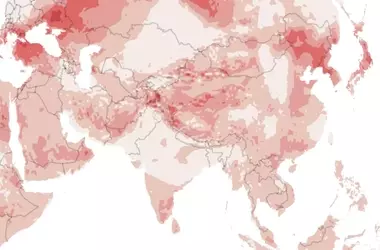
Changing Monsoon Patterns: East Asia's Shifting Rains
East Asia's traditional monsoon season, historically characterized by prolonged heavy rainfall from mid-June to July, is undergoing a significant transformation. Climate change has led to increasingly unpredictable precipitation, with regions like South Korea and western Japan experiencing drier periods during what was once their wettest season. This unpredictability mirrors shifts observed in other parts of Asia, raising concerns about altered weather patterns and their implications.
By Anderson Cooper Jul 09, 2025
Navigating Political Tensions and Workforce Shifts: A Look at Trump's Policies and Global Relations
This article delves into the potential ramifications of a recent Supreme Court decision on federal employment, granting the executive branch expanded authority to dismiss federal workers. It explores the anticipated impact on agencies like the Environmental Protection Agency, which has yet to outline a clear layoff strategy. Concurrently, the piece examines shifts in the former President's foreign policy approach, specifically his recent criticism of Russian leadership following renewed military aid to Ukraine, and the unexpected turn of his social media enterprise towards cryptocurrency as it faces financial challenges.
By Katty Kay Jul 09, 2025
US Seeks Deeper Economic Ties with African Nations Amidst Geopolitical Shifts
Five African heads of state are currently in Washington for a high-level summit focused on strengthening commercial relationships with the United States. This gathering, hosted by President Trump, signals a strategic shift from traditional aid to fostering economic partnerships, particularly in the critical minerals sector. The discussions are set against a backdrop of increasing geopolitical competition, with the U.S. seeking to counter the growing influence of China and Russia on the African continent.
By Mona Chalabi