Medical Devices
How Nebulizers Help Respiratory Conditions: A Technical Overview

A nebulizer is a specialized medical device engineered to convert liquid medication into a fine mist, known as an aerosol, which can be directly inhaled into the lungs. This method of delivery is a cornerstone of pulmonary therapy, particularly for individuals who may have difficulty using standard handheld inhalers. By bypassing the need for complex hand-breath coordination, nebulizers ensure that therapeutic agents reach the lower respiratory tract efficiently.
This article provides an objective analysis of nebulizer technology. It begins with the fundamental principles of aerosol therapy, explores the mechanical and physical mechanisms behind different nebulizer types, discusses the clinical landscape of their application, and concludes with a look at future advancements in inhalation technology.

1. Basic Conceptual Analysis: Aerosol Therapy and Lung Deposition
The primary objective of a nebulizer is to facilitate "lung deposition"—the process by which inhaled particles settle in the various compartments of the respiratory system. For a therapeutic agent to be effective in treating conditions like asthma or chronic obstructive pulmonary disease (COPD), the particles must be small enough to travel past the upper airways.
Particle Size and Micronization
The efficiency of a nebulizer is often measured by the Mass Median Aerodynamic Diameter (MMAD) of the droplets it produces.
- 5 to 10 Microns: Particles of this size typically settle in the upper airways (mouth and throat).
- 1 to 5 Microns: This is the "respirable range." Particles in this bracket are optimal for reaching the bronchi and bronchioles.
- Less than 1 Micron: These particles are so small they may remain suspended in the air and be exhaled before they can settle.
According to the National Institutes of Health (NIH), nebulizers are particularly useful for patients who are unable to use pressurized metered-dose inhalers (pMDIs) effectively, such as infants, the elderly, or individuals in acute respiratory distress .
2. Core Mechanisms and In-depth Explanation
Nebulizers are categorized by the physical method they use to create an aerosol. Each mechanism offers distinct characteristics in terms of noise, portability, and particle consistency.
Jet Nebulizers (Piston Compressor)
This is the most common type used in clinical settings.
- Mechanism: A compressor forces high-velocity air or oxygen through a narrow tube (Venturi) into a liquid reservoir. The resulting pressure drop sucks the liquid upward, where it hits a "baffle" that breaks the liquid into tiny droplets.
- Characteristics: These devices are durable and can aerosolize a wide variety of liquid formulations, though they are generally louder and require an external power source.
Ultrasonic Nebulizers
- Mechanism: These devices use high-frequency sound waves (ultrasonic vibrations) generated by a piezoelectric crystal to create waves on the surface of the liquid. These waves eventually break into aerosol droplets.
- Characteristics: They are quieter and faster than jet nebulizers. However, the vibration process generates heat, which can potentially alter the chemical structure of certain heat-sensitive therapeutic proteins.
Mesh Nebulizers (Vibrating Mesh Technology)
- Mechanism: This technology uses a membrane or "mesh" containing thousands of laser-drilled microscopic holes. A piezoelectric element vibrates the mesh at high speeds, drawing the liquid through the holes to create a consistent, fine-particle mist.
- Characteristics: These are highly efficient, portable, and battery-operated, representing the current technological peak of nebulizer design.
3. Presenting the Full Picture: Clinical Application and Objective Discussion
Nebulizers are utilized across a spectrum of respiratory conditions where direct delivery to the pulmonary tissue is required.
Primary Indications
- Asthma and COPD: To deliver bronchodilators that relax airway muscles or corticosteroids that reduce inflammation.
- Cystic Fibrosis: To administer saline solutions or specific agents that thin thick mucus, facilitating its removal.
- Respiratory Infections: To deliver certain antimicrobial agents directly to the site of infection in the lungs.
Comparative Landscape: Nebulizers vs. Inhalers
While nebulizers provide a continuous stream of mist over 5 to 15 minutes, allowing for passive breathing, they require more maintenance than inhalers. The World Health Organization (WHO) emphasizes the importance of proper cleaning protocols to prevent microbial contamination of the device reservoir.
| Feature | Jet Nebulizer | Metered-Dose Inhaler (MDI) |
| Administration Time | 5–15 Minutes | 1–2 Minutes |
| Coordination Required | Low (Normal Breathing) | High (Timed Inhalation) |
| Portability | Limited (Standard models) | High (Pocket-sized) |
| Maintenance | Frequent Disinfection | Minimal |
4. Summary and Future Outlook
The evolution of nebulizer technology is moving toward smarter, more efficient delivery systems that minimize waste and improve the precision of lung deposition.
Future Directions in Research:
- Breath-Actuated Systems: Sensors that trigger aerosol production only during the inhalation phase, significantly reducing the amount of medication lost to the environment during exhalation.
- Digital Connectivity: "Smart" nebulizers that record the time and duration of sessions, allowing clinicians to monitor adherence through cloud-based platforms.
- Inhaled Vaccine Delivery: Research into using nebulizers for needle-free vaccinations, leveraging the vast surface area of the lungs for systemic absorption.
- Microfluidic Aerosolization: Utilizing micro-scale fluid control to create highly uniform droplets for targeted delivery to specific regions of the lung.
5. Q&A: Clarifying Common Technical Inquiries
Q: Can any liquid medication be used in a nebulizer?
A: No. Only formulations specifically designed for inhalation should be used. The viscosity and surface tension of the liquid must be compatible with the device's mechanism to ensure the resulting particles fall within the respirable range.
Q: Why is a "mask" sometimes used instead of a "mouthpiece"?
A: Mouthpieces are generally preferred for adults as they minimize the deposition of the mist on the face and in the nose (which acts as a filter). However, for infants or those unable to seal their lips around a mouthpiece, a mask ensures the aerosol reaches the airway through either the nose or mouth.
Q: Does a nebulizer use oxygen or air?
A: Most home units use a compressor to pump filtered room air. In hospital settings, jet nebulizers are often connected to a wall-mounted flow meter, which can provide either compressed air or pure oxygen, depending on the patient's specific needs.
This article is intended for informational and educational purposes, reflecting the current scientific consensus on nebulizer technology and pulmonary health. For specific clinical protocols or data regarding respiratory management, readers should refer to the Global Initiative for Asthma (GINA) or the European Respiratory Society (ERS).

Other Articles
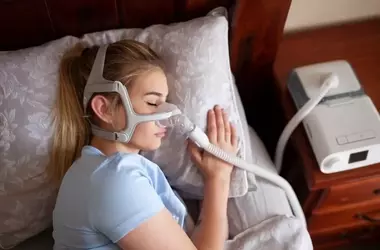 Dec 22, 2025
What Is a CPAP Machine and Who Needs It?
A CPAP (Continuous Positive Airway Pressure) machine is a medical device engineered to provide a constant stream of pressurized air to an individual's upper airway during sleep. Its primary function is to serve as a "pneumatic splint," preventing the soft tissues of the throat from collapsing and obstructing breathing. This technology is the gold standard for managing obstructive sleep apnea (OSA), a condition characterized by repetitive pauses in breathing.
 By Dr. Nadine Laurent
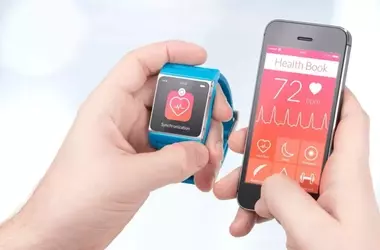 Dec 22, 2025
Smart Health Devices: Are They Medical Devices?
The distinction between "Smart Health Devices" and "Medical Devices" is a critical boundary in modern healthcare technology, defined primarily by regulatory intent, hardware precision, and clinical validation. Smart health devices generally refer to consumer-grade electronics—such as smartwatches, fitness trackers, and connected scales—designed for general wellness and activity tracking. In contrast, medical devices are instruments specifically intended by the manufacturer for the diagnosis, prevention, monitoring, or treatment of specific physiological conditions.
 By Yuki Tanaka, PharmD
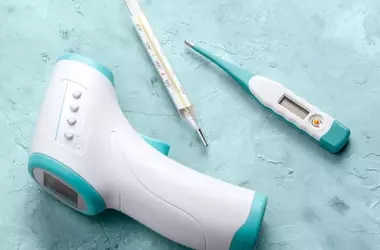 Dec 22, 2025
How Digital Thermometers Work: A Technical Overview
A digital thermometer is an electronic device engineered to measure temperature by utilizing sensors that exhibit predictable changes in electrical properties in response to thermal energy. Unlike traditional analog thermometers, which rely on the physical expansion of liquids like mercury or alcohol, digital versions translate thermal data into numerical values displayed on a digital interface. This article examines the underlying scientific principles of digital thermometry, exploring the specific components that facilitate heat detection, the mathematical processes involved in signal conversion, and the objective standards of accuracy and application in modern environments.
 By Carlos Mendoza