Art Training
Fluid Art: The Physics of Rayleigh-Taylor Instability and Material Dynamics

Fluid art, also known as acrylic pouring or flow art, is a painting technique that relies on the principles of fluid dynamics rather than traditional brushwork. By manipulating the viscosity, density, and surface tension of liquid acrylic paints, practitioners create complex, organic patterns. This article examines the chemical composition of pouring media, the mechanical forces that drive "cell" formation, the role of gravity and air pressure in paint distribution, and an objective assessment of the medium's predictability.
1. Basic Concept Analysis
Fluid art is a non-associative painting method where the artist acts as a facilitator for physical reactions between different liquid layers.
- Acrylic Dispersion: The primary medium consists of pigment particles suspended in an acrylic polymer emulsion. In fluid art, this must be thinned to a specific flowable consistency.
- Pouring Mediums: These are additives (such as PVA-based glues or professional acrylic polymers) used to extend the paint without breaking down the pigment load. They ensure that different colors remain discrete rather than mixing into a single muddy hue.
- Non-Newtonian Behavior: Many pouring mixtures exhibit non-Newtonian properties, meaning their viscosity changes under stress (such as when the canvas is tilted).
2. Core Mechanisms and In-Depth Elucidation
The visual complexity of fluid art is governed by specific physical laws, most notably the interaction between fluids of differing densities.
Rayleigh-Taylor Instability and Cell Formation
The most sought-after feature in fluid art is the "cell"—a circular or honeycomb-like structure. This is a practical application of Rayleigh-Taylor instability.
- Density Gradients: When a high-density paint (e.g., Titanium White) is layered over a low-density color, gravity pulls the heavier paint downward while the lighter paint rises through it.
- Surface Tension Modifiers: Additives like silicone oil or dimethicone are used to lower surface tension. Because oil and water-based acrylics are immiscible, the oil creates "holes" in the upper layer, allowing the colors beneath to surface and form cells.
Viscosity and Laminar Flow
Professional fluid art relies on maintaining laminar flow, where the fluid layers slide over one another smoothly.
- Consistency Matching: If the viscosities of the different colors are not matched, the paints will "blur" or "muddy." Achieving a consistent "trace" (the time it takes for paint to disappear back into the cup) is a critical mechanical step.
- Adhesion and Cohesion: The paint must have enough cohesion to move as a single sheet across the canvas, yet enough adhesion to stick to the substrate without "crazing" (cracking) during the drying phase.
Getty Images
Thermodynamic and Evaporative Drying
The drying process of fluid art is a transition from a liquid film to a solid plastic skin.
- Volume Contraction: As water evaporates from the emulsion, the paint film shrinks. This can cause physical stress on the canvas, potentially leading to warping if the layer is too thick.
- Skinning: The top layer dries first, creating a "skin." If the underlying layers are still wet and release gasses, it can cause bubbles or craters in the finished surface.
3. Presenting the Full Picture and Objective Discussion
An objective assessment of fluid art requires a look at its archival qualities and the degree of artistic control involved.
Predictability vs. Randomness
While the artist controls the initial color palette and the method of pouring (e.g., "dirty pour," "flip cup," or "Dutch pour"), the final outcome is determined by fluid movement.
- Stochastic Patterns: The specific placement of cells is a stochastic (randomly determined) process.
- Control Variables: Control is exercised through the tilting of the canvas and the use of air pressure (blow dryers or straws) to manipulate the "leading edge" of the paint.
Archival Stability
According to the Golden Artist Colors technical research, the longevity of fluid art is subject to the stability of the pouring medium.
- Yellowing: PVA-based mediums (like school glue) may yellow over time due to UV exposure, whereas 100% acrylic polymers remain clear.
- Surface Tack: Thick layers of fluid art can remain "tacky" for months, attracting dust and requiring a final isolation coat or varnish for protection.
4. Summary and Outlook
Fluid art has democratized abstract expression by shifting the focus from manual dexterity to an understanding of material science. It remains a popular medium for exploring the intersection of physics and art.
Future Trends:
- Computational Fluid Art: Using AI to predict "cell" outcomes based on specific paint density and tilt angles.
- Eco-Friendly Mediums: Development of biodegradable pouring additives to replace traditional acrylic polymers.
- Resin Hybrids: Combining acrylic pours with epoxy resins to create high-gloss, multi-dimensional depths.
5. Q&A (Question and Answer Session)
Q: Why do my cells disappear after I pour them?
A: This is usually due to "over-tilting." If the paint is moved too much after the cells have formed, the mechanical stress stretches the cells until they break or thin out into lines.
Q: What is the role of a torch in fluid art?
A: A butane torch is used to pop air bubbles. The heat also temporarily lowers the viscosity of the top layer, which can help trigger the Rayleigh-Taylor instability and encourage more cells to rise.
Q: Can I use any silicone for cell formation?
A: Technically, any oil will create a reaction, but 100% silicone oil or dimethicone is preferred because they are chemically stable and do not go rancid or significantly damage the acrylic bond.
Q: Why does the paint crack (craze) when it dries?
A: Crazing happens when the surface dries too fast or the paint layer is too thick. It can also occur if too much water was added to the paint, which breaks the acrylic polymer chain.
Would you like me to provide a table comparing the specific gravity of common artist pigments to help with density layering?

Polyglot and language app developer fluent in 7 languages, specializing in Hindi and Arabic instruction.
Exploration ArchivesOther Articles
 Dec 19, 2025
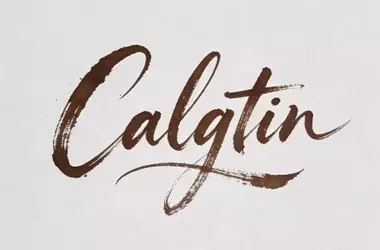
Modern Calligraphy: A Technical Analysis of Contemporary Scriptorium Practices
Modern calligraphyis a contemporary evolution of the traditional art of beautiful writing. Unlike traditional formal scripts—such as Spencerian or Copperplate—which are governed by rigid structural rules and historical cannons, modern calligraphy prioritizes individual style, creative expression, and the intentional subversion of classical proportions. This article examines the fundamental material requirements, the mechanical principles of pressure-based stroke variation, the chemical interaction between inks and substrates, and an objective assessment of the medium's role in the current visual landscape.
 By Dr. Chloe Bennett
 Dec 19, 2025
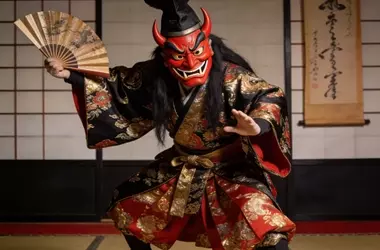
Kyogen: The Mechanics of Classical Japanese Comedy
Kyogenis a traditional form of Japanese theater that developed alongside Noh as its comedic counterpart. While Noh focuses on the tragic, the supernatural, and the aristocratic, Kyogen emphasizes the comedic, the mundane, and the everyday life of commoners during the medieval period. Together, these two forms constitute the theater ofNogaku.
 By Viktor Orlov
 Dec 19, 2025
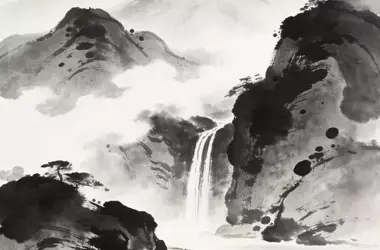
Technical Analysis of Sumi-e: Ink Chemistry, Tool Mechanics, and Philosophic Frameworks
Sumi-e, also known as Suibokuga, is a traditional East Asian wash painting technique that utilizes black carbon-based ink and water to create monochromatic images on paper or silk. Originating in China during the Tang Dynasty and later refined in Japan, the practice is characterized by its emphasis on brushstroke economy and the intentional use of negative space. This article examines the molecular composition of "Sumi" ink, the mechanical properties of animal-hair brushes, the fluid dynamics of ink-to-paper interaction, and the objective criteria defining technical proficiency in the medium. The following sections provide a structured analysis of the material science and physical principles that facilitate this art form.
 By Jin Park