Medical Devices
Electrocardiogram (ECG) Devices: A Scientific Overview of Principles, Function, and Interpretation

1. Objective Definition
The objective of this article is to explain what an electrocardiogram device is, what physiological phenomena it records, how the recording process works, and how ECG data are commonly interpreted in medical and research contexts. The article also aims to outline the scope and limitations of ECG measurements, clarifying what information these devices can and cannot provide. By following a systematic explanatory structure, the article seeks to support general scientific literacy regarding ECG technology while maintaining a neutral and descriptive tone.
2. Basic Concept Explanation
An electrocardiogram is a graphical representation of the heart’s electrical activity as detected on the body surface. ECG devices record voltage differences produced by depolarization and repolarization of cardiac muscle cells during each heartbeat. These voltage changes are small, typically measured in millivolts, and require amplification and filtering to be displayed clearly.
A standard ECG tracing consists of repeating waveforms commonly labeled as the P wave, QRS complex, and T wave. Each component corresponds to a specific phase of cardiac electrical activity. In adults at rest, normal heart rates are often described within a range of approximately 60 to 100 beats per minute, though variation occurs based on age, activity level, and physiological conditions.
ECG devices can be configured with different numbers of electrodes. The most widely referenced clinical format is the 12-lead ECG, which uses multiple electrodes placed at standardized locations on the limbs and chest to capture electrical activity from different spatial perspectives.
3. Core Mechanism and In-Depth Explanation
The functioning of an ECG device is based on bioelectric signal detection. Cardiac muscle cells generate action potentials through the movement of ions across cell membranes. When large groups of these cells activate synchronously, the resulting electrical currents propagate through body tissues and can be detected on the skin surface.
Electrodes placed on the body act as sensors that detect potential differences between locations. These signals are transmitted to the ECG device, where they undergo amplification to increase signal strength and filtering to reduce noise from muscle movement, electrical interference, and baseline drift. The processed signals are then plotted over time, producing the characteristic ECG waveform.
Different ECG leads do not represent separate electrical events but rather different viewpoints of the same cardiac electrical activity. By analyzing waveform shape, timing intervals, and rhythm regularity across leads, clinicians and researchers can infer information about heart rate, conduction pathways, and electrical axis orientation.
4. Comprehensive and Objective Discussion
ECG devices are used across a range of settings, including hospitals, outpatient clinics, emergency care environments, and physiological research. They are applied for rhythm observation, conduction assessment, and temporal analysis of cardiac electrical events. ECG recordings are also used in population studies and educational contexts to illustrate cardiac electrophysiology principles.
Despite their broad use, ECG devices have inherent limitations. An ECG records electrical activity rather than mechanical heart function and does not directly measure blood flow, cardiac output, or structural anatomy. Certain conditions may not produce detectable ECG changes, and similar waveform patterns can be associated with different physiological or pathological states.
Signal quality can be influenced by electrode placement, skin preparation, movement artifacts, and external electrical noise. Interpretation of ECG data relies on standardized criteria and contextual information, emphasizing that ECG findings are typically considered alongside other clinical or observational data rather than in isolation.
5. Summary and Outlook
In summary, an electrocardiogram device is a tool for recording and visualizing the heart’s electrical activity using surface electrodes and signal processing techniques. ECG waveforms reflect coordinated electrical events within cardiac tissue and provide insights into rhythm and conduction patterns. While ECG devices offer valuable temporal and electrical information, they do not capture all aspects of cardiac function.
From a scientific perspective, ongoing developments focus on signal processing methods, data standardization, and integration with digital health records. Future research continues to examine how ECG data can be analyzed more precisely while remaining grounded in established electrophysiological principles.
6. Question and Answer Section
Q1: Does an ECG device measure the strength of the heart’s pumping action?
No. An ECG records electrical activity and does not directly assess mechanical contraction or pumping strength.
Q2: Are ECG waveforms identical in all individuals?
No. Normal variation exists due to age, body composition, electrode placement, and individual physiological differences.
Q3: What does the term “lead” mean in ECG recording?
A lead represents a specific viewpoint of cardiac electrical activity derived from the voltage difference between electrodes.
Q4: Can an ECG detect all heart-related conditions?
No. Some conditions may not produce distinct ECG changes, and ECG findings are typically interpreted within a broader context.
- https://www.heart.org/en/health-topics/heart-attack/diagnosing-a-heart-attack/electrocardiogram-ecg-or-ekg
- https://www.ncbi.nlm.nih.gov/books/NBK549803/
- https://www.ncbi.nlm.nih.gov/books/NBK470573/
- https://www.who.int/publications/i/item/WHO-technical-specifications-electrocardiograph
- https://www.fda.gov/medical-devices/cardiovascular-devices/electrocardiographs-ecg-ekg-devices

Other Articles
 Feb 05, 2026
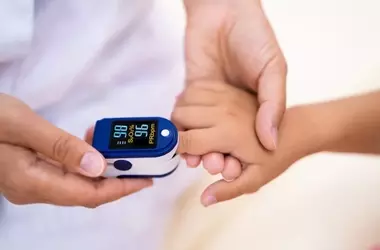
Pulse Oximeter: A Neutral Scientific Overview of Principles, Use, and Limitations
A pulse oximeter is a noninvasive medical device designed to estimate the oxygen saturation of hemoglobin in arterial blood. It has become a widely recognized tool in clinical environments and home health monitoring contexts. This article provides a neutral, science-focused overview of pulse oximetry, outlining its objectives, foundational concepts, operating mechanisms, interpretive considerations, and known limitations. The discussion follows a structured path: clarifying the goal of pulse oximetry, explaining basic concepts, examining the core measurement mechanism in depth, presenting a balanced and comprehensive perspective, summarizing key points and future directions, and concluding with a factual question-and-answer section. The purpose is strictly informational, aiming to support general understanding without recommendation, endorsement, or inducement.
 By Dr. Felipe Torres
 Feb 04, 2026
Patient Monitors: A Neutral, Scientific Overview
This article provides a neutral and educational overview of patient monitors. It defines the core concept, explains fundamental principles, describes key operating mechanisms in detail, and places patient monitoring systems within the broader context of modern healthcare. The discussion follows a structured sequence: clear objective, basic concept analysis, core mechanisms and in-depth explanation, a comprehensive and objective discussion, summary and outlook, and a question-and-answer section. The article is intended solely for information dissemination and knowledge clarification, without recommendation, inducement, or evaluative judgment.
 By Dr. Peter Van Dijk
 Feb 03, 2026
Oxygen Concentrator: A Neutral, Scientific Overview
This article presents a neutral and educational overview of the oxygen concentrator, focusing on its definition, foundational concepts, core operating mechanisms, performance characteristics, limitations, and broader application contexts. The discussion follows a structured progression from basic explanation to deeper technical clarification, then to an objective, comprehensive view, concluding with a summary, outlook, and a question-and-answer section. The sole purpose is information transmission and scientific understanding, without recommendation or evaluative intent.
 By Dr. Mei Wong