Art Training
Career Skill Retraining Strategies

Career skill retraining, or reskilling, is the process of learning entirely new capabilities to transition into a different role or industry. As of 2026, the strategy has shifted from long-term academic degrees toward "Skills-First" models—shorter, modular learning paths that focus on immediate industry relevance, particularly in response to AI-driven job redesign.
Phase 1: Strategic Planning for Career Pivots
Retraining is most effective when it is targeted. A common error is "learning for the sake of learning" without a clear destination.
- Assessment of "Sunset" vs. "Sunrise" Skills: Identify if your current role is being automated (sunset) and which adjacent fields are growing (sunrise).
- Transferable Skill Mapping: List current skills that are industry-agnostic, such as project management, stakeholder communication, or data literacy.
- The "One New Credential" Rule: Mid-career professionals often find success by adding a single, high-impact technical certification (e.g., EV technology for an electrician or AI prompting for a copywriter) rather than starting from zero.
Phase 2: Implementation Models—The "Build-Borrow-Buy" for Individuals
Just as businesses analyze talent, individuals should apply a "Talent Strategy" to their own retraining:
- Build (Upskilling): Enhance your current lane. If you are a marketer, learn AI-driven analytics.
- Borrow (Freelancing/Volunteering): Use "low-stakes" environments like pro-bono work or shadowing to test a new skill before a full career jump.
- Buy (Formal Retraining): Invest in intensive bootcamps or micro-credentials that offer a direct "education-to-work" pipeline.
Getty Images
- 70% Experiential: 2026 trends favor Apprenticeships and Work-Based Learning, even for white-collar roles.
- 20% Social: Peer learning groups and professional mentorship are essential for "insider" knowledge in a new field.
- 10% Formal: Short-term, "stackable" credentials (3–6 months) are replacing traditional 2-year degrees in high-demand sectors like IT and Green Energy.
Phase 3: High-Impact Retraining Pathways for 2026
The following sectors show the highest "Return on Investment" (ROI) for retraining within 6–12 months:
| Target Sector | Prerequisite / Background | Key Retraining Focus |
| Clean Energy | Electrical, Construction, HVAC | Solar/EV Installation, Grid Management |
| AI Oversight | Any Knowledge Work | Prompt Engineering, Ethics Compliance, Data Quality |
| Healthcare Tech | Admin, Nursing, Retail | Health Informatics, Telemedicine Coordination |
| Advanced Trades | General Labor, Manufacturing | CNC Machining, PLC Programming, Robotics Maintenance |
Phase 4: Modern Retraining Mechanisms
1. Micro-Credentials and "Stackable" Learning
Rather than a full degree, 2026 learners use Modular Education. You earn a certificate in Python for Data Science, then Machine Learning, then Cloud Architecture. Each "module" provides immediate job-market value.
2. AI-Augmented Learning
Use AI tutors and simulation platforms. Tools like Khan Academy’s Khanmigo or industry-specific VR simulations allow for high-frequency practice without the cost of physical labs.
3. Career "Pathways" Platforms
Utilize state and federal resources like Apprenticeship.gov or My Colorado Journey (and similar state platforms) that integrate live labor market data with training programs to ensure you aren't retraining for a saturated market.
Phase 5: Objective Discussion of Challenges
The "Entry-Level Gap"
A major 2026 challenge is the disappearance of traditional entry-level "stepping stone" roles due to AI. Retrainers must aim for "Junior-Plus" proficiency—showing they can direct AI tools rather than just perform the tasks the AI can now do.
Financial Sustainability
Retraining mid-career often involves a "pay dip." Strategies like Employer-Sponsored Reskilling (where your current company pays for your transition into a new internal role) or Income Share Agreements (ISAs) are used to mitigate this risk.
Phase 6: Q&A (Frequently Asked Questions)
Q: How long does a full career pivot take?
A: Most intensive reskilling programs in 2026 are designed to be completed in 3 to 9 months, with an additional 3–6 months for job placement.
Q: Is age a barrier to retraining?
A: Age is less of a barrier than "mindset." In a 2026 workforce, Learning Agility (the speed at which you learn) is valued more than your starting age.
Q: Should I quit my job to retrain?
A: Only if you have a 6-month financial buffer. The preferred method is "Parallel Paths"—spending 5–10 hours a week on retraining while maintaining current income until a transition is viable.

ESL (English as a Second Language) specialist empowering adult learners through conversational practice.
Exploration ArchivesOther Articles
 Dec 24, 2025
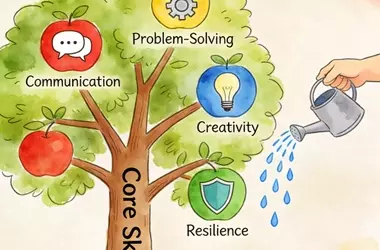
How to Master Transferable Job Skills
Mastering transferable skills is the process of identifying and refining the competencies that remain valuable across different industries and roles. In 2026, as AI and automation handle more routine technical tasks, these "portable" skills—often centered on cognitive agility and human-centered interaction—have become the primary currency for career longevity and successful pivots.
 By Viktor Orlov
 Dec 24, 2025
Skill Gap Analysis for Businesses Guide
In 2026, a Skill Gap Analysis (SGA) is no longer a luxury for HR departments—it is a critical business strategy. With AI and automation rapidly shifting the value of human labor, companies must move from areactive(hiring when a person leaves) to aproactive(building skills before they are needed) talent model.
 By Carlos Ruiz
 Dec 24, 2025
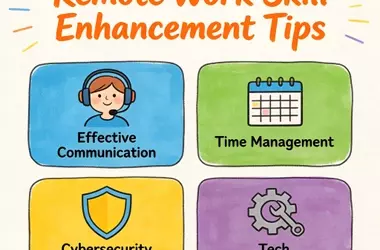
Remote Work Skill Enhancement Tips
In 2026, remote work has transitioned from a temporary arrangement to a highly refined professional discipline. Success in this environment requires more than just a stable internet connection; it demands a specific set of"Remote-First"competencies.
 By Eleanor Vance