Art Training
Remote Work Skill Enhancement Tips

In 2026, remote work has transitioned from a temporary arrangement to a highly refined professional discipline. Success in this environment requires more than just a stable internet connection; it demands a specific set of "Remote-First" competencies.
Enhancing these skills involves a balance of digital literacy, self-regulation, and intentional communication to overcome the lack of physical presence.
Phase 1: Communication and Collaboration Skills
In a remote setting, communication must be proactive and high-clarity to replace the "accidental" information sharing that happens in a physical office.
1. Mastering Asynchronous Communication
As teams become more globally distributed, the ability to work "out of sync" is vital.
- The "Write-First" Mentality: Before jumping on a call, document the issue. Use tools like Notion or Slack Threads to allow others to respond on their own schedule.
- Clarity over Brevity: When writing, include all necessary context (links, screenshots, and "why") in the first message to reduce back-and-forth pings.
2. Strategic Over-Communication
Without "hallway bumps," you must make your work visible.
- Daily/Weekly Status Updates: Post a short summary of "What I did," "What I’m doing," and "Where I’m stuck" in a public channel.
- The "Persona" of Presence: Use video purposefully for sensitive or complex discussions. For routine updates, use short screen recordings (e.g., Loom) to provide a "human" touch without the schedule friction of a live meeting.
Phase 2: Technical and Digital Literacy
Beyond basic software usage, remote work in 2026 requires an "Augmented Productivity" mindset.
1. AI Integration
Learn to use AI to handle the "administrative tax" of remote work.
- Meeting Summarization: Use AI assistants (e.g., Otter.ai, Zoom AI Companion) to transcribe meetings and generate action items, allowing you to focus on the conversation.
- Prompt Engineering: Enhance your speed by using generative AI to draft initial emails, reports, or project outlines.
2. Cybersecurity Hygiene
Remote workers are often the primary targets for social engineering.
- Device Discipline: Maintain strong, unique passwords with a password manager and ensure your home router and VPN are updated.
- Phishing Awareness: Be hyper-vigilant with links in "urgent" Slack messages or emails, a common tactic for bypassing corporate security.
Phase 3: Self-Management and Productivity
The greatest challenge of remote work is the "Blurring of Boundaries." Effective self-management is a skill that must be trained.
1. Deep Work and Focus Techniques
Distractions at home can be constant. Implementing structured focus periods is essential.
- The Pomodoro Technique: Work in 25-minute bursts with 5-minute breaks to maintain mental energy.
- Time Blocking: Schedule "Deep Work" blocks on your calendar and set your status to "Do Not Disturb" to prevent digital interruptions.
2. The Psychological Commute
Create rituals that signal the "Start" and "Stop" of the workday to prevent burnout.
- Opening Ritual: Brewing a specific coffee or a 5-minute walk before sitting at your desk.
- Shutdown Ritual: Tidying your desk and writing down your top 3 priorities for the next day. This "externalizes" work thoughts so they don't linger into your evening.
Phase 4: Social Influence and Emotional Intelligence
Remote networking requires "Intention" because it no longer happens by chance.
- Virtual Networking: Proactively schedule "Coffee Chats" with colleagues outside your immediate team. This builds the social capital needed for influence and career mobility.
- Active Listening 2.0: On video calls, pay closer attention to tone and micro-expressions, as these are the only non-verbal cues available.
Phase 5: Objective Discussion of Challenges
The "Visibility Gap"
A major risk of remote work is Proximity Bias, where managers unintentionally favor those they see in person. To counter this, your skill enhancement must include "Evidence of Impact"—regularly sharing data-backed results of your work to ensure your value is recognized regardless of your location.
Cognitive Load
Remote workers often suffer from "Context Switching Fatigue" due to constant pings across multiple apps. Improving your remote skills involves learning to Tame the Digital Noise by customizing notification settings and batching communication tasks.
Phase 6: Q&A (Frequently Asked Questions)
Q: Which is better for remote teams: Slack or Email?
A: Both serve a purpose. Use Slack for quick, ephemeral discussions and Email (or a shared doc) for formal decisions and long-term records.
Q: How do I handle a "Micromanaging" remote boss?
A: Shift the focus to Transparency. If you provide a high-clarity daily update before they ask for it, you reduce their anxiety and prove your accountability.
Q: Is it okay to work from a coffee shop?
A: For low-focus or administrative tasks, yes. For deep work or sensitive calls, a quiet, dedicated workspace is technically superior for focus and cybersecurity.

Botanical illustrator and drawing instructor focused on capturing the delicate details of nature.
Exploration ArchivesOther Articles
 Dec 24, 2025
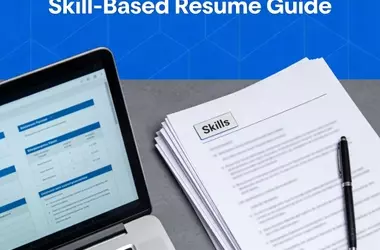
How to Build a Skill-Based Resume Guide
In 2026, the job market has shifted toward a"Skills-First"hiring model. A skill-based resume (also known as afunctionalorhybridresume) prioritizes your competencies over your chronological work history. This format is particularly effective for career changers, recent graduates, or those with employment gaps, as it highlightswhatyou can do rather thanwhereandwhenyou did it.
 By Dr. Priya Sharma
 Dec 24, 2025
Soft Skills Development for Workplace
Soft skills development in the workplace focuses on enhancing the interpersonal, emotional, and cognitive attributes that allow individuals to collaborate effectively and lead with influence. As of 2025-2026, these "durable skills" are increasingly prioritized as technical tasks are automated by AI, making human-centric strengths like empathy, ethics, and critical thinking the primary differentiators for career advancement.
 By Rajesh Raj Hassan
 Dec 24, 2025
In-Demand Skills for the Job Market Guide
In 2026, the job market is defined by"Hybrid Proficiency"—the ability to combine deep technical literacy with uniquely human behavioral strengths. As artificial intelligence (AI) handles a larger share of routine data processing and content generation, employers are shifting their focus toward candidates who can provide the strategic oversight and emotional intelligence that technology cannot replicate.
 By Li Wei