News
Brooklyn Co-op Grapples with Deep Divisions Over Gaza Conflict and Boycott Debates

The venerable Park Slope Food Co-op, a Brooklyn cornerstone since its establishment, finds itself at a critical juncture, its foundation shaken by the protracted conflict in Gaza. What began as a community hub for affordable, quality produce has transformed into a contentious arena, where members are embroiled in heated disputes over whether to ban Israeli-made goods. This internal strife has ignited allegations of antisemitism and discrimination, pushing the cooperative's governance and its very ethos to the brink. As members grapple with these profound disagreements, the future direction and unity of this iconic institution hang precariously in the balance.
This unprecedented division underscores the broader societal polarization stemming from global conflicts, illustrating how deeply political tensions can infiltrate even community-focused organizations. The co-op's long-held principles of collective decision-making and social justice are being severely tested, revealing the inherent challenges in maintaining harmony when faced with deeply held, divergent political convictions. Despite the palpable tension, the co-op's commitment to its members' involvement remains, albeit with a heightened sense of urgency and emotional investment.
The Tumultuous Intersection of Community and Geopolitics
The Park Slope Food Co-op, renowned for its commitment to community and discounted organic fare, has been thrust into an intense debate regarding the Israel-Gaza conflict. This internal struggle centers on a proposition to boycott products from Israel, a move that has starkly divided its 16,700 members. The cooperative, which prides itself on member participation in policy-making, now witnesses its monthly general meetings transform into forums for impassioned arguments. This ongoing dispute highlights the challenges of reconciling diverse political viewpoints within a cooperative model, as members grapple with the societal implications of their grocery choices.
Since the October 2023 escalation of the Gaza conflict, the co-op has seen the emergence of two prominent factions: PSFC for Palestine, advocating for the boycott of Israeli goods, and Co-op 4 Unity, which strongly opposes such a measure, denouncing it as divisive. This ideological chasm has led to a climate of accusation, with pro-Israel members alleging instances of antisemitism and hostile behavior. Meanwhile, boycott proponents argue that their stance aligns with the co-op's historical commitment to social justice. The recent board elections, heavily influenced by these opposing viewpoints, further underscored the deep polarization, with candidates from both sides vying for control over the co-op's future trajectory. The situation has even garnered external attention, prompting a call for investigation into discrimination claims by a U.S. Representative.
Navigating Allegations and Preserving Core Values
The internal conflict at the Park Slope Food Co-op has escalated beyond mere policy debates, leading to serious accusations of antisemitism and discrimination. Members from both sides report experiencing hostility, with pro-Israel members detailing incidents of verbal harassment and feeling unsafe within the co-op environment. Conversely, pro-boycott members, some of whom are Jewish themselves, claim to have been subjected to slurs and discrediting remarks by those who disagree with their stance. These troubling reports underscore the profound emotional and personal toll of the ongoing dispute, transforming the once-harmonious community space into a fraught battleground.
Adding another layer of complexity, a formal complaint alleging antisemitism and discrimination has been filed with New York's state Division of Human Rights, signaling the severity of the internal rifts. This legal action highlights the members' desperation to address what they perceive as a systemic issue within the co-op. While some members deny a tense atmosphere, the pervasive nature of the conflict is undeniable, as demonstrated by the canceled meeting due to security concerns and the closely contested board elections. The co-op's rich history of engaging in social justice movements, such as boycotting Chilean and South African products in the past, is now invoked by both sides to validate their current positions, further complicating efforts to find common ground. The failed referendum for hybrid meetings also indicates the challenges in adapting governance to accommodate a deeply engaged, yet divided, membership.
Anchor of NBC Nightly News, known for his trusted reporting and moderation of political debates.
Other Articles
 Jul 07, 2025
Biosphere 2: From 90s Joke to Global Research Hub
Once a subject of ridicule and the inspiration for a 90s comedy, Biosphere 2, an enormous sealed glass structure in the Sonoran Desert, has transformed into a critical scientific research facility. Initially designed to test human survival in self-sustaining ecosystems, its troubled early missions gave way to a new purpose under the University of Arizona's management. Today, scientists within its unique biomes, including a rainforest, ocean, and fog desert, conduct vital research on climate change adaptation, studying everything from the heat tolerance of cash crops to the resilience of endangered fish and the intricacies of watershed dynamics, proving its invaluable contribution to understanding Earth's complex systems.
By Anderson Cooper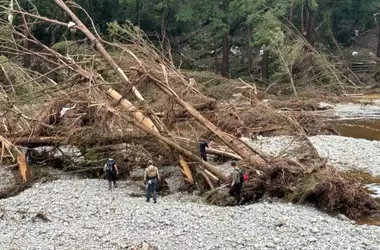 Jul 07, 2025
Devastating Floods Engulf Texas Hill Country, Leaving Dozens Dead and Many Missing
The Texas Hill Country is grappling with the aftermath of severe flooding that has claimed numerous lives and left many unaccounted for. The Guadalupe River experienced an unprecedented surge, destroying homes and displacing residents. Rescue efforts are ongoing, with state authorities and volunteers tirelessly searching for victims, including campers from a girls' summer camp. Survivors recount harrowing escapes, while families anxiously await news of their missing loved ones. The community faces immense challenges in rebuilding and healing from this catastrophic natural disaster.
By Katty Kay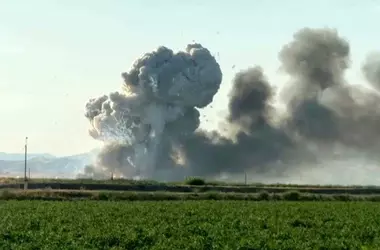 Jul 07, 2025
Devastating Fireworks Warehouse Explosion Claims Seven Lives in California
Seven individuals tragically lost their lives in a powerful fireworks warehouse explosion in Esparto, California. The catastrophic blast ignited a large wildfire and caused the building's collapse in Yolo County, near Sacramento. Authorities have confirmed the recovery of all missing persons' remains, with an ongoing investigation to determine the cause of this devastating incident that also left two people injured.
By Katty Kay