Medical Devices
Braces and Supports: Medical Purpose Explained

Medical braces and supports, formally classified as orthoses, are external devices applied to the body to modify the structural and functional characteristics of the neuromuscular and skeletal systems. Their primary clinical objectives include providing structural stability, restricting harmful movement, reducing mechanical load on specific tissues, and assisting in the correction of physical deformities. This article provides an objective analysis of orthotic technology, exploring the biomechanical principles that govern their use, the diverse classifications of supports across various anatomical regions, and the current scientific consensus on their role in musculoskeletal management.
The following sections will navigate through the fundamental physics of bracing, the specific mechanisms of stabilization and offloading, and the integrated role of these devices in modern clinical protocols.

1. Basic Conceptual Analysis: Classification and Composition
Orthoses are traditionally categorized by the anatomical region they serve and the degree of rigidity they provide. The International Organization for Standardization (ISO) provides a technical framework for these classifications, ensuring global consistency in nomenclature .
Primary Classifications
- Prophylactic Braces: Designed to prevent injury during high-risk activities, often used in athletic contexts to protect intact ligaments.
- Functional Braces: Intended to provide stability for unstable joints, such as those with ligamentous laxity or chronic structural deficiency.
- Rehabilitative Braces: Used to limit motion following a surgical procedure or acute trauma, allowing tissues to heal in a protected environment.
- Unloader (Offloading) Braces: Specifically engineered to shift mechanical pressure from one part of a joint to another, commonly utilized in degenerative joint conditions.
Material Science
Modern orthoses are constructed from a spectrum of materials chosen for their specific mechanical properties. Flexible supports often utilize neoprene or elasticized fabrics for compression, while rigid braces employ carbon fiber, thermoplastics, or aluminum alloys to provide non-yielding structural support.
2. Core Mechanisms and In-depth Explanation
The medical utility of braces and supports is rooted in the principles of biomechanics—specifically the application of force to influence the movement and alignment of the skeletal system.
The Three-Point Pressure Principle
Most rigid braces function based on the three-point pressure system. This involves a primary force applied at the area of deformity or instability, opposed by two counter-forces applied above and below the primary site.
- Alignment Correction: This system creates a mechanical lever that stabilizes a joint or corrects a spinal curve.
- Immobilization: By creating these opposing forces, the device prevents the joint from moving into ranges of motion that could cause further tissue damage.
Kinesthetic Awareness and Proprioception
Beyond mechanical restriction, supports influence the nervous system. The constant tactile contact of a sleeve or brace against the skin increases "proprioceptive input"—the body's ability to sense its position in space. This heightened awareness can lead to improved muscular recruitment and more stable movement patterns, even if the brace itself is flexible.
Load Shifting and Hydrostatic Compression
- Offloading: In conditions like medial compartment osteoarthritis, an unloader brace applies a valgus (outward) force to the knee. This widens the space between the femur and tibia on the inner side of the joint, reducing the pressure on the damaged cartilage.
- Hydrostatic Pressure: Spinal supports often work by increasing intra-abdominal pressure. By compressing the soft tissues of the abdomen, the support creates a semi-rigid cylinder that helps share the load of the upper body, thereby reducing the vertical compression forces on the lumbar vertebrae.
3. Presenting the Full Picture: Objective Clinical Discussion
The application of braces and supports is a standardized component of musculoskeletal care. According to the American Academy of Orthopaedic Surgeons (AAOS), the effectiveness of bracing is highly dependent on the specificity of the device and the individual’s clinical presentation .
Anatomical Applications
| Anatomical Region | Common Device | Primary Purpose |
| Cervical/Spinal | TLSO or Cervical Collar | Stabilization following vertebral fractures; scoliosis management. |
| Upper Extremity | Wrist Splint or Elbow Brace | Management of repetitive strain or ligamentous epicondylitis. |
| Lower Extremity | AFO (Ankle-Foot Orthosis) | Managing "foot drop" or stabilizing the ankle during gait. |
| Joint Specific | Hinged Knee or Shoulder Immobilizer | Limiting range of motion during post-operative recovery. |
Clinical Considerations and Limitations
While orthoses provide significant mechanical benefits, their use is subject to objective clinical debate. Long-term, continuous use of rigid bracing without a structured exercise program can potentially lead to "disuse atrophy," where the muscles surrounding the joint weaken because the device is performing the work of stabilization. Consequently, most clinical protocols integrate bracing with physical therapy to maintain muscular integrity.
4. Summary and Future Outlook
Orthotic technology has transitioned from heavy leather and steel constructions to lightweight, digitally designed systems. The future of this field lies in the integration of "smart" materials and personalized manufacturing.
Future Directions in Research:
- 3D-Printed Orthotics: Utilizing high-resolution scans of an individual’s limb to create custom-contoured braces that improve pressure distribution and comfort.
- Active/Powered Braces: Developing exoskeletal supports with integrated motors and sensors that assist movement for individuals with neurological impairments.
- Sensory-Feedback Braces: Researching supports equipped with sensors that provide haptic alerts (vibrations) to the user when they move into a position that exceeds safe biomechanical limits.
- Shape-Memory Alloys: Utilizing materials that can change their rigidity based on temperature or electrical input, allowing for a single brace to transition from a rigid rehabilitative state to a flexible functional state.
5. Q&A: Clarifying Common Technical Inquiries
Q: Is there a difference between a "brace" and a "support"?
A: In a technical context, "support" often refers to flexible, compressive sleeves (like an elastic knee sleeve) used for compression and proprioception. A "brace" usually implies a device with rigid or semi-rigid components (hinges, stays, or shells) intended to limit or control joint motion.
Q: Can a brace permanently fix a spinal curve like scoliosis?
A: In growing children and adolescents, specialized spinal braces (like the Milwaukee or Boston brace) are used to prevent the progression of the curve. While they do not "straighten" the spine instantly, they guide the growth of the vertebrae to achieve a more neutral alignment over time.
Q: Why do some braces need to be "hinged"?
A: Hinged braces allow for movement in one plane (such as flexion and extension) while preventing movement in others (such as side-to-side or rotational movement). This allows an individual to maintain a functional gait while protecting ligaments from lateral strain.
Q: What is the purpose of the "compression" provided by a soft support?
A: Compression helps manage localized edema (swelling) by facilitating the movement of interstitial fluid back into the lymphatic and venous systems. It also provides the sensory input necessary for improved joint positioning.
This overview is intended for informational and knowledge-sharing purposes, reflecting the current scientific understanding of orthotic devices. For specific clinical data or technical device specifications, individuals should consult the American Orthotic & Prosthetic Association (AOPA) or the National Institutes of Health (NIH).

Senior pharmaceutical scientist with expertise in oncology therapeutics.
Exploration ArchivesOther Articles
 Dec 22, 2025
How Ultrasound Therapy Devices Work: A Technical Overview
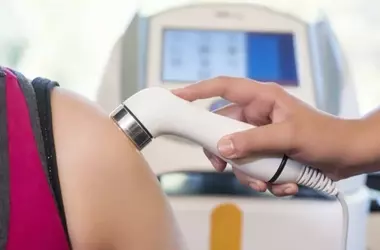
Ultrasound therapy devices are non-invasive medical instruments that utilize high-frequency sound waves—typically ranging from$0.7$to$3.3$MHz—to induce biological effects within soft tissues. Unlike diagnostic ultrasound, which is used to visualize internal structures, therapeutic ultrasound is designed to deliver energy to specific depths to facilitate physiological changes. This article provides an objective analysis of how these devices function, examining the transition from electrical energy to mechanical vibration, the dual modes of thermal and non-thermal interaction, and the standardized protocols governing their clinical application.
 By Dr. Hannah Fischer
 Dec 22, 2025
How Nebulizers Help Respiratory Conditions: A Technical Overview
A nebulizer is a specialized medical device engineered to convert liquid medication into a fine mist, known as an aerosol, which can be directly inhaled into the lungs. This method of delivery is a cornerstone of pulmonary therapy, particularly for individuals who may have difficulty using standard handheld inhalers. By bypassing the need for complex hand-breath coordination, nebulizers ensure that therapeutic agents reach the lower respiratory tract efficiently.
 By Dr. Marcus Lee
 Dec 22, 2025
What Is a CPAP Machine and Who Needs It?
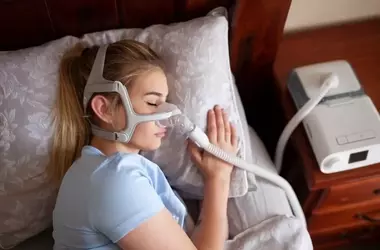
A CPAP (Continuous Positive Airway Pressure) machine is a medical device engineered to provide a constant stream of pressurized air to an individual's upper airway during sleep. Its primary function is to serve as a "pneumatic splint," preventing the soft tissues of the throat from collapsing and obstructing breathing. This technology is the gold standard for managing obstructive sleep apnea (OSA), a condition characterized by repetitive pauses in breathing.
 By Dr. Nadine Laurent