Medical Devices
What Is a Medical Device? A Technical and Regulatory Overview

A medical device is an instrument, apparatus, implement, machine, contrivance, implant, in vitro reagent, or other similar article intended for use in the diagnosis, mitigation, treatment, or prevention of disease or other conditions. Unlike pharmaceuticals, which achieve their primary intended action through chemical or metabolic means within the body, a medical device primarily performs its function through physical, mechanical, or thermal mechanisms. This article provides a neutral, evidence-based exploration of the medical device landscape, detailing the regulatory definitions, the classification systems based on physiological risk, the core mechanical principles of operation, and the objective frameworks used for safety validation. The following sections follow a structured trajectory: defining the parameters of medical instrumentation, explaining the hierarchy of risk classification, presenting a comprehensive view of technological categories, and concluding with a technical inquiry section to address common questions regarding device regulation and functionality.

1. Basic Conceptual Analysis: Defining the Boundaries
To analyze what constitutes a medical device, one must distinguish it from other health-related products through the lens of international regulatory standards.
Regulatory Definition
According to the World Health Organization (WHO) and the Global Harmonization Working Party (GHWP), a medical device is defined by its "intended use." If an object is marketed to identify, monitor, or compensate for an injury or physiological process, it falls under medical device regulation. This definition encompasses a vast spectrum, ranging from simple tongue depressors to complex robotic surgical systems.
The Distinction from Pharmaceuticals
The primary differentiator is the mode of action. A pharmaceutical product interacts with the body's receptors or metabolic pathways at a molecular level to produce a response. In contrast, a medical device provides a physical interface—such as a stent keeping an artery open, a thermometer measuring thermal energy, or a software algorithm analyzing a heart rhythm.
Global Statistical Context
Data from the World Health Organization indicates that there are an estimated 2 million different types of medical devices on the global market, categorized into more than 7,000 generic device groups. The regulation of these devices is essential to ensure that they perform as intended without causing unintended harm.
2. Core Mechanisms: Risk Classification and Safety
Medical devices are not regulated uniformly. Instead, they are categorized based on the potential risk they pose to the human body and the duration of their contact with tissues.
The Three-Tier Classification System
Most regulatory bodies, including the U.S. Food and Drug Administration (FDA) and the European Medicines Agency (EMA), utilize a risk-based classification system:
- Class I (Low Risk): These devices have minimal contact with the patient or pose little risk if they malfunction. Examples include elastic bandages, handheld surgical instruments, and examination gloves. They are subject to "General Controls."
- Class II (Moderate Risk): These devices require more stringent oversight because they often interact with internal systems or provide critical data. Examples include infusion pumps, powered wheelchairs, and acupuncture needles. They must meet "Special Controls" or performance standards.
- Class III (High Risk): These devices are usually life-sustaining, life-supporting, or implanted. They pose a significant risk of illness or injury if they fail. Examples include heart valves, implanted cerebellar stimulators, and automated external defibrillators (AEDs). They require "Premarket Approval" (PMA), the most rigorous level of review.
Mechanical and Digital Mechanisms
The functionality of medical devices relies on diverse scientific principles:
- Bio-electrical: Sensing electrical impulses from the heart (ECG) or brain (EEG).
- Structural/Mechanical: Providing physical support to skeletal structures or replacing joint surfaces.
- Optical: Using light waves to visualize internal cavities (endoscopy) or measure oxygen saturation (pulse oximetry).
- Software as a Medical Device (SaMD): Algorithms that process medical images or data to assist in clinical decision-making without being part of a hardware device.
3. Presenting the Full Picture: Objective Technical Discussion
The medical device industry is governed by rigorous quality management systems, most notably ISO 13485, which ensures that every stage of design and manufacturing meets safety requirements.
Comparative Overview of Device Categories
| Category | Primary Function | Examples | Mechanism of Action |
| Diagnostic | Identification of condition | MRI machines, Stethoscopes | Imaging / Acoustic sensing |
| Therapeutic | Treatment or mitigation | Lasers, Infusion pumps | Thermal energy / Controlled delivery |
| Surgical | Physical intervention | Scalpels, Robotic arms | Mechanical cutting / Manipulation |
| Monitoring | Continuous data tracking | Pulse oximeters, ECG | Physiological sensing |
| Implantable | Long-term support | Pacemakers, Hip joints | Electrical pacing / Structural replacement |
Data on Safety and Post-Market Surveillance
Regulatory bodies maintain databases, such as the FDA’s MAUDE (Manufacturer and User Facility Device Experience), to track "adverse events." This objective data allows regulators to identify trends in device failure and issue recalls or safety alerts when a device’s performance deviates from its validated specifications.
Objective Discussion on Validation
Before a device enters the market, it must undergo Verification (Does the device meet its design specifications?) and Validation (Does the device meet the needs of the user and the patient?). For high-risk devices, this often includes clinical trials to provide statistical evidence of efficacy and safety.
4. Summary and Future Outlook: The Digital Evolution
The field of medical devices is currently undergoing a shift toward connectivity and miniaturization.
Future Directions in Research:
- Wearable Bio-sensors: Devices that continuously monitor glucose, blood pressure, or electrolyte levels through non-invasive contact with the skin.
- 3D-Printed Implants: Custom-fit orthopedic or cranial implants designed from a patient’s specific CT scan data, improving anatomical integration.
- Tele-robotics: Surgical systems that allow specialists to perform procedures from remote locations via high-speed data transmission.
- AI Integration: Utilizing artificial intelligence to filter "noise" from diagnostic signals, potentially increasing the accuracy of early detection in cardiology and radiology.
5. Q&A: Clarifying Common Technical Inquiries
Q: Are everyday health apps considered medical devices?
A: It depends on the claim. A general fitness app that tracks steps is not usually a medical device. However, an app that uses a phone's sensor to diagnose a heart arrhythmia or calculate a specific dosage of insulin is categorized as Software as a Medical Device (SaMD) and must be regulated.
Q: What is "Biocompatibility" in medical devices?
A: This refers to the ability of a material to perform with an appropriate host response in a specific application. Materials used in implants, such as titanium or medical-grade silicone, are tested to ensure they do not cause toxic, inflammatory, or immune reactions when in contact with human blood or tissue.
Q: How do "Passive" and "Active" devices differ?
A: A passive device (like a catheter or a stent) does not rely on an external source of energy or electricity to function. An active device (like an ultrasound machine or a pacemaker) depends on a source of electrical energy or power to perform its intended task.
Q: What is a "510(k) Clearance"?
A: In the United States, this is a premarket submission made to the FDA to demonstrate that a new device is "substantially equivalent" to a device already legally on the market (a "predicate device"). It is a common pathway for Class II devices to reach the market without the full clinical trials required for a Class III PMA.
Q: Why do some devices have an "Expiration Date"?
A: For sterile devices, the expiration date usually refers to the "shelf-life" of the packaging. After this date, the manufacturer can no longer guarantee that the sterile barrier remains intact or that the materials (such as polymers) haven't degraded physically.
This article provides informational content regarding the regulatory and technical aspects of medical devices. For information regarding the use of a specific device or for medical diagnostic concerns, consultation with a licensed healthcare professional or a qualified biomedical engineer is essential.
Other Articles
 Dec 25, 2025
Understanding Electric Wheelchairs: A Technical and Functional Overview
Advancements in assistive technology have significantly transformed the landscape of personal mobility.Electric wheelchairs, also known as power-operated wheelchairs or powerchairs, are medical mobility devices propelled by an electric motor and navigated via onboard navigation controls, such as a joystick. Unlike manual wheelchairs that require physical exertion from the occupant or an attendant, these devices utilize stored electrical energy to facilitate movement. This article provides a neutral, science-based exploration of electric wheelchair technology. The following discussion will define the fundamental components of these devices, detail the mechanical and electronic systems that enable movement, present an objective comparison of different drive configurations, and outline safety and maintenance standards. By moving from mechanical principles to practical Q&A, this resource serves as an informative guide for understanding the role of motorized mobility in modern society.
 By Dr. Farah Noor
 Dec 25, 2025
Understanding Home Massagers: A Technical and Physiological Overview
Physical wellness and muscle recovery have become central themes in modern lifestyle management, leading to the widespread adoption of mechanical tools designed for tissue manipulation.Home massagersare portable or stationary electronic devices engineered to apply physical force—such as vibration, percussion, or kneading—to the body's soft tissues. These instruments aim to simulate professional manual therapy techniques to alleviate muscle tension and improve localized blood flow. This article provides a neutral, science-based exploration of the mechanics and biological effects of home massage technology. The following discussion will define the primary categories of massagers, detail the physiological mechanisms of action, present an objective comparison of different technological modalities, and outline safety considerations for domestic use. By moving from mechanical principles to practical Q&A, this resource serves as an informative guide for understanding the role of automated massage in personal health maintenance.
 By Ahmed El-Sayed
 Dec 25, 2025
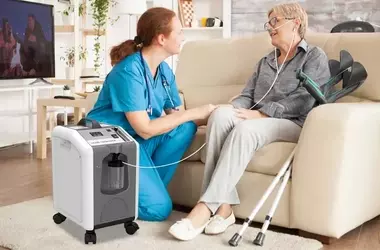
Understanding Home Oxygen Concentrators: A Scientific Overview
In the realm of respiratory support, the ability to concentrate life-sustaining gases from the surrounding atmosphere has transformed long-term care.Home oxygen concentratorsare medical electrical devices that take in ambient air, remove nitrogen, and deliver a purified stream of oxygen—typically at concentrations between 90% and 95%—to an individual via a nasal cannula or mask. Unlike oxygen tanks that store a finite amount of compressed gas, these machines operate continuously as long as they have a power source. This article provides a neutral, science-based exploration of the technology. The discussion begins with the fundamental components of the system, details the chemical-mechanical process known as pressure swing adsorption, presents an objective comparison of different device types, and outlines the safety protocols necessary for domestic use. By navigating from basic physics to practical Q&A, this resource serves as an informative guide for understanding the role of oxygen concentration in modern home health.
 By Dr. Hannah Fischer