News
The Unwavering Builder: A Towering Feat of Persistence in Rural China

Building Beyond Boundaries: A Testament to Individual Vision Against All Odds
An Architectural Anomaly in the Countryside
Nestled amidst fields of tall grasses, a peculiar edifice rises, resembling a whimsical fusion of a camping tent and a multi-tiered wedding cake. This structure, comprising eleven progressively smaller wooden rooms stacked precariously, appears to defy gravity, seemingly secured only by a network of thin cords extending from its apex to the ground below. Its dark red timber facade adds to its distinctive, almost fantastical, allure.
Inside the Visionary Dwelling
Stepping inside this unconventional home reveals an equally audacious interior. Ceilings are shored up by repurposed utility poles, while electrical cords and power strips hang loosely from overhead beams. Large containers collecting rainwater paradoxically contribute to the building's stability. The homemade wooden ladders, connecting each floor, ascend at sharp angles, often lacking any form of handrail, underscoring the raw, unfiltered nature of its construction.
The Mastermind Behind the Marvel
Chen Tianming, the 43-year-old visionary responsible for designing, constructing, and inhabiting this unique tower, navigates its intricate levels with ease. His journey through the structure includes passing a cozy reading nook on the fifth floor and an airy, open-air tearoom on the sixth, showcasing the personal touches embedded within his handiwork.
A View from Above: Chen's Perspective
From the vantage point of the ninth floor, Chen gazes upon the orderly, uniformly constructed apartment complexes where his community resides. This contrasts sharply with his own creation, a structure that embodies individuality rather than conformity, a silent statement against the homogenization of modern living spaces.
Defying Skepticism: The Builder's Resolve
Reflecting on his creation, Chen acknowledges the common perception: \"They say the house is shabby, that it could be blown down by wind at any time.\" This observation, echoing the sentiments of many who view his seemingly fragile yet resilient home, was palpable during a recent visit. Despite such doubts, his commitment to his unique dwelling remains unshaken, highlighting his profound conviction in his architectural vision.
CNN anchor known for his coverage of major global events and sober, factual delivery.
Other Articles
 Jul 19, 2025
Unpacking the 'Protein-Packed' Trend in Snacks: A Deep Dive into Nutritional Realities
The packaged snack market is awash with 'high-protein' claims, but what do these labels truly signify for consumers' health? This article delves into the burgeoning protein snack industry, examining the nutritional science behind protein's importance, the marketing tactics employed by food manufacturers, and providing practical guidance for consumers to discern genuinely beneficial high-protein options from mere marketing ploys. It explores expert opinions on protein intake and suggests whole food alternatives for a balanced diet.
By Isabel Allende Jul 18, 2025
New Postmaster General Affirms Independent Status of U.S. Postal Service Amid Privatization Debates
The newly appointed U.S. Postmaster General, David Steiner, has publicly declared his opposition to privatizing the USPS, advocating for its continued operation as a self-sufficient federal entity. This statement addresses widespread concerns sparked by previous discussions within the Trump administration regarding a potential overhaul of the postal service. Steiner's commitment aims to reassure employees and the public about the future stability and accessibility of mail services, especially for rural areas.
By Katty Kay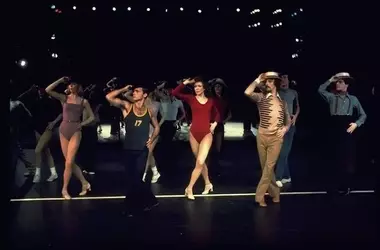 Jul 18, 2025
A Tale of Two Musicals: 'A Chorus Line' vs. 'Chicago' After 50 Years
In the summer of 1975, Broadway welcomed two musicals, 'Chicago' and 'A Chorus Line,' each approaching the performing arts from distinct angles. While 'A Chorus Line' garnered immediate widespread acclaim, 'Chicago' received a more cautious reception. Both shows, however, were innovative for their time, exploring the lives of performers—one through the lens of 1920s vaudeville and crime, the other focusing on contemporary dancers' aspirations. Fifty years later, their enduring legacies invite a re-evaluation of their initial critical standing and subsequent cultural impact.
By Michele Norris