News
Unpredictable Trade Policies: An Analysis of Recent Tariff Adjustments and Global Responses

Recent developments in international trade have introduced an element of unpredictability into the global economic arena, with a notable shift towards unilateral tariff adjustments. This new approach involves imposing significant duties on imported goods from various countries, prompting widespread concern and triggering a complex series of diplomatic and economic responses. The implications extend beyond immediate financial impacts, reshaping commercial relationships and prompting a re-evaluation of established trade norms. The evolving situation underscores the delicate balance of international commerce and the profound effects of protectionist measures on interconnected economies worldwide.
A core aspect of this evolving trade landscape involves the issuance of official communications to foreign governments, outlining proposed tariffs and their intended implementation. These documents often signal a radical departure from conventional trade practices, establishing substantial levies across a broad spectrum of imported products. While the initial deadline for these tariffs was set, the fluidity of policy statements, including retractions and reconfirmations, has generated considerable uncertainty. Despite the firm stance on new rates, these communications also contain provisions for potential reductions, contingent upon the removal of existing trade barriers, such as tariffs or regulatory restrictions, by the recipient nations.
These recent tariff adjustments stem from broader protectionist policies initially implemented earlier in the year, which saw a wide range of duties applied to various imports. Following an initial period of market instability, a strategic 'pause' was declared, during which rates were uniformly set, allowing for a window of negotiation with numerous trading partners. The objective was to secure new trade agreements within this timeframe, thereby preventing the reapplication of the higher, initial tariff levels. To date, a limited number of new agreements have been finalized, with one prominent deal officially signed and another announced, though specific details remain undisclosed. The ongoing situation highlights the intricate interplay between economic leverage and diplomatic engagement in shaping global trade dynamics.
The current global economic climate is characterized by a series of unilateral trade actions that have introduced significant volatility. These measures, driven by a new strategic direction, involve setting duties on goods from numerous international partners. While the stated goal is to rebalance trade relationships, the frequent adjustments and shifting deadlines for these tariffs create an environment of considerable uncertainty for businesses and governments alike. The dialogue between nations often includes opportunities for compromise, indicating that a reversal or modification of these duties could occur if specific trade barriers are dismantled by the affected countries. This emphasizes a transactional approach to international trade, where concessions are sought in exchange for revised tariff structures. The ongoing negotiations are crucial in determining the ultimate impact of these policies on global supply chains and economic stability.
Ultimately, the current phase of international trade is marked by an assertive approach to economic policy, evidenced by the strategic use of tariffs as a bargaining tool. This strategy aims to reshape global commerce, yet it also introduces an element of unpredictability that resonates across markets and diplomatic channels. The coming period will be critical in observing how these measures fully unfold and whether the intended outcomes are achieved amidst the complex and interdependent nature of the global economy.
Anchor of NBC Nightly News, known for his trusted reporting and moderation of political debates.
Other Articles
 Jul 12, 2025
Hope Amidst the Havoc: Volunteers Unite to Reunite Pets with Owners After Devastating Texas Floods
Following catastrophic floods in central Texas that left a path of destruction and countless missing pets, dedicated volunteers are working tirelessly to reunite animals with their distraught owners. Amidst the debris and desolation, these compassionate individuals are combing through ravaged areas, setting traps, and providing care for rescued animals, offering a beacon of hope to those who have lost so much.
By Michele Norris Jul 11, 2025
A Beacon of Community: Christopher's Cafe Transforms Fall River
In Fall River, Massachusetts, Christopher's Cafe, run by a dedicated couple, has become more than just a place to eat. It's a vibrant community hub, turning a neglected storefront into a lively spot that offers a daily changing menu, food pantries, neighborhood clean-ups, and a community fund for those in need, fostering a spirit of generosity and collective well-being in the area.
By Isabel Allende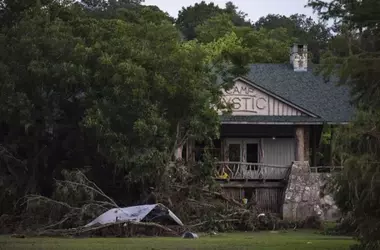 Jul 12, 2025
FEMA Controversy: Camp Mystic Buildings Removed from Flood Map Prior to Tragic Inundation
Federal regulators repeatedly approved requests to delist Camp Mystic structures from its 100-year flood plain, enabling the camp's growth in a high-risk area. This decision came under scrutiny following a devastating flash flood that swept through the camp, resulting in multiple casualties. Critics argue that these exemptions from basic flood regulations are particularly concerning for a facility responsible for the safety of numerous young individuals, especially considering the camp's location in a known flood-prone region.
By Mona Chalabi