News
United Nations Probes Alleged Sabotage of Trump's Speech

Unraveling the Mystery: Investigations Begin into U.N. Incidents
Trump's Claims of Deliberate Interference at the United Nations General Assembly
Former President Trump expressed his belief that his recent address at the United Nations General Assembly was deliberately undermined by three significant malfunctions. He took to social media to declare that the incidents, involving a stalled escalator, a non-functional teleprompter, and an inadequate sound system, were not mere coincidences but acts of \"triple sabotage.\" Trump's assertion suggests a deliberate effort to disrupt his presentation, leading to his strong condemnation of the U.N.'s operational integrity.
The Escalator Episode: A Moment of Unexpected Halt
The series of unfortunate events commenced with an escalator incident as former President Trump and the First Lady arrived at the U.N. headquarters. The escalator abruptly ceased movement shortly after they stepped on, leaving them momentarily stranded. Footage of this incident, humorously dubbed \"Escalatorgate\" by some, captured the couple completing their ascent on foot. Despite initially making light of the situation, Trump later characterized it as an intentional act of sabotage, demanding a thorough investigation.
Teleprompter Troubles and a Powerful Speech
Upon reaching the podium, President Trump encountered a non-operational teleprompter. While he initially joked about the mishap, he proceeded to deliver a lengthy address. During his speech, he reiterated his long-standing criticisms of the United Nations, touching upon issues such as climate change and global migration. Despite the technical difficulties, he later reflected on the speech's reception, noting that the challenges might have inadvertently made his delivery more engaging.
U.N.'s Response to the Escalator Malfunction: An Accidental Trigger
In response to the escalating accusations, the United Nations launched an investigation into the escalator incident. U.N. officials clarified that the stoppage was most likely accidental. According to their findings, a videographer from the U.S. delegation, filming the presidential couple's arrival, inadvertently activated a safety mechanism at the top of the escalator. This mechanism, designed to prevent accidents, caused the escalator to halt, a conclusion supported by the machine's central processing unit data.
Discrepancies Regarding Teleprompter and Audio Issues
The U.N. assigned responsibility for the teleprompter's operation to the U.S. delegation, directing further inquiries to the White House. The White House, in turn, stated that U.N. staff had prevented their team from setting up the teleprompter as agreed, forcing them to improvise during the speech. Furthermore, claims surfaced about the sound system, with observations that the audio level for President Trump's speech was unusually low. However, the U.N. explained this by noting the system's design for multilingual translation via earpieces, suggesting that direct audience sound might naturally be softer.
White House Reiterates Sabotage Allegations and Demands Action
Despite the U.N.'s explanations, White House officials continued to emphasize the narrative of deliberate sabotage. The press secretary publicly suggested that U.N. staff might have intentionally caused the escalator to stop. This perspective was fueled by past anecdotes and the U.N.'s ongoing financial struggles, which have led to cost-cutting measures, including intermittently shutting down escalators and elevators. U.S. Ambassador to the U.N. Mike Waltz echoed these concerns, demanding a comprehensive explanation for all malfunctions and robust preventative measures. These events underscore a period of significant tension and distrust between the U.S. and the international body.
Anchor of NBC Nightly News, known for his trusted reporting and moderation of political debates.
Other Articles
 Sep 25, 2025
UN Vows Action on Dementia: A Global Health Turning Point
The United Nations has issued an unprecedented political declaration addressing dementia, marking a pivotal moment in global health. This move aims to elevate dementia's status in worldwide health agendas, especially in lower-income countries where the condition is often overlooked. Advocates hope this declaration will translate into tangible support and resources for the millions affected by dementia and their caregivers.
By Anderson Cooper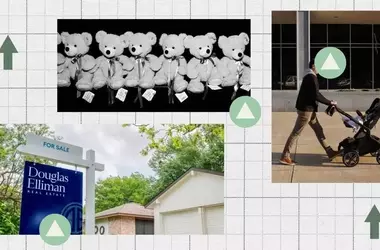 Sep 25, 2025
Soaring Housing Costs Lead to Smaller Families
The sharp increase in housing costs, up 56% since February 2020, is forcing many Americans to reevaluate their family planning. For some, like Ava Rimal, the dream of a larger family is being sacrificed for the sake of affording a home in a desirable area. Others, such as Chelsea Clouser, are questioning the feasibility of having children at all due to financial pressures from high rents and home prices, leading to a visible shift in generational family size expectations.
By Katty Kay Sep 25, 2025
Federal Judge Rules Mass Firings Unlawful, But Reinstatement Unlikely
A federal judge has ruled that the Trump administration's mass termination of probationary federal employees was illegal, yet he refrained from ordering their reinstatement. Citing the Supreme Court's likely opposition and the time elapsed since the firings, the judge noted that many affected individuals have moved on, though some express frustration and a desire to return to their positions. This decision highlights a contentious legal battle over executive power and employee protections.
By Christianne Amanpour