ParentsKids
Understanding Your Child's Language Development: A Monthly Guide

The journey of a child's language development unfolds through distinct stages, each marked by significant progress. From birth, infants absorb sounds and begin to associate them with their surroundings. Early vocalizations, starting with cries, soon evolve into a symphony of coos and vowel sounds like "oo" and "aa", laying the groundwork for more complex speech. By approximately four weeks, babies show an ability to differentiate between similar syllables, and around two months, they start linking specific sounds to lip movements, demonstrating an innate capacity for linguistic processing.
As babies approach 4 to 6 months, their vocalizations transition from cooing to babbling, incorporating consonant sounds such as 'g,' 'k,' 'm,' 'w,' 'p,' and 'b.' During this period, they begin to recognize familiar words and their own names, understanding them as important auditory cues. Between 7 and 12 months, babbling becomes more intentional and word-like, with repeated sounds like "gaga." They also develop an understanding of gestures and pointing to express desires. Around their first birthday, most babies utter their first words, often simple terms like "mama," "dada," or greetings. The vocabulary slowly expands, with a focus on nouns, followed by verbs and adjectives, enabling them to form basic one-word questions and assert their will with a firm "No!" Their comprehension also deepens, as they start distinguishing grammatical nuances and following simple one-step instructions.
A remarkable phase, often termed the "language explosion," occurs between 19 and 20 months, where toddlers rapidly acquire new words daily. This period often leads to an inquisitive "Why?" stage, and by the second year, children begin to construct two- to four-word sentences. While they may charmingly overextend concepts, understanding of verbs grows, and they intently observe and listen to adults, absorbing language patterns. From 25 to 30 months, toddlers refine their linguistic abilities, using "When? What? Where?" questions and grasping complex meanings of words like "no." They also begin to master challenging sounds and understand grammatical elements like tense and plurals, leading to two-word phrases. By age three, children can articulate complete thoughts in several words and narrate simple stories, demonstrating a vocabulary of approximately 300 words. Between 4 and 5 years, children engage in intricate conversations, use adjectives, tell jokes, and have an expressive vocabulary of around 2,500 words, understanding about 14,000. They can express abstract ideas, fears, and dreams, and use language to evoke responses from others.
Nurturing a child's language development is a rewarding process that involves active engagement and patient encouragement. Reading storybooks with engaging narratives, initiating playful conversations, and gently correcting speech by rephrasing correctly without highlighting errors are all effective strategies. Rhyming games are particularly beneficial for enhancing sound awareness. It's also crucial to monitor for any speech concerns and to limit screen time, as genuine human interaction is paramount for linguistic growth. By embracing these practices, parents can create a rich environment that fosters a child's natural inclination to communicate, celebrate each milestone, and support their journey toward confident and expressive speech, laying a strong foundation for future learning and social interaction.
Pseudonym for a foster carer and author of many memoirs offering insight into childcare and trauma.
Other Articles
 Apr 16, 2026
Understanding Cervical Dilation During Childbirth: A Visual Guide
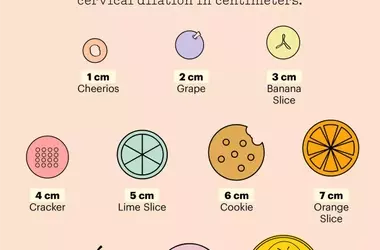
This article explores the crucial process of cervical dilation, a key component of labor, explaining its progression and what to anticipate across the three distinct stages of childbirth. A visual chart, comparing dilation measurements to everyday items, is included to help expecting parents better understand these physiological changes, fostering a sense of preparedness and control during labor.
By Tiffany Jewell Apr 16, 2026
Choosing the Perfect Middle Name for Your Baby Boy
Selecting a middle name for a baby boy can be an enjoyable yet daunting task. Parents often seek a name that complements the first name, holds personal significance, or pays homage to family heritage. This article explores a variety of options, from timeless classics to contemporary choices, offering inspiration and guidance to help parents navigate this important decision. It emphasizes that while middle names are not mandatory, they provide an additional layer of identity and choice for the child as they grow.
By Nigel Latta Apr 16, 2026
Exploring America's Most Prevalent Surnames and Their Cultural Journeys
The United States is a melting pot of cultures, reflected in its vast array of surnames. While millions of distinct family names exist, only a select few are truly widespread. This article delves into the origins, meanings, and cultural significance of the top 10 most common last names in America, offering a fascinating glimpse into the diverse heritage that shapes the nation's identity.
By Kim John Payne