Medical Devices
Understanding Pulse Oximetry: A Comprehensive Scientific Overview

Human physiological health is fundamentally dependent on the continuous supply of oxygen to vital organs and tissues. Pulse oximeters are non-invasive medical devices designed to measure the oxygen saturation level ($SpO_2$) of a person's blood, along with their heart rate. This technology allows for the rapid assessment of respiratory function without the need for blood draws or needles. The following discussion aims to clarify the scientific principles behind these devices, progressing from basic terminology to the complex optical mechanisms that allow for measurement through the skin. The article will also present an objective comparison of different device types, discuss clinical accuracy standards, and conclude with a look at future developments in physiological monitoring. By providing a structured and factual analysis, this resource serves as an informative guide for understanding how oxygen levels are monitored in modern healthcare.
Foundational Concepts and Categorization
Pulse oximetry serves as a critical indicator of how effectively oxygen is being sent from the lungs to the rest of the body. The primary metric, $SpO_2$, represents the percentage of hemoglobin in the blood that is currently carrying oxygen.
These devices are generally categorized based on their form factor and intended environment of use:
- Fingertip Pulse Oximeters: Small, portable devices used for quick checks in home or clinical settings. The sensor and display are integrated into a single unit that clips onto a finger.
- Handheld Oximeters: Used primarily in hospitals, these feature a separate sensor probe connected to a larger screen, often allowing for continuous monitoring and data storage.
- Fetal/Neonatal Oximeters: Specialized sensors designed for the delicate skin of infants, often attached to the foot or scalp to monitor oxygenation during birth or in intensive care.
- Wearable/Smart Oximeters: Integrated into smartwatches or fitness trackers for long-term health tracking, although these often vary in clinical certification compared to medical-grade devices.
Core Mechanisms: The Physics of Light Absorption
The ability of a pulse oximeter to "see" oxygen levels through the skin is based on the principles of spectrophotometry and plethysmography.
1. Light Emission and Absorption
- The Mechanism: The device contains two light-emitting diodes (LEDs) that shine through a translucent part of the body (usually the fingertip or earlobe). One LED emits red light (660nm) and the other emits infrared light (940nm).
- The Result: Oxygen-rich blood (oxygenated hemoglobin) absorbs more infrared light and allows more red light to pass through. Oxygen-poor blood (deoxygenated hemoglobin) absorbs more red light and allows more infrared light to pass through.
2. Calculating the Ratio
- The Mechanism: A photodetector on the opposite side of the clip receives the light that has passed through the tissue.
- The Result: An internal processor calculates the ratio of the red light absorption to the infrared light absorption. This ratio is then converted into a percentage—the $SpO_2$ reading.
3. Filtering the Pulse (Plethysmography)
- The Mechanism: The device must distinguish between "pulsing" arterial blood and "static" tissues like bone, skin, and venous blood.
- The Result: Because only arterial blood pulses with the heartbeat, the oximeter ignores the constant light absorption of static tissues and focuses only on the fluctuating signals. This is also how the device calculates the heart rate.
The Clinical Landscape and Device Comparison
Understanding the utility of a pulse oximeter involves recognizing the differences between medical-grade equipment and consumer-grade sensors.
Comparison of Oximetry Modalities
| Feature | Medical-Grade Fingertip Oximeter | Hospital Handheld System | Smartphone/Watch Sensor |
| Primary Use | Spot checks / Home health | Continuous clinical monitoring | Fitness and wellness tracking |
| Accuracy Standard | FDA / CE Certified ($\pm 2\%$) | High Precision ($\pm 1\%$) | Variable / Non-certified |
| Data Output | $SpO_2$ & Pulse Rate | Waveforms ($Pleth$) & Alarms | Trends and Averages |
| Environmental Tolerance | Moderate | High (Filters out motion) | Low (Requires stillness) |
Operational and Accuracy Protocols
- The "Normal" Range: In a healthy individual at sea level, $SpO_2$ readings typically fall between 95% and 100%.
- Perfusion Index (PI): High-quality oximeters often display a PI value, which indicates the strength of the pulse at the sensor site. A very low PI may suggest that the $SpO_2$ reading is inaccurate due to cold hands or poor circulation.
- Interference Factors: Factors such as dark fingernail polish, artificial nails, excessive movement, or bright ambient light can interfere with the sensor’s ability to read the light accurately.
Objective Discussion and Evidence
Scientific research on pulse oximetry emphasizes its value as a non-invasive tool while noting specific biological and environmental limitations.
- Accuracy Thresholds: According to the World Health Organization (WHO), pulse oximeters are generally accurate to within 2% to 3% of a laboratory blood gas analysis ($SaO_2$) when readings are above 70%. Below 70%, the accuracy of most portable devices decreases significantly.
- Skin Pigmentation Considerations: Recent clinical data published in the New England Journal of Medicine has highlighted that pulse oximeters may overestimate oxygen levels in individuals with darker skin tones. The melanin in the skin can absorb light in a way that occasionally masks "hidden hypoxemia" (dangerously low oxygen levels that the device fails to detect).
- "Silent Hypoxia" Observation: During the global health events of recent years, oximeters became a primary tool for detecting "silent hypoxia," where individuals had low oxygen levels but did not feel shortness of breath.
- Carbon Monoxide Limitation: Clinical evidence confirms that standard pulse oximeters cannot distinguish between oxygen and carbon monoxide bound to hemoglobin. In cases of smoke inhalation or carbon monoxide poisoning, a device may falsely show a "normal" 99% reading.
Summary and Future Outlook
The trajectory of pulse oximetry is moving toward continuous, integrated monitoring and improved algorithm accuracy for diverse populations.
Future developments include:
- Multi-Wavelength Sensors: Utilizing more than two wavelengths of light to detect other forms of hemoglobin, such as carboxyhemoglobin or methemoglobin.
- Camera-Based Oximetry: Research into using smartphone cameras and advanced algorithms to measure oxygen levels via the face or finger without a dedicated clip.
- AI Bias Correction: Implementing machine learning algorithms trained on diverse skin tones to eliminate the accuracy gap found in current hardware.
- Integration with Respiratory Therapy: Oxygen concentrators and ventilators that automatically adjust their output based on real-time $SpO_2$ data from the user.
Question and Answer Section
Q: Can a pulse oximeter detect a heart attack?
A: No. A pulse oximeter measures blood oxygen and heart rate, not the electrical activity of the heart or the presence of a blockage in the coronary arteries. While a heart attack might eventually lead to lower oxygen levels, an oximeter is not a diagnostic tool for cardiac events.
Q: Why does the reading change when the finger is cold?
A: Cold temperatures cause blood vessels in the extremities to constrict (vasoconstriction). This reduces the amount of blood flowing through the finger, making it difficult for the sensor to detect a strong enough pulse to provide an accurate reading.
Q: Does a reading of 94% mean a person needs supplemental oxygen?
A: Not necessarily. While 95-100% is the standard range, individuals with chronic conditions like COPD may have a "normal" baseline that is lower. Clinical decisions regarding oxygen therapy are based on a comprehensive medical assessment, not a single device reading.
Q: Can an oximeter be used on a toe?
A: Yes, if the device fits properly and there is adequate blood flow. In clinical settings, sensors are often placed on the toes of infants or patients whose hands are inaccessible.
References
- https://www.who.int/news-room/questions-and-answers/item/pulse-oximeters-training-videos
- https://www.fda.gov/medical-devices/safety-communications/pulse-oximeter-accuracy-and-limitations-fda-safety-communication
- https://www.ncbi.nlm.nih.gov/pmc/articles/PMC4627970/
- https://pubmed.ncbi.nlm.nih.gov/33326671/
- https://www.mayoclinic.org/symptoms/hypoxemia/basics/definition/sym-20050930

Expert in bioequivalence studies and generic drug development.
Exploration ArchivesOther Articles
 Dec 25, 2025
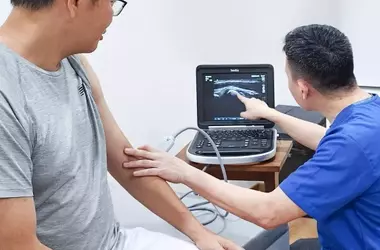
Understanding Point-of-Care Ultrasound (POCUS): A Technical and Clinical Overview
Point-of-Care Ultrasound (POCUS) refers to the use of portable ultrasonography by a healthcare practitioner at the patient's bedside to answer specific clinical questions or guide medical procedures. Unlike traditional comprehensive ultrasound exams performed in specialized radiology departments, POCUS is characterized by its immediate application, focused scope, and integration into the physical examination process. This article provides a neutral, evidence-based exploration of POCUS technology, detailing its structural components, the physics of acoustic wave interaction with human tissue, and its objective role in modern clinical environments. The following sections follow a structured trajectory: defining the technological framework, explaining the core mechanisms of sonography, presenting an objective overview of systemic benefits and limitations, and concluding with a technical inquiry section to clarify common operational questions.
 By Dr. Laura Kim
 Dec 25, 2025
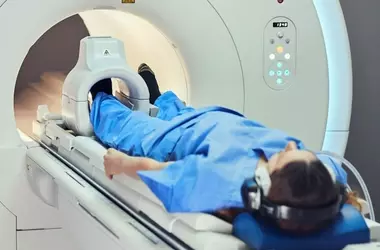
Understanding AI-Assisted Medical Imaging: A Technical and Clinical Overview
AI-assisted medical imaging refers to the integration of artificial intelligence (AI) algorithms—primarily machine learning and deep learning—into the process of acquiring, analyzing, and interpreting medical images. These technologies are used to enhance the visibility of anatomical structures, identify potential abnormalities, and provide quantitative assessments that supplement the qualitative review of radiologists. This article provides a neutral, evidence-based exploration of AI in medical imaging, detailing its structural components, the computational mechanisms of pattern recognition, and its objective role within current clinical workflows. The following sections follow a structured trajectory: defining foundational concepts, explaining the core mechanisms of neural networks, presenting an objective overview of systemic benefits and challenges, and concluding with a technical inquiry section to clarify common questions regarding its implementation.
 By Jonas Svensson
 Dec 25, 2025
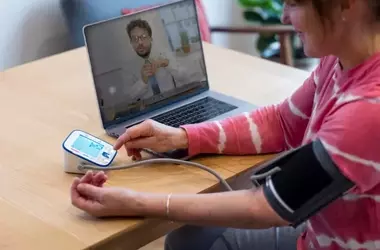
What Is Remote Patient Monitoring Technology? A Technical and Clinical Overview
Remote Patient Monitoring (RPM) technology refers to a coordinated system of digital medical devices and telecommunications infrastructure used to collect patient health data from one location and securely transmit it to healthcare providers at a different location for assessment. Unlike traditional telehealth, which focuses on real-time video consultations, RPM focuses on the continuous or periodic acquisition of physiological metrics outside of conventional clinical settings. This article provides a neutral, scientific exploration of RPM technology, detailing its structural components, the data transmission pathways, and its role in managing chronic physiological conditions. The following sections follow a structured trajectory: defining foundational concepts, explaining the core mechanisms of data synchronization, presenting an objective overview of systemic challenges and benefits, and concluding with a technical inquiry section to clarify common operational questions.
 By Dr. Felipe Torres