News
U.S. Announces Withdrawal from UNESCO, Citing Divisive Agendas

The United States has once again declared its intention to depart from the United Nations Educational, Scientific and Cultural Organization (UNESCO), marking a significant shift in its international engagement. This impending withdrawal, echoing a previous exit, underscores a persistent ideological divide and is set to reshape the landscape of global cultural and scientific cooperation. The decision comes despite recent efforts by the preceding administration to re-establish ties and clear outstanding financial obligations.
United States Reaffirms UNESCO Withdrawal Over Policy Disagreements
In a pivotal announcement made on Tuesday, July 22, 2025, U.S. State Department spokesperson Tammy Bruce confirmed the Trump administration's decision to initiate the nation's departure from the United Nations Educational, Scientific and Cultural Organization (UNESCO). This move signals a significant reversal, occurring merely two years after the Biden administration facilitated the U.S.'s re-entry into the esteemed international body. The withdrawal is scheduled to become effective at the close of 2026.
The core of the U.S.'s discontent, as articulated by spokesperson Bruce, centers on UNESCO's perceived deviation from American national interests. Specifically, the administration contends that UNESCO has increasingly championed what it terms 'divisive social and cultural causes.' A primary point of contention highlighted was the organization's pronounced emphasis on the United Nations' sustainable development goals, encompassing critical areas such as poverty eradication, hunger alleviation, gender equality, and the promotion of clean energy. Bruce asserted that these objectives reflect a 'globalist, ideological agenda for international development' that stands in direct opposition to the 'America First' foreign policy framework. Furthermore, a long-standing issue for the U.S. has been UNESCO's controversial decision in 2011 to grant member state status to Palestine. This move, according to Bruce, is 'highly problematic, contrary to U.S. policy, and contributed to the proliferation of anti-Israel rhetoric within the organization.'
Audrey Azoulay, the Director-General of UNESCO, expressed her disappointment, though she conceded the decision was largely anticipated. In a public statement, Azoulay lamented that the U.S.'s withdrawal 'contradicts the fundamental principles of multilateralism.' She also voiced concern about the potential adverse effects on numerous American partners, including communities aspiring for World Heritage Site inscription, Creative City status, and the establishment of University Chairs. UNESCO, with its 194 member states, is globally renowned for its administration of over 1,200 World Heritage Sites, which include iconic American landmarks such as the Statue of Liberty, Yosemite National Park, and Grand Canyon National Park. Inclusion on this prestigious list not only confers international recognition but also provides access to crucial funding for the preservation and conservation of these culturally and naturally significant locations.
This is not an unprecedented move for the United States. The Trump administration previously withdrew from UNESCO in 2018, citing similar grievances regarding perceived anti-Israel bias. That withdrawal was followed by the Obama administration's cut in funding to the organization in 2011, also in response to Palestine's admission. The Biden administration's effort in 2023 to rejoin UNESCO included commitments to settle over $600 million in back dues, underscoring the fluctuating nature of U.S. engagement with this vital international institution.
Reflecting on Global Cooperation and National Interests
The United States' repeated disengagement from UNESCO prompts a crucial reflection on the delicate balance between national sovereignty and international collaboration. While every nation has the right to define its foreign policy and protect its perceived interests, a withdrawal from a body dedicated to education, science, and culture raises questions about the long-term implications for global dialogue and shared heritage. Such actions can be seen as undermining the very multilateralism that is often essential for addressing complex global challenges, from climate change to cultural preservation. It highlights the inherent tension between a nation's immediate political leanings and the enduring need for cross-cultural understanding and scientific advancement on a global scale. Perhaps, a more consistent and engaged approach, even amidst disagreements, could better serve both national objectives and the broader goals of international harmony and progress.
Chief International Anchor for CNN, renowned for war reporting and interviewing world leaders.
Other Articles
 Jul 23, 2025
US and Japan Ink New Trade Agreement, Signaling Shift in Global Commerce
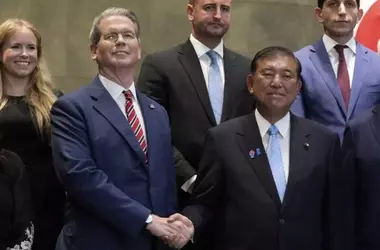
President Donald Trump has announced a new trade agreement with Japan, setting a 15% import tax on Japanese goods, a significant reduction from the previously threatened 25%. This move is expected to create numerous jobs and strengthen the economic ties between the two nations, with Japan committing substantial investment in the U.S. and opening its markets to American automotive and agricultural products. Japanese Prime Minister Shigeru Ishiba welcomed the deal, emphasizing its mutual benefits. This agreement underscores Trump's strategy to utilize tariffs as a negotiation tool, aiming to rebalance trade relationships and foster domestic manufacturing growth, even as concerns about potential consumer price increases and corporate profitability persist.
By Rageh Omaar Jul 22, 2025
AFP Appeals to Israel for Journalists' Gaza Exit Amid Starvation Crisis
Agence France-Presse (AFP) has urged the Israeli government to facilitate the departure of its freelance journalists from the Gaza Strip due to severe food shortages. The journalists are reportedly suffering from hunger, leading to physical weakening and hindering their ability to report. This plea highlights the dire humanitarian situation in Gaza, where widespread malnutrition is rampant, and access for international journalists remains restricted.
By Ann Curry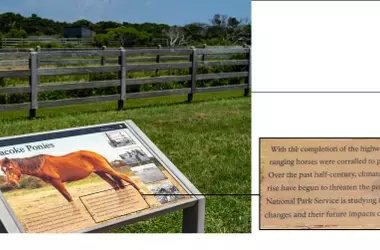 Jul 22, 2025
National Park Service Reviews Historical Narratives Under New Directive
The National Park Service is undertaking a comprehensive review of its interpretive materials across 433 sites, prompted by a recent executive order. This directive aims to ensure exhibits emphasize American progress and natural grandeur, potentially altering or removing content that could be perceived as 'disparaging.' Internal documents reveal parks flagging historical descriptions related to climate change, slavery, and Native American imprisonment for potential revision, stirring debate about historical accuracy versus a curated national narrative.
By Rageh Omaar