News
Tragic End for Centenarian Marathon Legend, Sparks Road Safety Debate in India

The extraordinary journey of Fauja Singh, a revered figure who defied age and adversity to become a global marathon sensation, has reached a poignant and unexpected end. His demise, not due to the natural passage of time but from a tragic road accident, serves as a profound reminder of life's fragility and, more critically, spotlights the perilous state of roadways in India. This incident has ignited a crucial conversation about the pressing need for enhanced safety measures and infrastructure development across the nation.
Details Emerge on the Demise of a Running Icon
On a somber afternoon, the 14th of July, 2025, in the tranquil village of Beas Pind, Punjab, India, the life of Fauja Singh, aged 114, was abruptly cut short. While venturing out to inspect his rice fields in a neighboring community, he was struck by a speeding SUV on a bustling highway. His friend's son, Balbir Singh, discovered him lying gravely injured, but critical blood loss prevented any chance of survival, according to medical professionals. This heartbreaking event has sent ripples of grief across the globe, prompting heartfelt tributes from international leaders, including India's Prime Minister, and a commitment from his London running club to establish a clubhouse in his honor. Meanwhile, a group of Indian sculptors has embarked on creating a life-size statue, cementing his legacy. However, beyond the expressions of sorrow, the incident has starkly illuminated India's alarming road fatality statistics, with over 150,000 lives lost annually. Nitin Gadkari, India's highway minister, recently confessed his shame in Parliament regarding the persistently high death toll, highlighting a systemic issue. Police have since apprehended 26-year-old Amrit Singh Dhillon from Dasupur village for the hit-and-run. Reports indicate Dhillon's attempts to evade capture by driving off-road, concealing his vehicle, and switching to a motorcycle. While Fauja's family acknowledged the swift police action, they emphasized that such promptness is often lacking, fostering a sense of impunity among reckless drivers. A relative of the accused, choosing anonymity, candidly stated that the intense media scrutiny was largely due to Fauja's celebrity status, implying that countless similar, unpublicized accidents occur regularly.
This tragic incident underscores a multifaceted problem in India's road safety landscape. While traffic police attribute accidents to reckless driving fueled by foreign film imitations and pedestrian shortcuts, experts like Rohit Baluja, director of the Indian Institute of Road Traffic Education, point to critical flaws in infrastructure design. Despite a boom in road construction under Prime Minister Narendra Modi's administration, many new roads lack essential safety features like warning signs and pedestrian underpasses. Baluja's research, based on thousands of accident investigations, reveals that a significant portion—30-33%—are directly attributable to engineering failures. He cites the very location of Fauja Singh's accident, noting the absence of rumble strips and junction warnings despite the presence of adjacent village access roads. This emphasizes a prevailing design philosophy that prioritizes vehicular traffic over the safety of vulnerable road users. Fauja Singh, whose remarkable physical resilience allowed him to remain active and medication-free until his last breath, tragically fell victim to these systemic failings. His final days were spent passing on the wisdom of an active life to his granddaughter, Japneet, an aspiring marathoner herself. As his biographer, Khushwant Singh, eloquently put it, Fauja had overcome his fear of dying because he was "fully living" his life—a life that deserved to continue unhindered by preventable dangers on the road.
Chief International Anchor for CNN, renowned for war reporting and interviewing world leaders.
Other Articles
 Jul 20, 2025
Reindustrialize Summit: Forging America's Techno-Industrial Future
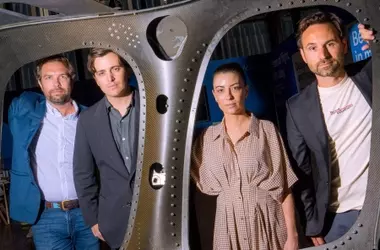
The "Reindustrialize 2025" summit in Detroit brought together Silicon Valley investors and Trump administration officials to champion a techno-industrial resurgence in the United States. This event showcased innovative American manufacturing, from autonomous gun turrets to electric vehicles, emphasizing the crucial link between industrial might and national security. The overwhelming attendance and online viewership underscore a growing commitment to revitalizing domestic production for both economic prosperity and strategic independence.
By Michele Norris Jul 20, 2025
Teenagers' Engagement with AI Companions: Trends, Benefits, and Risks
A recent study by Common Sense Media reveals that nearly three-quarters of U.S. teenagers have used AI companions for various interactions, including seeking advice and engaging in deep conversations. While these digital tools offer avenues for exploration and support, the report highlights concerns regarding potential addiction, data privacy, and the impact on developing crucial social skills. Despite the growing reliance on AI, most teens still prioritize human connections.
By Carl Bernstein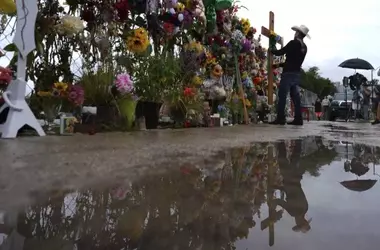 Jul 20, 2025
Kerr County Flood Recovery: Progress in Locating Missing Persons
Officials in Kerr County, Texas, have significantly reduced the number of individuals reported missing after the devastating July 4th flash floods. The initial count of nearly 100 missing persons has dropped to just three, following extensive search and rescue operations and diligent investigative efforts. While the death toll remains at 107 in Kerr County, the considerable progress in accounting for previously missing individuals offers a glimmer of hope amidst the ongoing recovery. The community continues to grapple with the aftermath of the catastrophic event, which saw the Guadalupe River rise dramatically, destroying homes and vehicles in a region particularly vulnerable to flash flooding.
By Michele Norris