News
Texas Enacts Groundbreaking Food Labeling Law Amid National Debate Over Additives

A new Texas law mandates warning labels on food products containing certain dyes and additives that are banned or restricted in other countries. The legislation, signed by Governor Greg Abbott, aims to align with the federal “Make America Healthy Again” health initiative and could influence nationwide food manufacturing practices. However, experts have raised concerns about the accuracy of the list of targeted ingredients, noting some are already regulated in the U.S. or even permitted in the regions cited by the law. While consumer advocates applaud efforts to increase transparency, they caution potential legal disputes may arise due to inconsistencies in the regulation. This move is part of a broader trend among U.S. states enacting stricter food additive controls, reflecting shifting attitudes toward public health policy.
The Texas law will take effect in 2027 and applies to over 40 substances commonly used in snacks like candies and chips. Products containing any of these ingredients must carry a label stating they include components not approved for human consumption in Australia, Canada, the European Union, or the United Kingdom. Though the goal is to encourage healthier eating habits and reformulation of processed foods, critics argue the list appears inconsistent. Several additives listed are currently allowed in all four jurisdictions mentioned, while others are already under restriction in the U.S., suggesting a lack of thorough research before finalizing the regulation.
One point of contention lies in how regulatory standards differ globally. In Europe and other regions, the precautionary principle often governs food safety—meaning an additive can be prohibited if its safety is uncertain. Conversely, U.S. policy typically permits use unless there is clear evidence of harm. This divergence complicates comparisons between international regulations. For instance, partially hydrogenated oils and certain red dyes have already been banned by U.S. authorities, yet remain included in the Texas list. Industry representatives and scientists alike question the methodology behind selecting which substances to target, emphasizing the need for precise and legally sound language in such laws.
Consumer advocacy groups and nutrition experts see value in increased scrutiny of food additives, citing studies showing that labeling initiatives can shift both consumer behavior and industry practices. The FDA has previously proposed front-of-package warnings for nutrients like sugar and sodium, but this Texas law represents a novel approach by focusing on chemical additives instead. Supporters believe it empowers consumers with more information, while also incentivizing manufacturers to reconsider their ingredient choices. Nonetheless, the potential for legal challenges remains high, particularly if companies argue the law misrepresents the regulatory status of specific compounds.
This development fits into a larger national movement where multiple states have introduced measures targeting artificial dyes and preservatives. California led the way in 2023 with bans on several additives, followed by similar actions in Arkansas, West Virginia, and now Texas. Some laws focus specifically on school meals, removing potentially harmful substances from children’s diets. Although such policies historically face resistance in conservative-leaning states, recent political shifts suggest growing bipartisan support for stronger consumer protections. As federal agencies also push for voluntary reductions in artificial ingredients, the landscape of American food regulation continues to evolve rapidly.
Anchor of NBC Nightly News, known for his trusted reporting and moderation of political debates.
Other Articles
 Jun 24, 2025
California Man Faces Charges in Connection with Library Video Game Thefts
A man from Oakland, California, was arrested for allegedly stealing nearly $10,000 worth of Nintendo Switch games from Marin County public libraries between April and June 2025. The suspect, facing 12 felony charges, reportedly targeted at least seven library branches. Libraries have expanded their collections to attract younger visitors, potentially making them targets due to the popularity of Nintendo Switch games. Authorities have not disclosed specific stolen titles or whether any were for the newly released Switch 2. Over 150 games are believed to have been taken, but it remains unclear how the suspect planned to use or sell them. No items have been reported recovered.
By Michele Norris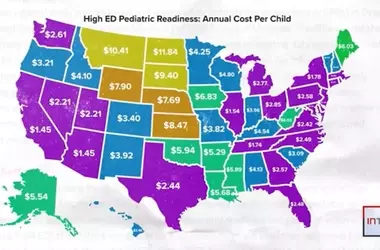 Jun 24, 2025
Emergency Rooms Nationwide Lag in Pediatric Preparedness, Study Reveals
A recent study published in the Journal of the American Medical Association reveals that only 17% of U.S. emergency departments are fully prepared to treat pediatric patients. The research indicates that improving pediatric readiness in ERs could prevent an estimated 2,000 child deaths annually. Key measures include implementing child-specific protocols, training staff, and acquiring appropriate equipment. The estimated cost for nationwide improvements is approximately $207 million per year, or up to $12 per child. Advocates urge legislative action to enhance pediatric emergency care, emphasizing its affordability and life-saving potential.
By Mona Chalabi Jun 25, 2025
Top European Getaways for UK Travellers: Explore More with KLM
By Mona Chalabi