News
Supreme Court Questions Legality of Presidential Tariffs

Judicial Scrutiny: Unpacking Presidential Tariff Authority
Supreme Court Challenges Trump's Tariff Justifications
During a recent session, the Supreme Court's justices voiced considerable doubts about the prior administration's assertion that it could unilaterally levy tariffs on other nations, using national security as the primary legal justification. This critical examination focused on the application of the International Emergency Economic Powers Act (IEEPA), a statute that permits the president to regulate international commerce during national emergencies.
Bipartisan Doubts on Executive Overreach
Both conservative and liberal members of the bench rigorously questioned the solicitor general's defense of the executive actions. Their inquiries highlighted concerns that the former president might have exceeded the powers granted by both the IEEPA and the Constitution itself, an interpretation that lower courts have already echoed in previous rulings.
Defining Tariffs: Taxation vs. Regulation
A central point of contention was the nature of these tariffs. The government contended that the tariffs were primarily regulatory, with revenue generation being a secondary, incidental outcome. However, legal representatives for the plaintiffs challenging these tariffs emphatically stated that, at their core, tariffs are a form of taxation, directly contradicting the government's characterization.
Economic Impact and Policy Debate
The extensive revenue collected from these tariffs—reportedly $195 billion in the last fiscal year—underscores their significant economic impact. This figure reinforces the argument that the tariffs served as a substantial source of federal income, rather than merely regulatory tools. The debate also touched upon the broader implications of such tariffs on international trade relations and domestic businesses, many of whom were negatively affected by the trade measures.
Future Implications for Executive Trade Powers
The Supreme Court's impending decision is poised to significantly influence the balance of power between the executive and legislative branches concerning trade policy. It will delineate how future administrations can utilize national security claims to implement economic measures, setting a precedent for presidential authority in international economic affairs. The outcome is eagerly anticipated and will likely reshape the landscape of U.S. trade relations.
CNN anchor known for his coverage of major global events and sober, factual delivery.
Other Articles
 Nov 05, 2025
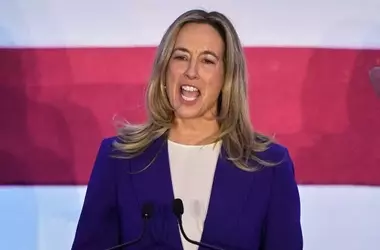
Mikie Sherrill's Victory: A Mandate for Leadership in New Jersey
Representative Mikie Sherrill's gubernatorial victory in New Jersey, winning by a significant margin against a Trump-endorsed opponent, signals a strong voter desire for effective leadership. Sherrill attributes her win to focusing on everyday affordability concerns and her background as a military veteran and mother, resonating with residents facing economic challenges and policy impacts from the previous administration.
By Lester Holt Nov 05, 2025
Johannesburg's Spring Transformation: A Jacaranda Spectacle
This article explores Johannesburg's stunning transformation during spring as jacaranda trees bloom, painting the city in vibrant purple hues. Once known for its gold mines, the city now embraces a different kind of richness through its abundant flora. The author, a journalist, shares a personal connection to these flowers, recalling childhood memories and finding a sense of belonging in a place that once felt foreign.
By Christianne Amanpour Nov 05, 2025
Government Shutdown Sets New Record as Economic and Social Strain Intensifies
The current U.S. government shutdown has surpassed all previous records, now extending beyond 35 days. This prolonged impasse, rooted in funding disagreements, is causing severe disruptions across various sectors, impacting federal workers, essential services, and the broader economy. With no immediate resolution in sight, the nation grapples with escalating consequences, including threats to public health benefits and significant economic losses.
By Mona Chalabi