Professional skills
Software Development Training: A Scientific Overview of Principles, Approaches

1. Objective Definition
The objective of this article is to explain what software development training entails, the fundamental competencies it addresses, and how these competencies are typically acquired. The article also outlines the structure of training programs, the mechanisms by which learning occurs, and the scope of knowledge areas included in software development education. By presenting this information systematically, the article aims to provide a clear and neutral understanding of software development training as a professional and educational domain.
2. Basic Concept Explanation
Software development involves creating and maintaining applications, systems, and tools through programming and systematic problem-solving. Key activities include requirements analysis, algorithm design, coding, testing, debugging, deployment, and maintenance. Software development training encompasses structured learning experiences intended to familiarize participants with these processes and associated technologies.
Training programs vary in format, duration, and content coverage. Common forms include formal academic programs, vocational or technical courses, online learning platforms, bootcamp-style programs, and workplace-based training initiatives. Training may cover multiple programming languages, software development methodologies, tools for version control, debugging, and testing, as well as principles of software architecture and design.
The central goal of training is the development of competency in both technical skills (coding, system design, testing) and conceptual understanding (problem-solving, software engineering principles, collaborative practices). While specific competencies differ depending on the program and intended application, training generally emphasizes a combination of theoretical knowledge and practical application.
3. Core Mechanisms and In-Depth Explanation
The mechanisms underlying software development training include cognitive learning, hands-on practice, and iterative feedback. Cognitive learning introduces participants to fundamental principles, logic structures, and conceptual models relevant to software design and development. Instruction often employs lectures, readings, demonstrations, and problem-based exercises.
Hands-on practice is central to skill acquisition in software development. Trainees typically write code, develop small-scale projects, perform debugging exercises, and use version control systems. These activities provide experiential learning opportunities, reinforcing theoretical knowledge through application. Iterative feedback mechanisms, such as peer review, automated testing results, and instructor evaluations, help learners refine their skills and correct errors.
Learning is also influenced by exposure to software development frameworks, libraries, and environments. Familiarity with development tools and ecosystems allows learners to bridge the gap between abstract principles and practical application. Additionally, collaborative exercises, such as pair programming or team-based projects, help develop coordination, communication, and project management skills relevant to real-world software development environments.
4. Comprehensive and Objective Discussion
Software development training is applied in multiple contexts, including academic settings, professional development programs, vocational training, and self-directed learning platforms. The field encompasses a wide range of knowledge areas, including but not limited to: programming languages (e.g., Python, Java, C++), software engineering methodologies (e.g., Agile, Waterfall), software testing strategies, system design, cybersecurity fundamentals, and version control systems.
Effectiveness of training depends on several factors, including program structure, learner engagement, available resources, and assessment mechanisms. Research in educational psychology and computer science education indicates that active, project-based learning combined with iterative feedback enhances skill acquisition compared with passive instruction.
Training also faces inherent challenges. The software development field evolves rapidly, and technologies or best practices taught in one period may become outdated. Learners must therefore develop adaptive skills, problem-solving approaches, and the ability to apply foundational principles to new contexts. Additionally, variability in learner background, prior knowledge, and cognitive styles affects training outcomes.
While software development training equips participants with knowledge and practical experience, it does not guarantee mastery, employment outcomes, or productivity in professional settings. It functions as a structured process for skill development rather than a deterministic solution for career advancement.
5. Summary and Outlook
In summary, software development training is a structured educational process designed to develop both technical and conceptual competencies in software creation and maintenance. Core mechanisms include cognitive instruction, hands-on practice, and iterative feedback, often reinforced through collaborative and project-based learning. Training spans multiple domains, including programming languages, software engineering methodologies, testing, system design, and tools familiarization.
Looking ahead, the field of software development training is influenced by ongoing technological change, the emergence of new programming paradigms, and the integration of digital learning platforms. Future research and program design continue to explore methods to enhance learning efficiency, accommodate diverse learner backgrounds, and integrate adaptive technologies while remaining grounded in fundamental software engineering principles.
6. Question and Answer Section
Q1: Does software development training ensure professional competency?
No. Training provides structured learning and practice but does not guarantee full professional skill or productivity.
Q2: Are all software development programs identical in content?
No. Programs vary in scope, duration, focus areas, and instructional approaches.
Q3: Why is hands-on practice emphasized in software development training?
Practical coding and project exercises reinforce theoretical knowledge and develop problem-solving skills essential to software creation.
Q4: How do technology changes affect software development training?
Rapid technological evolution requires continuous updates to training content and fosters the development of adaptive problem-solving skills.
https://www.acm.org/education/curricula-recommendations
https://www.ieee.org/education/curricula.html
https://www.nature.com/articles/s41599-019-0351-3

Contemporary dance choreographer and instructor exploring movement as a form of emotional expression.
Exploration ArchivesOther Articles
 Feb 04, 2026
Cybersecurity Training: A Neutral Educational Overview
This article presents a neutral and informational overview of cybersecurity training. It defines the core concept, outlines the objectives such training typically seeks to address, and explains the foundational ideas, technical mechanisms, and broader context in which cybersecurity training exists. The discussion follows a structured sequence: clarifying objectives, analyzing basic concepts, examining core mechanisms in depth, presenting an overall and balanced discussion, summarizing key points with an outlook, and concluding with a question-and-answer section. The article is limited to factual explanation and knowledge transfer and avoids recommendations, assurances, or persuasive language.
 Feb 04, 2026
Supply Chain Management Training: A Neutral Educational Overview of Concepts
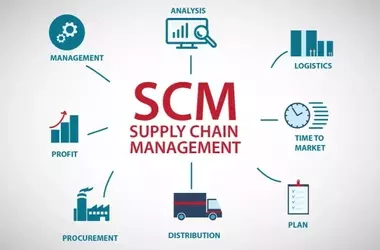
Supply Chain Management (SCM) training refers to structured educational initiatives designed to enhance understanding of supply chain principles, processes, and systems used in coordinating the flow of goods, services, information, and finances. This article provides a neutral overview of SCM training by defining its core concept, clarifying educational objectives, explaining foundational principles, analyzing instructional and operational mechanisms, presenting a broader perspective within economic and organizational contexts, and concluding with a forward-looking synthesis and a question-and-answer section. The purpose is to provide factual and descriptive knowledge without offering recommendations, promises, or prescriptive guidance.
 By Natalia Petrova
 Feb 04, 2026
Tax Planning Training: A Neutral Educational Overview of Concepts, Structures
Tax planning training is a structured form of education focused on explaining how tax systems operate, how legal tax rules are interpreted, and how individuals or organizations can understand compliance-related decision frameworks. This article provides a neutral, educational overview of tax planning training by defining its core concept, clarifying its objectives, explaining foundational principles, examining underlying mechanisms, and discussing its broader role within regulatory and economic contexts. The article concludes with a forward-looking summary and a question-and-answer section addressing common conceptual inquiries.
By Natalia Petrova