News
Samosas Under Scrutiny: India's Beloved Snack Sparks Health Debate

A recent health advisory from the Indian government, cautioning against the excessive consumption of high-fat and high-sugar snacks, has inadvertently sparked a national debate, particularly centering on the much-loved samosa. This traditional deep-fried pastry, a staple of Indian street food culture, found itself at the top of a list of foods to be consumed in moderation, leading to widespread public outcry and a flurry of online discussions and media reports. The passionate response underscores the profound cultural significance of these culinary items, which are not merely food but an integral part of daily life and heritage for many Indians.
India boasts an astonishing variety of street foods, each offering unique flavors and textures. Beyond the samosa, the country's vibrant street food scene includes crispy pakoras, syrupy jalebis, and tangy papdi chaat. These affordable, readily available, and satisfying snacks are often accompanied by chai, a spiced tea. Among these, the samosa, a triangular, crispy, deep-fried pastry filled with spiced potatoes, stands out as a national favorite and a prominent culinary export. Typically served with sweet and savory chutneys, these delightful treats can be purchased for as little as 15 cents from street vendors across the nation.
On June 21, the Indian health ministry issued a notice recommending that all government ministries display posters in public areas, such as office canteens and meeting rooms, indicating the oil and sugar content of various foods. The sample posters prominently featured the samosa as a high-fat item, while jalebis were noted for their high sugar content. This advisory, although seemingly mild, was perceived by many as an attack on their cherished culinary traditions. The public reaction quickly escalated, with social media platforms becoming a hub for memes and discussions, and local media outlets drawing parallels, albeit hyperbolically, to health warnings typically associated with cigarettes. This comparison further fueled the controversy, highlighting the deep emotional attachment the populace has to its traditional cuisine.
The strong public sentiment against the advisory reflects the deep-rooted affection and cultural connection Indians share with their traditional foods. For many, items like the samosa are not just simple snacks but comfort foods and symbols of cultural identity. The intensity of the reaction suggests that while health awareness is important, the government's approach may have inadvertently touched upon a sensitive aspect of national heritage, demonstrating that certain culinary traditions are far more than mere dietary choices; they are an intrinsic part of the nation's identity.
Award-winning journalist and former NBC News anchor and Today show co-host.
Other Articles
 Aug 11, 2025
Remembering Sheila Jordan: A Jazz Icon's Enduring Legacy
Sheila Jordan, a groundbreaking figure in the jazz world, has passed away at 96. Known for her distinctive vocal style and influential debut album, 'Portrait of Sheila,' she overcame significant personal and professional hurdles. Her career spanned decades, culminating in recognition as a Jazz Master by the National Endowment for the Arts. Jordan's dedication to music and education left an indelible mark on the genre.
By Anderson Cooper Aug 11, 2025
Ford's Strategic Shift: A New Era for Affordable Electric Trucks
Ford is making a significant investment in electric vehicles, announcing plans to retool its Louisville Assembly Plant to produce a midsize electric pickup truck priced around $30,000 within 18 months. This move aims to make EVs more accessible to U.S. consumers and strengthen Ford's position against Chinese EV manufacturers. The initiative represents a shift from previous, more expensive EV models that failed to achieve profitability, focusing instead on affordability and a streamlined production process. This $5 billion investment is a calculated risk, emphasizing innovation and efficiency to overcome market challenges and competition.
By Carl Bernstein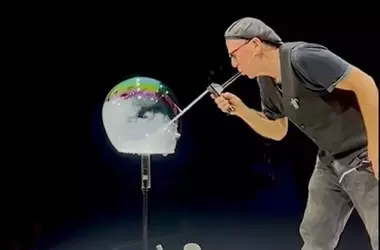 Aug 11, 2025
The Art of Bubbles: A Growing Phenomenon at the Edinburgh Fringe
The Edinburgh Festival Fringe, renowned for its comedy and theater, is increasingly becoming a hub for bubble artistry. Performers like Louis Pearl, the 'Amazing Bubble Man,' captivate audiences with intricate bubble manipulations, creating immersive and interactive experiences. This article explores the rising popularity of bubble shows, the performers behind them, and the unique blend of science, art, and wonder that defines this captivating genre at one of the world's largest arts festivals.
By Carl Bernstein