Corporate Training
Sales Skills Training: Concepts, Learning Methods, and Organizational Context

1. Defining the Objective
Sales skills training refers to organized learning activities intended to develop knowledge and abilities associated with commercial selling processes. In business environments, sales interactions involve communication between organizations or individuals who offer goods or services and those who may choose to purchase them. Training programs in this area often explore behavioral, psychological, and analytical aspects of sales interactions.
The objective of this article is to provide a clear and neutral explanation of sales skills training as an educational and organizational concept. Several questions guide the discussion:
- What are sales skills and why are they studied in professional training contexts?
- What concepts and methods are typically included in sales training programs?
- How do communication techniques and decision-making processes function in sales interactions?
- What learning formats and instructional approaches are commonly used in training programs?
- How do broader economic and organizational factors influence the development of sales education?
The article follows a systematic structure that begins with foundational definitions and expands toward a broader understanding of how sales training operates in different environments.
2. Basic Concept Analysis
2.1 Understanding Sales in a Business Context
Sales is the process through which goods or services are exchanged for value, typically through financial transactions. In modern economies, sales activities occur in multiple sectors, including retail, business-to-business markets, digital commerce platforms, and service industries.
Sales processes often involve several stages:
- identifying potential customers
- presenting information about products or services
- responding to questions or concerns
- negotiating terms of exchange
- completing a transaction
Training programs that focus on sales skills aim to analyze these stages and explain the techniques used within each step.
2.2 Definition of Sales Skills
Sales skills refer to abilities associated with communication, persuasion, negotiation, relationship management, and analytical understanding of customer needs. These skills often combine interpersonal communication techniques with knowledge of products, markets, and consumer behavior.
Examples of skills frequently discussed in training programs include:
Communication Skills
Clear explanation of product features, listening to customer concerns, and structured dialogue.
Needs Assessment
Identifying customer requirements through questions and analysis.
Negotiation Techniques
Managing discussions related to pricing, contract terms, or service conditions.
Relationship Management
Maintaining ongoing communication with customers or clients.
Analytical Skills
Interpreting sales data, customer feedback, and market trends.
2.3 Types of Sales Environments
Sales training may address different market contexts.
Business-to-Consumer (B2C)
Transactions between companies and individual consumers, commonly seen in retail and online commerce.
Business-to-Business (B2B)
Transactions between organizations, often involving longer negotiation processes and formal contracts.
Service-Based Sales
Sales interactions involving intangible offerings such as consulting services or subscriptions.
Different contexts influence how sales communication and negotiation strategies are discussed in training programs.
3. Core Mechanisms and In-Depth Explanation
Understanding sales skills training requires examining the psychological, communicative, and analytical processes involved in sales interactions.
3.1 Communication and Information Exchange
Sales interactions typically involve structured communication between participants. Communication processes may include:
- presenting information about products or services
- asking questions to identify customer needs
- clarifying misunderstandings
- providing comparisons between options
Communication theory often appears in sales training because effective information exchange can influence decision-making processes during commercial interactions.
3.2 Customer Decision Processes
Consumer behavior research examines how individuals or organizations evaluate purchasing decisions. Sales training programs sometimes introduce concepts related to decision-making stages, including:
- problem recognition
- information search
- evaluation of alternatives
- purchasing decisions
- post-purchase evaluation
Understanding these stages helps explain how communication strategies align with customer decision processes.
3.3 Negotiation Dynamics
Negotiation is another concept frequently examined in sales training. Negotiation involves discussions between parties to reach agreements on terms such as price, quantity, delivery conditions, or service features.
Negotiation research in business studies often examines topics such as:
- information asymmetry
- bargaining strategies
- mutual value creation
- conflict resolution
Sales training programs sometimes incorporate simulated negotiation exercises to analyze these dynamics.
3.4 Data and Analytical Tools
Modern sales environments increasingly involve data analysis. Sales teams often examine information such as:
- customer relationship management (CRM) data
- purchasing patterns
- marketing campaign responses
- market demand indicators
Training programs may introduce analytical tools used to interpret these datasets and support decision-making.
3.5 Role-Playing and Simulation Methods
Many training programs include experiential learning methods such as role-playing scenarios or case studies. These activities allow participants to observe how communication techniques operate in simulated commercial interactions.
Educational research suggests that experiential learning methods may help illustrate theoretical concepts within practical contexts.
4. Presenting the Broader Landscape and Objective Discussion
4.1 Organizational Use of Sales Training
Sales skills training appears in various organizational contexts. Companies often organize internal training sessions for employees involved in marketing or sales departments. These programs may address product knowledge, communication methods, and industry regulations.
In addition to corporate training, universities and business schools frequently include sales-related topics within marketing or business administration programs.
4.2 Professional Development and Continuing Education
Professional education institutions and industry associations sometimes offer courses related to sales communication, negotiation theory, and customer relationship management. These programs may be part of broader business education initiatives.
The structure of these courses varies widely, ranging from short workshops to extended academic programs.
4.3 Digital Transformation in Sales Education
Digital technologies have influenced the format of sales training. Online learning platforms, virtual simulations, and data analysis tools are increasingly incorporated into training environments.
Digital communication channels such as video conferencing, online retail platforms, and automated marketing systems have also influenced the skills examined in modern training programs.
4.4 Economic and Labor Market Context
Research reports on global labor markets indicate that sales-related roles continue to exist across a wide range of industries. These roles may involve interactions with customers, management of commercial relationships, and coordination with marketing and logistics teams.
Economic studies frequently examine the role of sales and marketing activities in supporting the distribution of goods and services within market economies.
4.5 Ethical and Regulatory Considerations
Sales practices are often subject to consumer protection laws, advertising standards, and regulatory frameworks that aim to ensure transparency and fair commercial conduct.
Training programs sometimes include discussions of ethical considerations such as:
- accurate representation of product information
- responsible marketing communication
- compliance with regulatory requirements
These topics reflect the broader legal and ethical environment surrounding commercial transactions.
5. Summary and Future Outlook
Sales skills training represents a category of educational programs focused on understanding and developing communication, negotiation, and analytical abilities associated with commercial exchanges. These programs combine elements of business theory, psychology, communication studies, and data analysis.
Key points discussed in this article include:
- Sales involves exchanges of goods or services within commercial markets.
- Sales skills include communication, negotiation, needs analysis, and relationship management.
- Training programs often examine consumer decision processes, negotiation theory, and data analysis tools.
- Educational formats include corporate training, university courses, workshops, and online learning platforms.
- Ethical considerations and regulatory frameworks influence how sales practices are studied and applied.
Future developments in digital commerce, data analytics, and customer relationship technologies may influence the evolution of sales education. As economic systems and communication technologies continue to evolve, training programs may adapt to reflect new market structures and business practices.
6. Question and Answer Section
Q1: What is sales skills training?
Sales skills training refers to organized educational programs designed to explain techniques and concepts associated with commercial selling processes.
Q2: What subjects are commonly included in sales training programs?
Topics may include communication methods, customer behavior analysis, negotiation theory, product knowledge, and data analysis related to sales performance.
Q3: Why is communication emphasized in sales education?
Sales interactions involve information exchange between sellers and potential buyers. Clear communication can influence how information is understood during commercial discussions.
Q4: Are sales training programs limited to retail industries?
No. Sales training is relevant in many sectors, including technology services, manufacturing, financial services, and business-to-business markets.
Q5: What role does data analysis play in modern sales environments?
Organizations often analyze sales data, customer interactions, and market trends to understand purchasing patterns and support strategic planning.
Q6: Why do some training programs include role-playing exercises?
Role-playing activities simulate real-world interactions and allow participants to observe communication and negotiation dynamics within structured scenarios.
https://www.oecd.org/skills/
https://www.bls.gov/ooh/sales/home.htm
https://www.coursera.org/articles/sales-skills
https://hbr.org/2015/12/what-great-salespeople-do
https://www.mckinsey.com/capabilities/growth-marketing-and-sales/our-insights
https://www.weforum.org/reports/the-future-of-jobs-report-2023

Woodcarver and storyteller sharing techniques and cultural narratives behind indigenous Pacific Northwest art.
Exploration ArchivesOther Articles
 Mar 06, 2026
Time Management Training: Concepts, Mechanisms, and Organizational Context
Time management training refers to structured educational programs that explain how individuals and organizations plan, allocate, and monitor time resources in order to complete tasks and coordinate activities. Time is a finite resource in both professional and personal contexts, and structured approaches to managing it have been studied in fields such as organizational psychology, productivity research, and behavioral science. This article defines the concept of time management training and examines several central questions: what time management means in practical terms, how time allocation processes function, what mechanisms influence effective time use, and how time management practices are viewed within broader workplace systems. The discussion follows a structured sequence consisting of objective clarification, conceptual explanation, analysis of underlying mechanisms, comprehensive and balanced discussion, concluding insights with future considerations, and a final question-and-answer section addressing commonly discussed issues.
 By Chloe Davis
 Mar 06, 2026
Performance Management Training: Understanding the Structure, Mechanisms, and Organizational Role
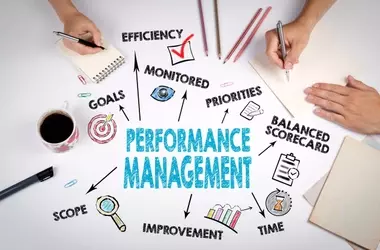
Performance management training refers to structured learning programs designed to explain the principles, processes, and analytical tools used to evaluate and guide employee performance within organizations. The topic intersects with organizational psychology, human resource management, and leadership development. This article aims to clarify the objectives of performance management training, explain the fundamental concepts behind performance management systems, explore the mechanisms that support effective evaluation and feedback, and present a broader view of how such training fits into modern workplaces. The discussion proceeds through the following structure: defining the objective of the topic, explaining core concepts, analyzing underlying mechanisms, presenting a comprehensive perspective with balanced discussion, summarizing insights and future considerations, and concluding with a question-and-answer section that addresses commonly discussed issues.
By Chloe Davis Mar 06, 2026
Business Administrative Secretary Training: A Scientific Overview of Skills, Functions
Business administrative secretary training refers to structured educational programs designed to develop the knowledge and competencies associated with administrative coordination, document management, communication processes, and office operations within organizations. The role of administrative professionals has evolved alongside changes in corporate structures, digital communication systems, and globalized business environments. This article presents a neutral and educational explanation of business administrative secretary training. The discussion begins by defining the objective of the article and outlining the key questions addressed. It then explains foundational concepts related to administrative roles, followed by a detailed examination of operational mechanisms and skill frameworks. A broader discussion explores the organizational and labor-market context of administrative work. The article concludes with a summary, outlook, and a question-and-answer section. The purpose is strictly informational, focusing on knowledge transmission.
 By Youssef Khoury