News
A-Rod and Marc Lore Secure Full Ownership of Timberwolves and Lynx in $1.5 Billion Deal

After years of negotiations and procedural formalities, the transition of ownership for both the NBA’s Minnesota Timberwolves and the WNBA’s Minnesota Lynx has reached a successful conclusion. A consortium headed by Alex Rodriguez, former Major League Baseball standout, and Marc Lore, a prominent figure in e-commerce, has now received full control, with the NBA’s governing board giving its complete endorsement. The transaction, reportedly valued at $1.5 billion, is anticipated to finalize shortly, marking a new chapter for the franchises.
The acquisition process began several years ago, when Rodriguez and Lore first entered the picture as partial stakeholders. Glen Taylor, the billionaire who originally acquired the Timberwolves in 1994, gradually moved toward stepping down from majority control. The duo's vision for the teams includes long-term investment, organizational excellence, and building a legacy that resonates beyond the court. Their leadership structure will see Lore take on the role of primary franchise representative, with Rodriguez serving as alternate governor.
An official unveiling event is set for July in Las Vegas during the NBA summer league, where the pair will publicly outline their plans. The Lynx, known for their four WNBA titles, and the Timberwolves, who made a strong playoff run this year reaching the Western Conference Finals, stand at the threshold of a new era under leadership committed to raising competitive and cultural standards.
In an age where sports franchises are not just about competition but also community impact and innovation, the arrival of fresh leadership often signals more than just financial change—it represents a shift in values, ambition, and public engagement. As new stewards step into their roles, the opportunity to inspire through integrity, vision, and dedication becomes ever more powerful.
Veteran BBC and OZY journalist, author, and commentator on US politics and women's issues.
Other Articles
 Jun 24, 2025
Unlocking Tax Payments: How Credit Cards Can Work For—or Against—you
The IRS allows taxpayers to pay their tax bills using credit cards through authorized processors, but this convenience comes with added costs. A convenience fee of 1.75% to 1.85% (with a minimum of $2.50) is charged per transaction, and potential interest charges may apply if the balance isn't paid in full. While offering flexibility and rewards opportunities, credit card payments are limited to two transactions per year. Alternatives such as installment plans, short-term loans, or improved financial planning may be more cost-effective solutions for managing tax payments.
By Lester Holt Jun 24, 2025
Powering the AI Revolution: The Hidden Energy Giant Poised to Profit from Artificial Intelligence’s Surge
Artificial intelligence represents a transformative investment opportunity, but its rapid growth is creating an urgent energy crisis. AI data centers consume massive amounts of electricity, straining power grids and raising concerns about future energy availability. While major investors focus on AI technology itself, a critical opportunity lies in energy infrastructure. One overlooked, debt-free company with significant cash reserves owns key nuclear energy and infrastructure assets, positioning it to profit from the AI-driven energy demand. It also benefits from U.S. LNG exports, onshoring trends, and Trump-era energy policies. Trading at less than 7 times earnings, this company offers indirect exposure to AI growth through essential infrastructure, making it a compelling investment with potential for over 100% returns in 12–24 months.
By Lester Holt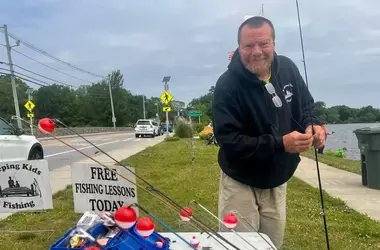 Jun 24, 2025
Hooked on Giving: The Heartwarming Mission Behind Keeping Kids Fishing
John Graichen, a Coventry resident, dedicates his Sunday mornings to teaching children and adults how to fish through his program "Keeping Kids Fishing." Started nearly eight years ago, the initiative provides free fishing gear, including poles, tackle, and bait. Graichen, who has fished since age 4, aims to support children from single-parent families or those lacking guidance. His efforts have grown significantly, donating over 3,392 fishing kits. A volunteer-driven initiative, it also accepts donations to sustain its nonprofit mission. Graichen finds joy in helping people disconnect from technology and connect with nature, crediting the program with improving his mental health after battling neuro Lyme Disease.
By Lester Holt