ParentsKids
Reviving Curiosity: The Impact of Language on Children's Scientific Engagement

The journey of nurturing a child’s curiosity about the world around them is both fascinating and challenging. Initially, children exhibit an insatiable desire to explore their surroundings, questioning everything they encounter. However, as they grow older, many lose interest in scientific exploration, often due to subtle language cues that shape their perception of science. Recent research highlights how these cues can either foster or hinder a child’s engagement with science, offering valuable insights for parents and educators.
Research indicates that the way adults communicate about science significantly influences a child’s willingness to engage with it. Phrases like "Let’s be scientists today!" may unintentionally discourage certain groups by associating science with specific identities rather than actions. Studies show that encouraging children to "do science" instead of becoming scientists can enhance their persistence and motivation, particularly among younger children. This shift in language emphasizes the process of discovery over the identity of being a scientist, making it more inclusive and accessible to all children regardless of background or gender.
For instance, researchers observed that young girls demonstrated greater perseverance in scientific activities when encouraged through action-oriented language rather than identity-based encouragement. This suggests that traditional stereotypes about who can be a scientist still persist, influencing children's self-perception and interest in scientific pursuits. By first grade, such stereotypes can already manifest, leading to reduced interest in fields like computer science and engineering among girls.
However, as children transition into adolescence, the role of identity becomes increasingly important. During this stage, emphasizing future identities tied to science—such as aspiring doctors or engineers—can motivate teenagers to invest more effort in their studies. This shift aligns with adolescents' natural inclination to explore potential futures and form personal identities, making identity-focused language more effective at this age.
Parents and educators play a crucial role in shaping how children perceive science. By focusing on the actions involved in scientific exploration during early years and gradually introducing identity-based encouragement as children mature, we can maintain their interest in science throughout development. Encouraging children to enjoy learning and discovery not only enriches their educational experience but also fosters critical thinking skills essential for success in any field.
Balancing action-oriented language with identity-focused encouragement presents a promising approach to sustaining children's interest in science. As research continues to uncover the nuances of linguistic influence on scientific engagement, parents are empowered to nurture lifelong curiosity and appreciation for the scientific process in their children.
Educational psychologist and author focusing on building empathy and resilience in children.
Other Articles
 Apr 21, 2025
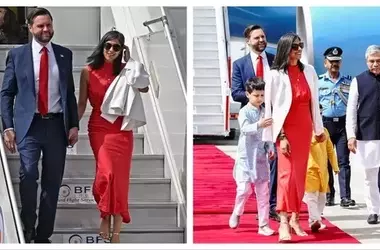
US Vice President's Spouse Captivates Delhi with Vibrant Attire
US Vice President JD Vance arrived in New Delhi with his wife, Usha Vance, who made a stylish impression in a bright red dress on the first day of their four-day visit. Usha, known for her Indian heritage, accessorized her bold look with a white blazer, black sunglasses, and minimal jewelry. The couple's children embraced traditional Indian attire, with the boys wearing kurta-pyjamas and young Maribel donning an Anarkali-style suit. Usha, an accomplished attorney with roots in Andhra Pradesh, balanced elegance and cultural pride, drawing attention to her fashion choices while highlighting family values and heritage through their outfits.
By Jessica Lahey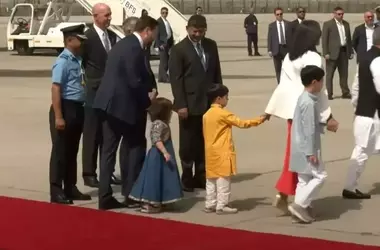 Apr 21, 2025
US Vice President's Family Charms India with Traditional Attire During Official Visit
US Vice President JD Vance arrived in New Delhi with his family for a four-day official visit aimed at strengthening bilateral ties in trade, defense, and strategic areas. His children captivated onlookers at Palam Airport with their traditional Indian attire. Vance is set to meet Prime Minister Narendra Modi and will later visit Jaipur and Agra, including a trip to the Taj Mahal. Union Minister Ashwini Vaishnaw welcomed the delegation, emphasizing the significance of Indo-US relations. This visit follows Vance's recent trip to Italy, where he met Prime Minister Giorgia Meloni and Pope Francis. The visit seeks to enhance the comprehensive strategic global partnership between India and the US, with ongoing discussions on a potential trade agreement.
By Dr. Benjamin Spock Apr 21, 2025
A Mother's Ordeal: A Child Left Behind in an Uber
During a harrowing incident, Julia, a GTA mother, experienced her five-year-old daughter being left in an Uber after a family trip. Despite discussing their unloading plan, the Uber driver departed with the sleeping child still inside. Although police located the driver and ensured the child's safety, Uber's customer support refused to assist Julia or authorities in contacting the driver, citing protocol. This refusal frustrated Julia, who criticized Uber’s lack of emergency responsiveness. While Uber maintains its procedures prioritize user safety, Julia is advocating for policy changes to improve emergency handling. Her case highlights broader concerns about customer service within the gig economy.
By Kim John Payne