News
Presidential Decree Aims to Reshape College Sports Landscape

Forging a New Era: Presidential Mandate for Collegiate Athletic Integrity
Executive Action to Stabilize Collegiate Athletics
Presidential action has recently been directed towards the realm of college sports, with a newly signed executive order designed to empower federal entities, including the Department of Education, in overseeing athlete scholarships and name, image, and likeness (NIL) agreements. This directive explicitly seeks to curtail certain NIL arrangements perceived as \"pay-for-play\" while simultaneously mandating increased scholarship opportunities for women's and Olympic sports. The order underscores a commitment to safeguarding the integrity and diverse offerings within intercollegiate athletics, warning against potential deterioration without such federal intervention.
The Battle Over \"Pay-for-Play\" and Scholarship Equality
At the core of the new directive is the ambition to rebalance the financial ecosystem of college sports. It mandates that top-tier athletic departments bolster scholarship provisions for non-revenue sports, particularly those for women and Olympic disciplines. Concurrently, the order targets NIL deals, aiming to distinguish between legitimate marketing endorsements and direct compensation for athletic performance. This regulatory effort endeavors to preserve the educational essence of collegiate sports, which, according to the order, is vital for fostering American athletic prowess on the global stage and supporting numerous student-athletes.
Legal Ramifications and Federal Authority
The legal enforceability of the executive order's provisions remains a significant point of discussion among legal scholars. While some view it as a clear signal of growing federal interest in collegiate sports, others question its binding authority. The directive suggests leveraging federal funding mechanisms and Title IX compliance to influence universities, particularly public institutions that constitute the bulk of major athletic departments. This potential for direct federal intervention represents a novel approach to regulating a domain traditionally governed by collegiate associations.
A Response to Evolving Athlete Compensation
This presidential initiative follows closely on the heels of a landmark class-action settlement that has fundamentally altered athlete compensation, enabling direct payments to players and challenging the long-held amateurism model. The order reflects a broader concern that without new regulatory frameworks, the increased monetization of college sports could jeopardize the viability of non-revenue sports, as resources are increasingly channeled towards football and basketball to maintain competitive advantage. The directive champions a more equitable distribution of resources to ensure the survival and growth of a diverse array of collegiate athletic programs.
The NCAA's Alignment and Future Outlook
The National Collegiate Athletic Association (NCAA), the primary governing body for college athletics, has expressed support for the executive order, aligning with its long-standing efforts to seek federal legislative solutions to the myriad legal challenges it faces concerning athlete compensation and eligibility. However, the order also risks exacerbating political divisions, potentially complicating the path toward comprehensive, bipartisan legislative reform. The directive further outlines the involvement of various federal agencies, including the National Labor Relations Board, the Department of Justice, and the Federal Trade Commission, in clarifying athlete status and addressing future litigation, signaling a robust and multi-faceted federal engagement in the future of college sports.
CNN anchor known for his coverage of major global events and sober, factual delivery.
Other Articles
 Jul 24, 2025
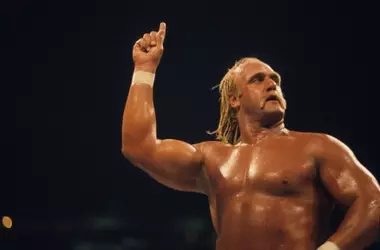
Wrestling Icon Hulk Hogan Passes Away at 71, Leaving Behind a Legacy of Entertainment and Transformation
Hulk Hogan, the legendary figure who revolutionized professional wrestling into a global phenomenon, has died at the age of 71. His unique blend of charisma and athletic prowess transcended the ring, making him a household name. Hogan's passing marks the end of an era for sports entertainment, as he leaves behind an indelible mark on millions of fans worldwide. His impact extended beyond the wrestling world, encompassing pop culture and even politics, solidifying his status as a multifaceted public figure.
By Lester Holt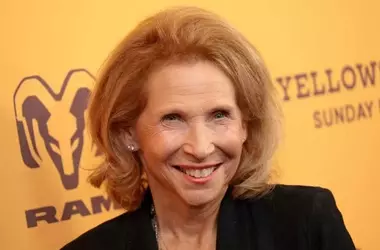 Jul 24, 2025
FCC Greenlights Paramount Sale Amidst Contentious Concessions
The Federal Communications Commission has approved the acquisition of Paramount Global by Skydance Media, a decision preceded by significant concessions from Paramount aimed at appeasing the Trump administration. These include a substantial legal settlement, the termination of diversity, equity, and inclusion programs, and the establishment of an ombudsman for ideological bias complaints. Critics argue these measures undermine journalistic independence and freedom of the press, setting a troubling precedent for media organizations.
By Mona Chalabi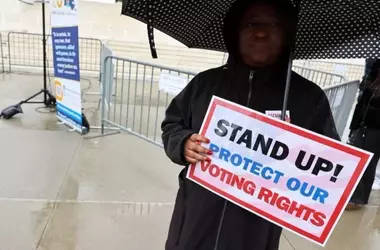 Jul 24, 2025
Supreme Court Temporarily Upholds Voting Rights Act Protections
The Supreme Court has issued a temporary stay on a lower court decision that sought to restrict a key provision of the Voting Rights Act. This pause allows for continued enforcement of anti-discrimination measures in voting, particularly impacting seven states. The case originates from North Dakota, where two tribal nations are challenging a ruling that questioned the right of private entities to sue under Section 2 of the Act. This development is crucial for safeguarding minority voting rights amidst ongoing legal challenges.
By Isabel Allende